
 Pearl
Pearl Bitway
 Walrus
 Optimism
 Pons
Pons Quantus
 NEAR Protocol

Since its launch, Dogecoin has consistently maintained its position as the largest memecoin by market capitalization. However, the recent broader market correction hit the Dogecoin price and also affected Bitcoin (BTC). This downturn severely impacted the memecoin market.
While the market was struggling, exchanges were streamlining the trading of Dogecoin. Institutions were loading more capital into the cryptocurrency. This is a classic example of buying the dips in anticipation of recovery. Will these help DOGE break past the current resistance?
Dogecoin Price Rejects Ichimoku Cloud
On the charts, Dogecoin price confirmed a classic technical setup. A sharp 6.52% rejection at a key structural ceiling indicated this. In fact, the memecoin was down more than 70% from the highs seen towards the end of 2024.
The Ichimoku indicator showed that Dogecoin price tried to break through the Kumo (Cloud) resistance. The zone had a lot of overhead supply, but it lacked sufficient momentum.
This specific rejection happened when DOGE price hit the cloud’s lower boundary at about $0.136. This resulted in its price quickly dropping to its current level of $0.1250, affirming the bearish signal.
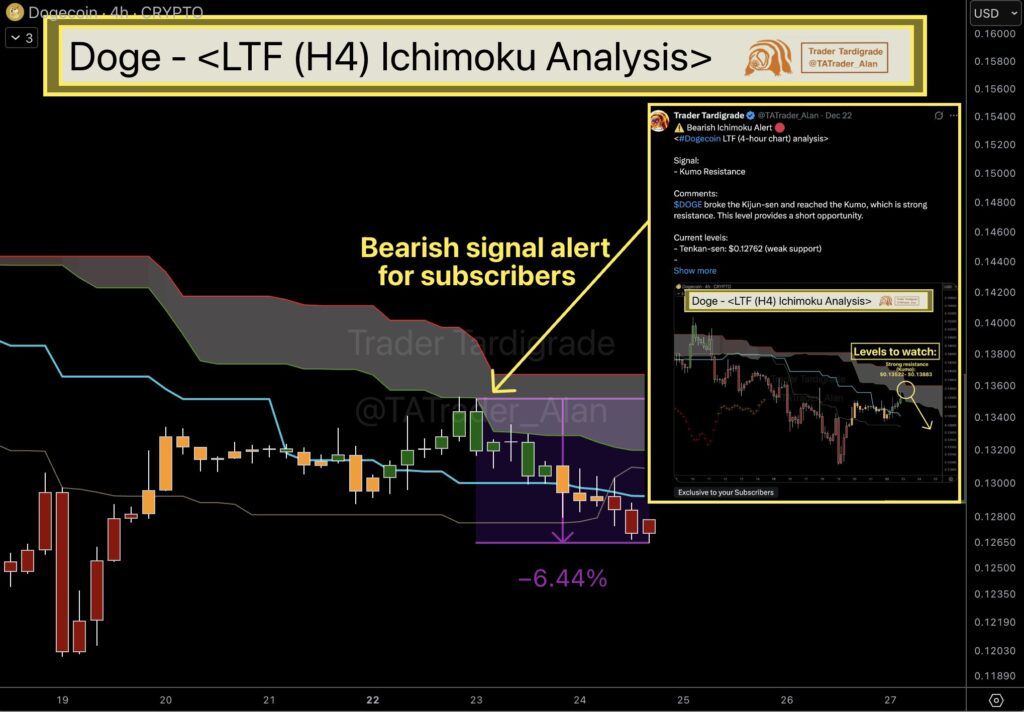
Historical data showed that when the price was below the cloud, it meant that the market was bearish. The cloud was a forceful layer of resistance. The sellers were still in technical control until the DOGE price closed above or inside the umo on the day.
This daily decline flush-out was a perfect example of how the indicator found pivot zones with high chances of success. It also demonstrated how the cloud frequently provided trend-following traders with the most straightforward path to take.
Speaking of trend-following, Coinbase’s move on the perpetual futures contracts side is unfolding. Will that be bullish for Dogecoin, or will it add more sell pressure from derivative traders?
How Will DOGE Prices React After Coinbase’s Futures Regulation?
Coinbase’s introduction of CFTC-regulated Dogecoin perpetual futures marked a significant milestone. This is because it brought in institutional investors from the United States and made the crypto more legitimate.
The move would definitely increase the trading activity of the coin. However, the direction of orders was not determined.
This made DOGE’s market structure, capital efficiency, and strategic positioning better. Since the launch, the open interest in futures has grown by 11% to almost $3 billion. These results confirmed that there was a lot of demand for leveraged exposure.
Therefore, the price may fluctuate depending on whether sellers or buyers emerge victorious. However, analysts still thought the market could bounce back and aim for $0.20 in the medium term.
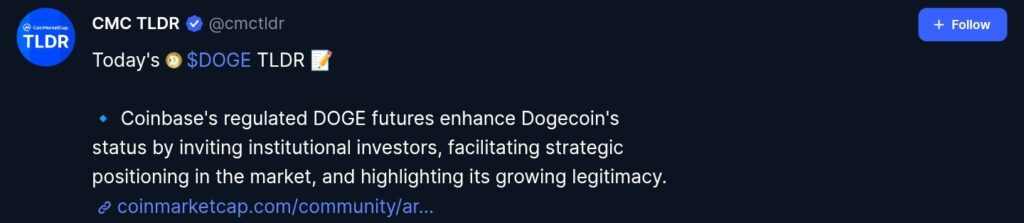
In the meantime, DOGE was trading around $0.13, and there was still short-term volatility. Still, this regulated access could lead to long-term growth and more people using it.
21Shares Plans to Buy $1.5M DOGE
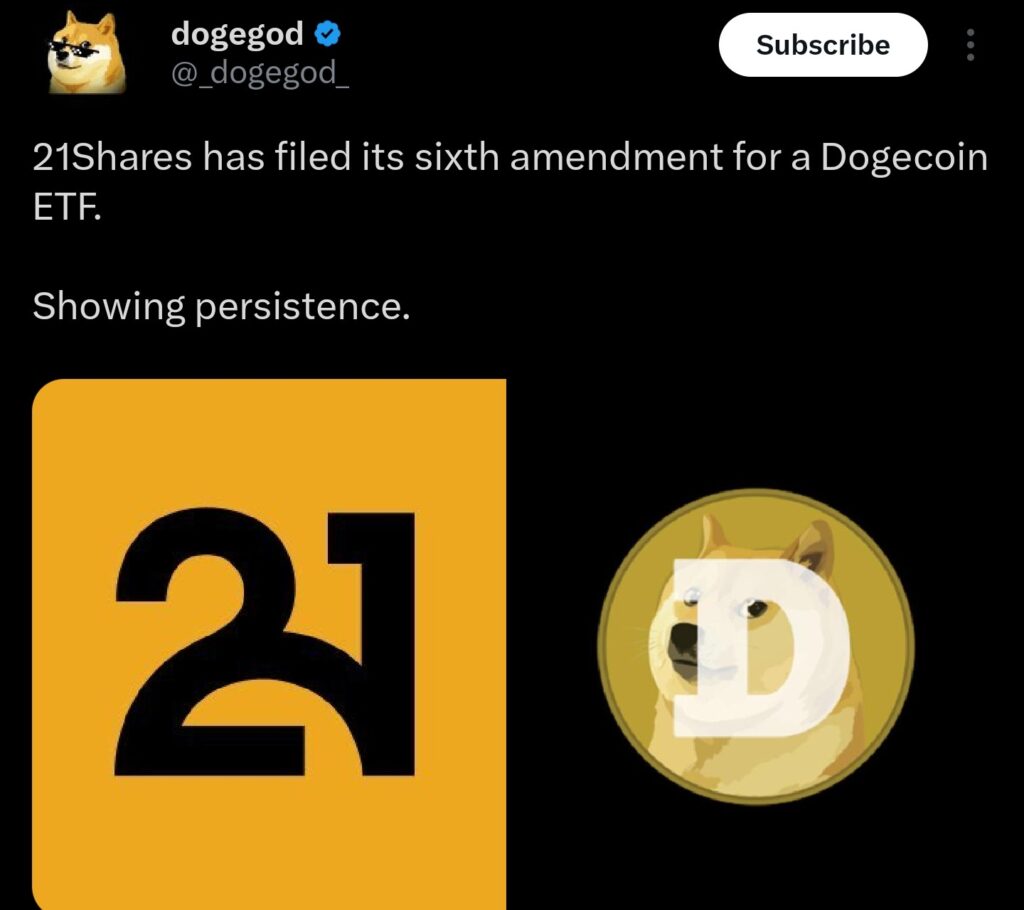
More bull action followed Dogecoin. However, its price still lagged. 21Shares just filed its sixth amendment to the SEC registration for a spot Dogecoin ETF.
The firm still planned to launch the fund on Nasdaq under the ticker TDOG. At launch, it aimed to buy about $1.5 million worth of DOGE.
Despite the lack of enough investor interest in the existing DOGE ETFs, 21Shares is still planning to launch the fund. The TDOG product won’t be available until the SEC says its registration is valid.
Altogether, the ongoing push from regulators showed that crypto ETFs were becoming more common in mainstream finance. However, it also showed that demand was still unclear and that traditional markets were still being reviewed.





