
 Bitcoin
 ZKsync
 Pudgy Penguins
 Pearl
Pearl Quantus
 Starknet
 NEAR Protocol
Pi Network price rose for the second consecutive day as investors bought the dip following its retreat to a record low on Tuesday. It rebounded to $0.082, up by 17% from its weekly low. Still, this rebound may be brief as Pi Coin faces some major risks ahead.
Pi Network Price Jumps Amid the Crypto Rally
Pi Coin was one of the best-performing tokens today as it jumped by 15%. This rebound happened as traders rotated to the crypto market following the relatively weak consumer inflation numbers released on Tuesday.
That report showed that the headline Consumer Price Index (CPI) dropped by 0.4% in June as gasoline prices dived. Core inflation also dropped from 2.9% in May to 2.5% in June, as it moved closer to the Federal Reserve’s target of 2.0%.
The inflation report influenced expectations for Federal Reserve policy, which often affects demand for risk assets such as cryptocurrencies. However, future policy decisions remain dependent on incoming inflation, labor market, and broader economic data. Earlier this week, Federal Reserve Governor Christopher Waller said future policy decisions would depend on inflation data, reinforcing the market’s focus on incoming economic releases.
The US inflation report pushed other cryptocurrencies higher. Bitcoin jumped closer to the key resistance level of $65,000, while the market capitalization of all coins rose by 2.6% to $2.22 trillion. In most cases, some of the top laggards usually lead the gains when there is a comeback.
Pi Coin Faces Some Major Risks Ahead
Pi Network price faces some major risks despite the two-day rally. First, the network continues to unlock millions of tokens each day. Data shows that the network will unlock over 76 million tokens this month and 1.7 billion in the next 12 months. At the current price, these tokens will be worth over $141 million, a substantial amount for a crypto project valued below $1 billion.
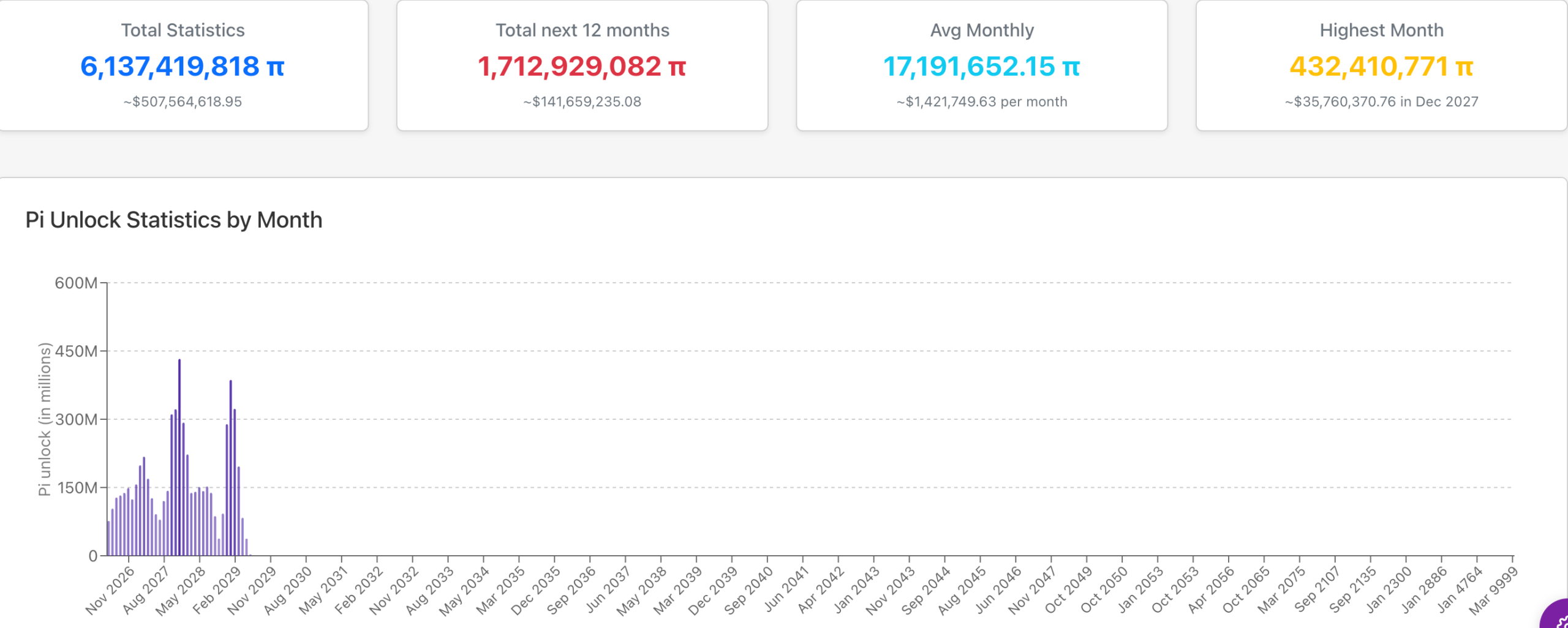
Token unlocks are usually bearish because they increase the number of tokens in circulation. The impact is usually substantial for coins that have weak demand. In Pi’s case, the daily volume tends to be less than $20 million.
Pi faces other risks, including the ambitious targets it has set. For example, its upgrades mean that it will become a layer-1 network that competes with the likes of Ethereum and Solana. However, a look at some of the top chains that have attempted to compete with Ethereum have failed. This includes popular chains like Polkadot and Cardano.
Meanwhile, there are signs that Pi has likely lost many of its pioneers as the token has slumped to a record low. At its peak, Pi had over 60 million pioneers, who were actively mining the token. Today, data shows that the total number of account holders has dropped to 17 million. Microbes, who hold Pi tokens worth between $0 and $1 are over 14.5 million.
This article is for informational purposes only and should not be considered financial or investment advice. Cryptocurrency markets are highly volatile, and token prices can change rapidly due to market sentiment, liquidity, regulatory developments, and token unlock schedules. Readers should conduct their own research and assess their financial circumstances before making investment decisions.
Technicals Suggest That Pi Coin Price Has More Downside
The daily chart shows that the Pi Network token has slumped and is now hovering near its all-time low. It has plunged below the crucial support level of $0.1300, its lowest level in February this year. It also dropped below the key support at $0.1192, its June low.
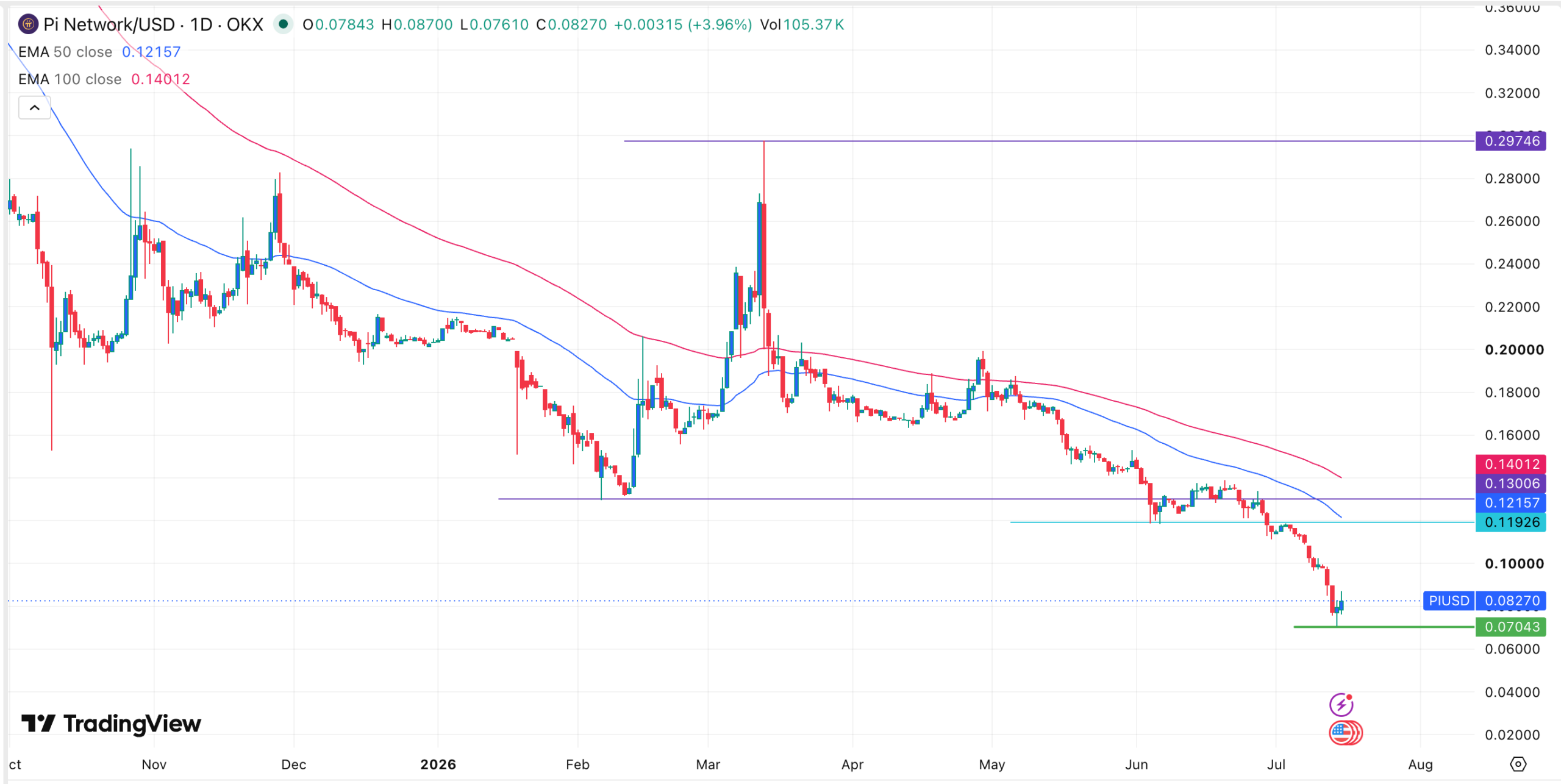
The token sits below the 50-day and 100-day Exponential Moving Averages (EMA). Before the token moves above these averages, chances are that the bearish trend will continue. If this happens, the next key target to watch will be at $0.05, which is about 40% below the current level.
Technical analysis reflects historical price action rather than future performance. A sustained recovery above the 50-day and 100-day exponential moving averages would strengthen the short-term outlook, while continued weakness below recent support could keep downside risks elevated.



