Dacity Coin
 streamoors
 Celestia
 Injective
 Quantus
 Pudgy Penguins
 Pearl
Pearl
XRP gained another utility channel in Japan through Rakuten’s digital financial ecosystem. Users can purchase XRP using Rakuten Points and convert holdings into Rakuten Cash.
The structure connects XRP with services across one of Japan’s largest digital ecosystems. Rakuten officially reports more than 100 million members across the country.
The development came as XRP traded around $1.06 after testing $1 support. Selling pressure on Binance also remained a risk for the short-term price outlook.
Rakuten Connects XRP With Everyday Payments
Rakuten Wallet has linked XRP with services that support routine consumer payments in Japan. Customers can use Rakuten Points to purchase XRP through the company’s crypto platform. They can also convert XRP holdings into Rakuten Cash and spend that balance through supported Rakuten payment channels.
The setup gives XRP holders a route from crypto ownership to purchases within Rakuten’s broader ecosystem. Rakuten Cash works across participating merchants and the company’s online shopping services. Rakuten has more than 100 million member IDs in Japan, while Rakuten Pay serves tens of millions of users.
Yasuo Matsuda, senior analyst at Rakuten Wallet, discussed the payment structure during Ripple’s Onchain Economy program. He said customers had requested spot XRP trading after the platform had already offered margin trading. Rakuten Wallet introduced XRP margin trading in 2020 and later expanded its spot crypto offering. Rakuten also added XRP to its spot trading lineup in April 2026.
Ripple News Focuses on XRP Utility in Japan
Rakuten’s service combines Rakuten Points, Rakuten Wallet and Rakuten Cash. That structure allows customers to move loyalty value into XRP and later move XRP into a spendable balance. Users can therefore interact with the asset through services they may already use for shopping and payments.
Matsuda also pointed to transaction speed when discussing XRP’s payment role. Ripple says XRP transactions settle within seconds, with the asset designed for payments and liquidity functions. Stablecoins can serve another role by reducing exposure to the price swings associated with crypto assets.
He also discussed tokenized real-world assets and security tokens as other areas for blockchain-based financial activity. Financial companies have explored on-chain products, trading infrastructure, and tokenized assets.
XRP Price Tests $1 as Selling Pressure Builds
The Ripple news arrived while XRP remained under technical pressure. XRP traded near $1.06 on Aug. 13 after approaching the psychological $1 level. That area remains central to the token’s immediate technical structure.
CryptoQuant data showed the Binance Taker Buy/Sell ratio below one during the reported period. The indicator compares taker buying volume against taker selling volume.
A reading below one indicates greater taker sell volume during that measurement period. However, the indicator alone does not establish the direction of XRP’s next move.
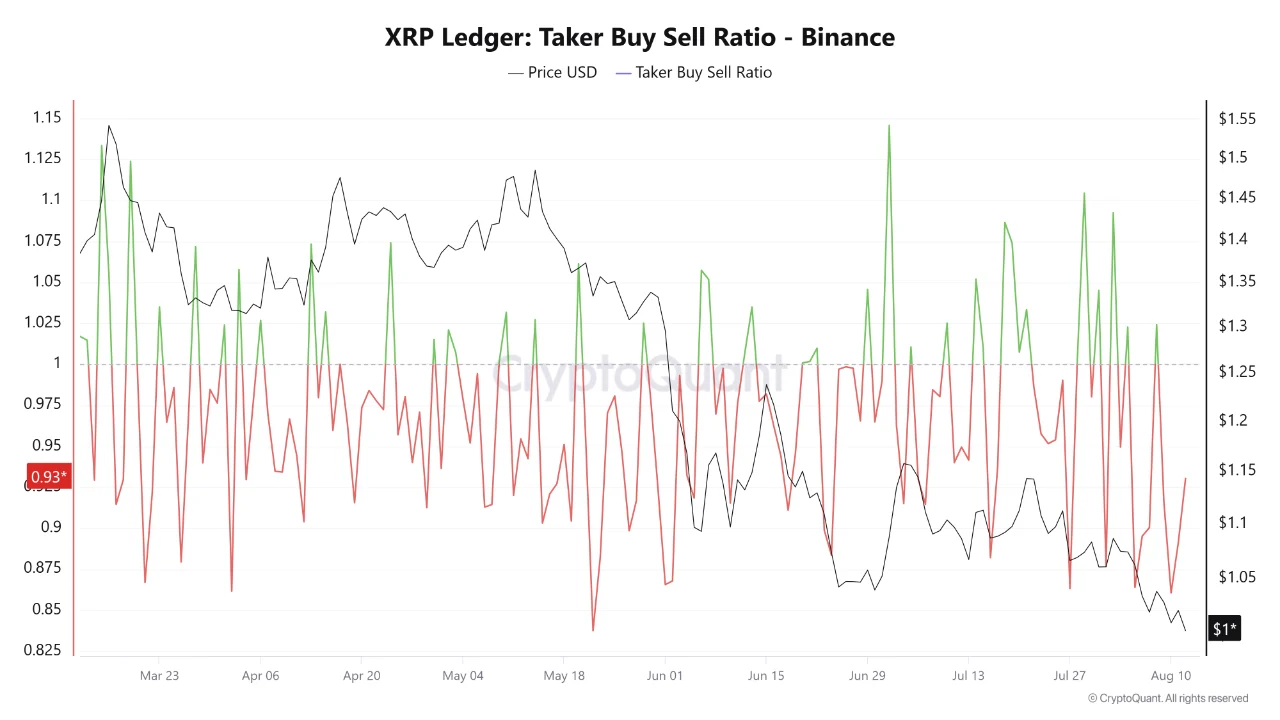
XRP also remained near support following its latest decline. Losing $1 on a sustained closing basis could weaken its existing technical structure.
Conversely, holding the psychological level would keep attention on whether buyers can absorb current selling pressure.
The Rakuten development provides a separate fundamental consideration. Its effect on XRP demand cannot yet be quantified from available transaction data.
That distinction matters because greater accessibility does not automatically translate into higher XRP transaction volumes or prices.
This article is for informational purposes only and does not constitute financial advice. Cryptocurrency markets are highly volatile. Readers should conduct independent research or consult a licensed financial professional before making investment decisions.