
 NEAR Protocol
 Bitcoin
 Puffer
 Hyperliquid
 ZKsync
 Pudgy Penguins
 Pearl
Pearl

In July 2025, U.S. consumer credit increased by $16.01 Billion. This was the third-highest monthly increase in history. Up from $9.61 billion in June, it was the year’s second-largest gain.
The current total consumer credit is $5.06 Trillion. Both revolving and non-revolving credit are included in this. The increase exceeded the $10.1 Billion market expectation by a significant margin.
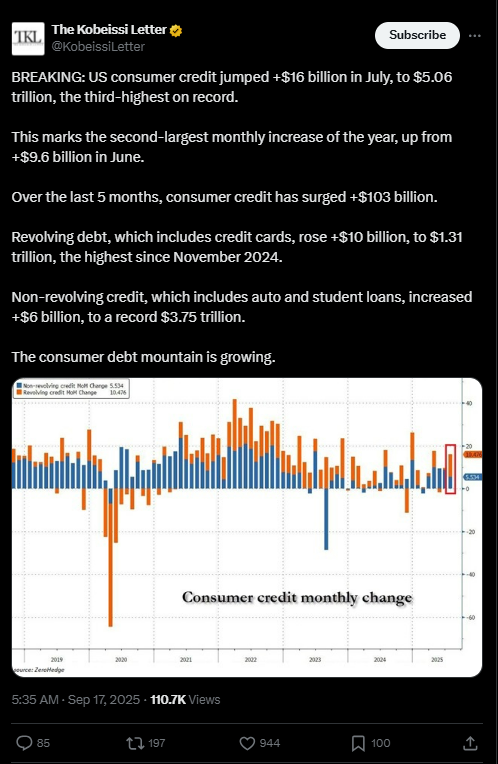
Despite high interest rates, it displays robust borrowing activity. Consumer credit has increased by $103 Billion in the last five months.
This is a reflection of households’ growing need for credit. In July, consumer credit rose at an annual rate of 3.8%. This rate is faster than the 2.3% rate from the previous month.
Credit Cards Drive the Increase
Credit cards and other revolving credit increased by $10 Billion in July. The highest since November 2024 was $1.31 Trillion. Revolving credit grew at an annual rate of 9.7%, a significant increase from June.
This implies that more Americans are making purchases with credit cards. Interest rates on credit cards are still high, averaging 21.76% across all accounts. Interest-charged accounts have even higher rates (23.37%).
Bank card balances reached $1.07 Trillion, up 4.3% from the previous year. The number of active bankcard accounts increased by 5.6% to 582.6 million. From 21.2% in July 2024, the average utilization decreased marginally to 20.8%.
This indicates that fewer people are making use of their credit. Yet, the bankcard delinquency rate (60+ days past due) was 2.76%, which is still high.
Auto and Student Loans Hit New Highs
In July, non-revolving credit, which includes student and auto loans, increased by $6 Billion. It grew steadily, reaching a record $3.75 Trillion. Compared to revolving credit, non-revolving credit grew at a slower rate of 1.8% annually.
Auto loan balances reached $1.67 Trillion, a 1.4% annual increase. There are 87 million active auto loan accounts in the United States. Auto loans that were 60 days or more past due had a delinquency rate of 1.51%. This was marginally higher than the previous year.
A significant portion of non-revolving credit is also made up of student loans. Of all non-mortgage consumer debt, they make up 36.8%. 32.1% is made up of auto loans and leases. At the same time, 24.2% come from credit cards.
Total Consumer Debt Nears $18 Trillion
According to Equifax, total U.S. consumer debt reached $17.94 trillion in July 2025. Compared to July 2024, this represents a 2.5% increase: $ 13.27 Trillion, or 74% of the total, mortgage debt accounts for the largest share.
Credit cards, auto, and student loans make up $4.67 Trillion of non-mortgage debt. 95.3% of all mortgage debt is from first mortgages. HELOCs, or home equity lines of credit, account for 3%. Other housing-related loans make up the remaining amount.
What does this mean for the Economy?
The increase in consumer credit indicates strong demand for borrowing. It might be an indication of economic confidence or pressure from growing expenses. August saw the highest rate of inflation since January, at 2.9%. The cost of food, energy, and housing all went up.
Additionally, tariffs have increased the cost of clothing and automobiles. The Federal Reserve anticipates that interest rates will be lower shortly despite inflation.
Jobless claims are on the rise, indicating a weakening labor market. Reduced interest rates make borrowing less expensive and encourage spending.



