
 Wisp
Wisp Doge Pepe
 Crawlerpad
 Zylo Ecosystem
 Pearl
Pearl Basic Attention
 Quantus

Stellar is showing one of the most interesting multi-cycle setups, according to analyst Dan Gambardello’s latest technical analysis.
XLM crypto currently trades around $0.4 with a 37 risk score, nearly identical to the 38 risk reading from October 2017, weeks before a parabolic rally.
XLM Crypto Shows October 2017-Style Setup with Declining Risk
Stellar’s weekly chart shows an ascending triangle pattern with price compressing toward the upper resistance line across multiple cycles. Gambardello highlights how XLM crypto has pressed against the same resistance level with dropping risk readings over time.
The 2018 bull market peak registered 97 risk, followed by 53 during a subsequent test, while current levels hover around 37 risk at similar price points.
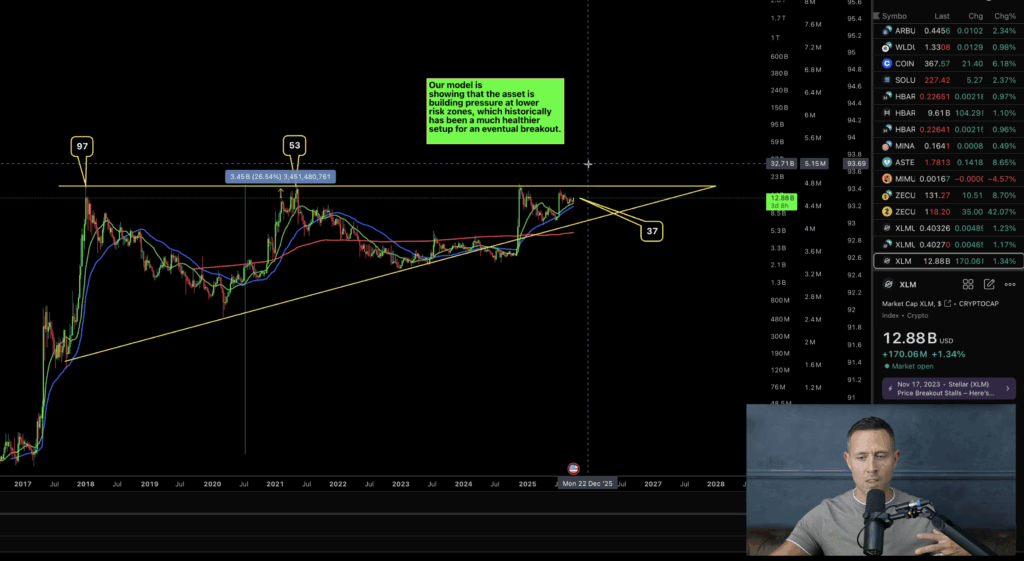
The risk model data comes from CoinGecko’s methodology, which Gambardello characterizes as more conservative than alternatives like CoinMarketCap.
CoinGecko’s stricter data interpretation shows the 2018 high as XLM’s all-time peak, while CoinMarketCap shows the last cycle broke previous records.
Gambardello stated that XLM crypto has become one of the most requested assets for risk model development since launching his intelligence system in May.
Visa’s expanding stablecoin settlement capabilities to include Stellar blockchain adds fundamental support to technical patterns. The corporate adoption narrative provides potential catalysts for XLM crypto breakout above multi-cycle resistance.
Cardano Presents Similar Risk Profile at Higher Price Levels
Cardano’s risk analysis shows a more interesting situation when compared with Stellar’s setup. ADA currently trades around 85 cents with a 35-36 risk score.
This contrasts sharply with February 2021 levels, when a 67-cent ADA registered 75-78 risk before a nearly 200% rally to all-time highs. The current risk reading sits at roughly half the previous cycle’s pre-breakout levels.
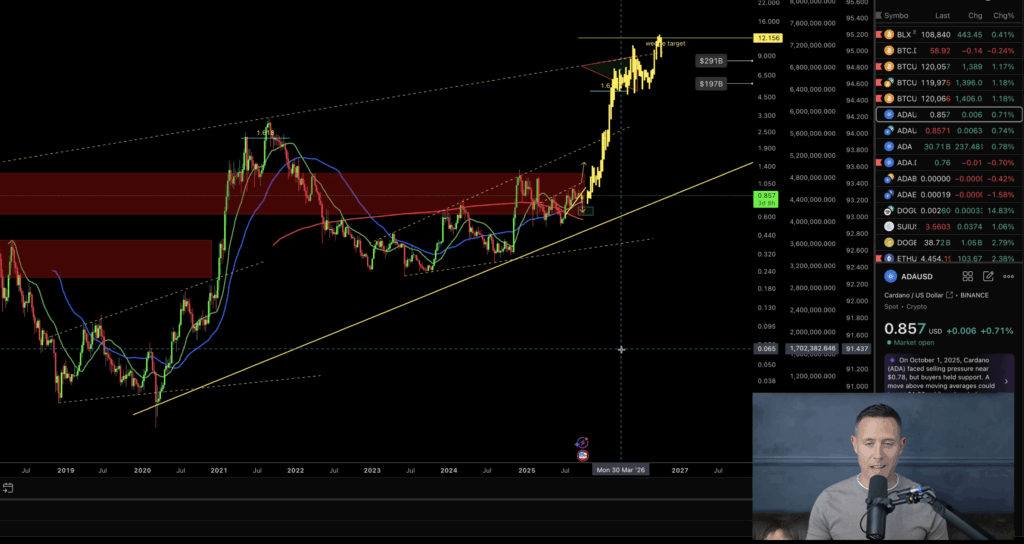
Multi-cycle comparison shows September 2020 ADA at 8 cents with a 35 risk score versus the current 85-cent prices at an identical 35 risk. The tenfold price increase at matching risk levels suggests substantially higher upside potential from current positions.
The February 2021 comparison between XLM cryptocurrency and Cardano reveals distinct performance characteristics. Stellar posted 26% gains from early February to cycle peaks while Cardano delivered approximately 200% returns during the same period.
Cardano maintains a macrobullish structure, characterised by higher highs and higher lows, across its weekly chart. Gambardello avoids using the multi-cycle ascending pattern for precise breakout targets and noted the measured move would reach unrealistic levels.
Instead, he focuses on higher high analysis, suggesting $5-10 range remains achievable for ADA this cycle.
Race Between XLM and ADA Could Decide Altcoin Season Performance
Gambardello mentioned the comparison as a “race” between two altcoins with similar risk profiles but different fundamental narratives.
Stellar benefits from corporate partnerships, including Visa’s stablecoin settlement integration, and Cardano maintains strong developer activity and growth in its smart contract ecosystem.
XLM crypto’s advantage lies in its ascending triangle pattern with clear resistance testing across multiple cycles. The structure provides defined breakout levels for traders planning entries and exits.
Stellar’s current 37 risk matches pre-breakout levels from previous cycles, suggesting favourable risk-reward positioning.
Cardano’s edge comes from lower risk readings relative to price compared with previous cycle. The 35 risk at 85 cents versus the 75 risk at 67 cents shows improved market positioning.
The lower relative risk, combined with a higher absolute price, suggests that ADA absorbed prior cycle selling pressure while maintaining a bullish structure.
Both assets face upcoming catalysts from macro factors, including interest rate cuts, a falling dollar, and pro-crypto legislation. Gambardello emphasizes business cycle shifts and increasing liquidity support bullish scenarios across altcoins.




