
 Wisp
Wisp Doge Pepe
 Zylo Ecosystem
 Crawlerpad
 Pudgy Penguins
 Pearl
Pearl Basic Attention

Aave Protocol (AAVE) launched a new buyback program as its active loans surged to new levels this year. The price of the altcoin crashed to the $200 levels from around $400 in late August.
The decentralized finance (DeFi) token has been in the lead, especially in the lending sector. This sector gained much of its traction after more users embraced trading on DeFi protocols, ditching CEXs.
Its founder, Stani Kulechov, has been backing it, especially on social media, terming it as a digital bank. Traders deposit their tokens on the protocol as collateral to borrow so as to maximize their gains.
As the altcoin prints a key bullish signal, we will be assessing the eligibility of this potential buy.
AAVE Crypto Price Flashes Buy Signal
According to Ali Charts analysis, the price action of AAVE crypto perpetual contracts over a two-day timeframe indicated a buy signal.
After hitting a high of about $380 in late August, the indicator flashed a sell signal. What followed was that the price started to go down steadily, dropping more than 42% to about $218. This observation indicated the accuracy of the indicator; however, there was no certainty about future price movements, as they depend on speculation across various trades.
A TD Sequential signal of “9” showed up at the recent low that was between $205 and $225. This could mean that the selling pressure was starting to fade and buyers were stepping in gradually.
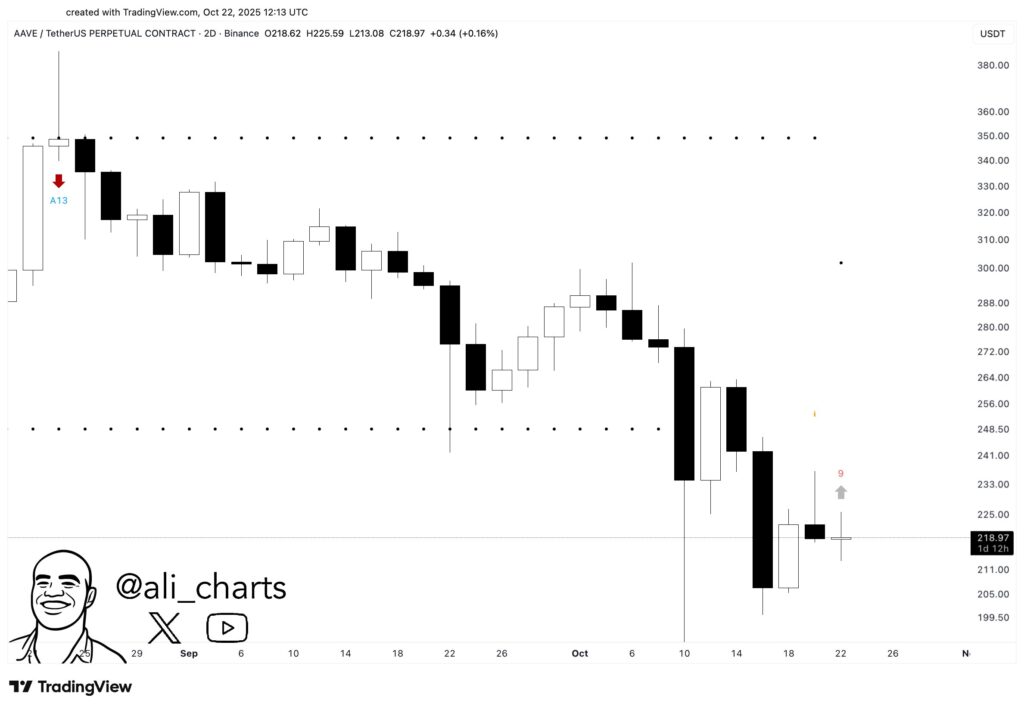
This counter suggested that the trend may be about to change or that it was in a consolidation phase. But just because there were buy signals, it did not mean there would be a quick rise.
When writing, the price was at $218.97, and higher lows and volume would make the bullish case stronger. Thus, traders should keep an eye out for follow-through or a possible invalidation.
AAVE Crypto DAO Proposes Buyback Program
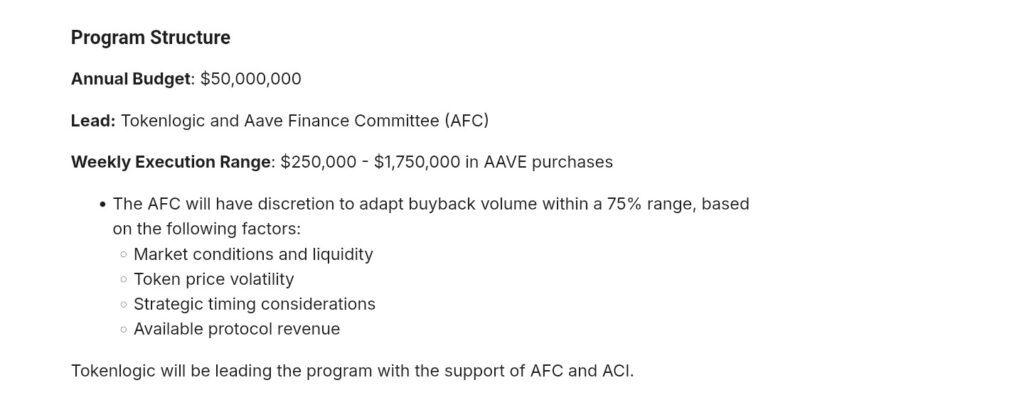
Backing this bullish outlook was the buyback program launched by AAVE DAO. The program allocated a significant annual budget of $50,000,000, with the key participants being Tokenlogic and the Aave Finance Committee (AFC). The plan gave a weekly execution range between $250,000 and $1,750,000 in purchases of AAVE crypto tokens.
AFC reserved the right to change this amount within a range of 75 percent. This was dependent on factors like the market conditions and liquidity, the volatility of the tokens, the strategic time, and available protocol revenue.
These buybacks usually result in a decreased supply of AAVE tokens in circulation. As a result, this generally creates an upward pressure on price, assuming an unchanged or growing demand.
This planned scarcity would help improve scarcity, which would effectively transfer the value created by the protocol to token holders. Steady implementation of the program, particularly the minimum commitment per week, creates a constant deflationary pressure on the circulating supply of AAVE crypto tokens.
Active Loans on Aave Protocol
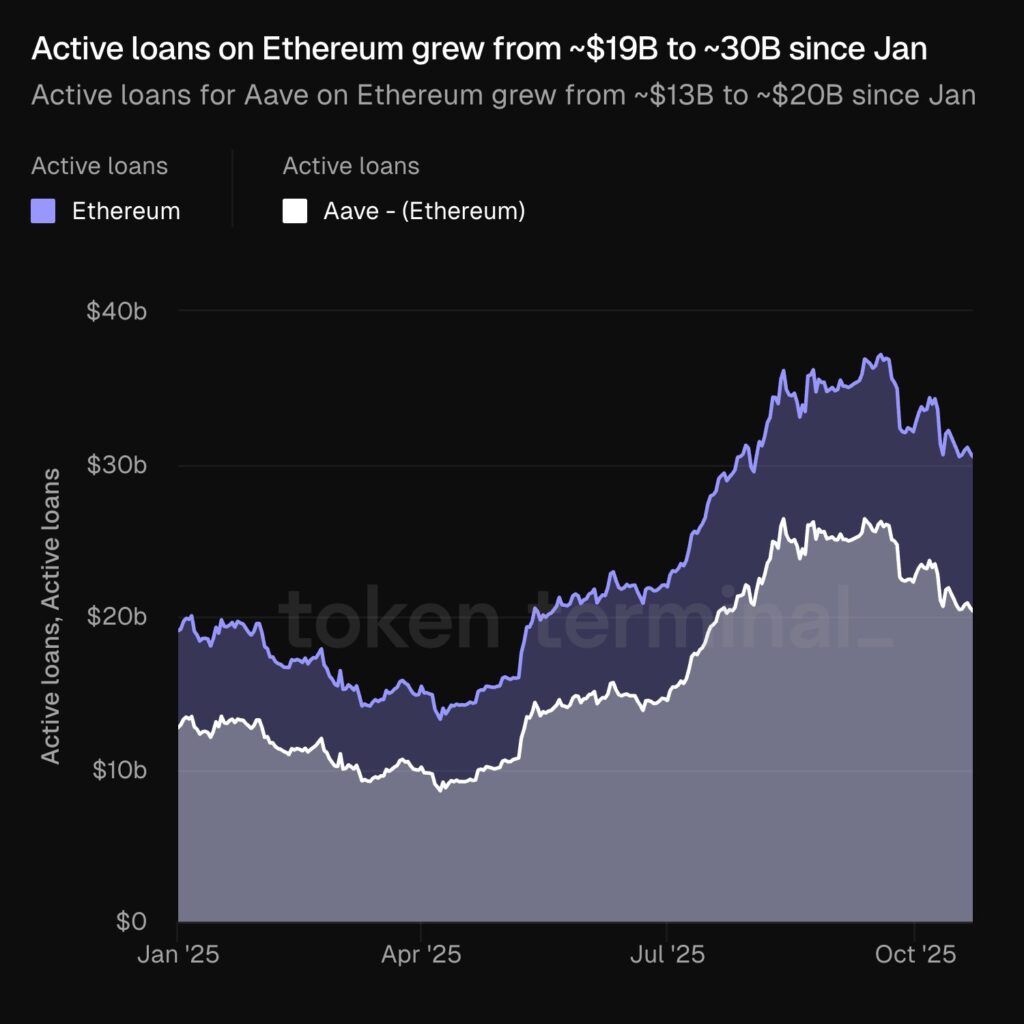
Traders also did not have to overlook the significant data on active loans. This year alone, active loans on the Ethereum ecosystem increased by roughly $11 billion from $19B to $30B. AAVE made up about 7 billion alone, growing from $13B to $20B. This implied that AAVE concentrated about 63% of the overall loans on the mainnet.
This coincided with a growth of the Total Value Locked (TVL) of Aave against the total DeFi TVL. The current TVL of Aave was more than $64B, accounting for a big percentage of the total DeFi TVL.
Altogether, improved market conditions would see the altcoin respect the signal, thus reversing its current bearish trend. Alternatively, failure to close above $264 would invalidate this buy signal.





