
 Pearl
Pearl Bitway
 Pudgy Penguins
 Optimism
 Walrus
 NEAR Protocol
 Pons
Pons

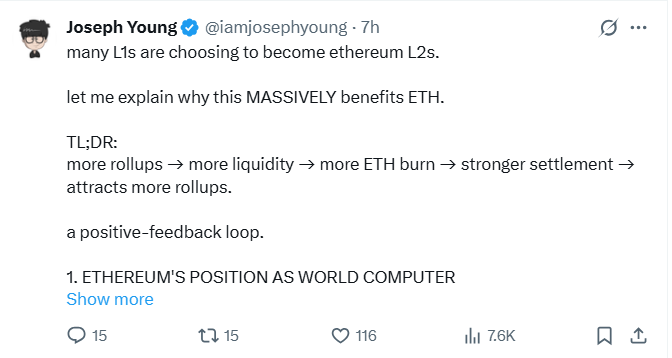
More Layer-1 blockchains are shifting to Ethereum L2s as network activity increases in 2025. The move is tied to 4 major factors spotlighted by Ethereum advocate Joseph Young.
Ethereum shows strong settlement power and a rising ETH burn. Rollup networks boost liquidity by using the chain for data posting and final settlement.
Ethereum Serves as a Strong Settlement Base
It is worth noting that L2 networks post their data to Ethereum through blobs. These blobs hold transaction details without placing a heavy load on the main chain.
The related blob fees are burned under EIP-4844. Higher activity on L2s creates more blobs. This leads to more token burn. This burn supports a steady supply path for ETH.
As detailed, the process also strengthens Ethereum as a central settlement base where multiple networks anchor their transactions. Many teams see value in using one secure layer rather than maintaining their own full chain.
More Blob Usage Leads to Higher ETH Burn
According to developers, every L2 must post batches of its transactions to Ethereum. These batches use blobs, and the fees from these blobs are fully burned.
It was stated that a larger number of L2s leads to more posting activity. Rising blob usage brings more fee revenue while reducing supply.
The structure could move Ethereum closer to a deflationary trend during periods of heavy demand. Teams that move from L1 to L2 also gain freedom to scale without taking on the cost of securing their own base layer.
L2 Activity Increases Liquidity Across Ethereum
It is important to add that the shift of L1 protocols into L2s expands liquidity across Ethereum. Settlement flows, bridges, and trading activity increase capital inside the ecosystem.
ETH plays a central role because it is used for settlement, bridging, and liquidity on many networks. The expansion of L2s increases the economic zone built on Ethereum.
Developers and users gain access to wider markets and deeper pools of assets. The combined effect strengthens the network and encourages more teams to join.
Ethereum Absorbs New Technology From L1 Migrations
A Layer-1 protocol that becomes an L2 brings its own technical features. These features include virtual machines, bridging systems, and scaling designs.
Once the protocol shifts onto Ethereum, its technology operates within the larger ecosystem. Notably, this process expands Ethereum’s available tools without changing the base layer.
The network gains new design options while keeping its main structure and security intact. Basically, the result is a more flexible environment for development.
Network Throughput Continues to Rise
Meanwhile, Ethereum recently reached a record seven-day average of 24,192 transactions per second. This level reflects higher activity from L2 networks. More transactions flow through these rollups and settle on Ethereum.
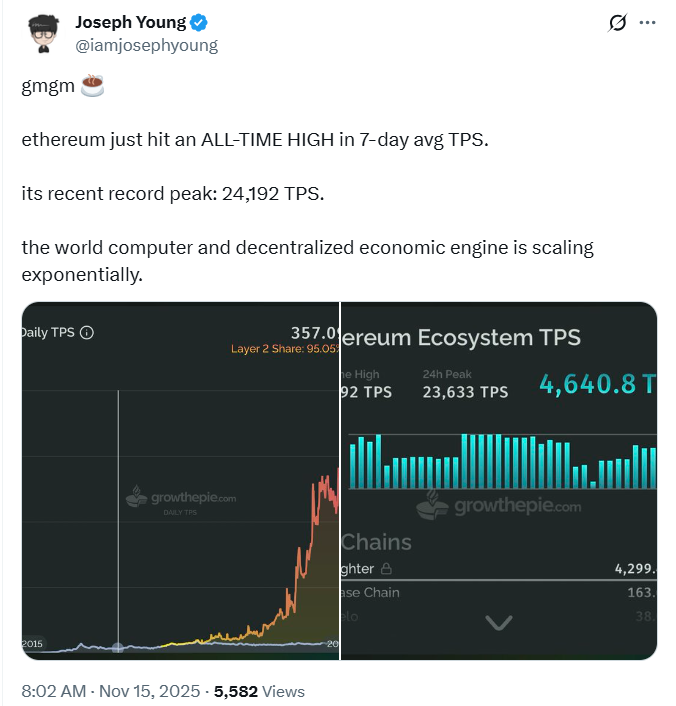
The rise supports the broader trend of Layer-1 projects joining the system rather than operating separately. Shared infrastructure attracts teams that want reliable settlement and strong uptime.
On price outlook, market figures show steady interest in Ethereum. ETH trades near $3,200 as the network holds a market cap of $381.5 billion. Daily trading volume stands at $33.14 billion with the circulating supply remaining at 120.69 million ETH.
More so, these levels show that Ethereum continues to draw activity from users, builders, and institutions. Market watchers believe Layer-1 protocols continue to explore the L2 model. They are looking for lower operating costs, stronger security, and more active markets.
Ethereum provides a base layer where these networks can post data and rely on shared settlement. The trend highlights how the ecosystem continues to broaden as more projects adopt the rollup approach.





