
 Pearl
Pearl Bitway
 Monad
Monad Ondo
Ondo Derive
 Walrus
 Zcash
Zcash

Ethereum price stabilized above $3,000 after a sharp market-wide drawdown erased leveraged optimism. Ether fell 13.8% in three days before rebounding, as risk appetite weakened across cryptocurrencies.
The move followed broad deleveraging and renewed macro uncertainty. Traders now questioned whether the rebound reflected strength or short covering.
Ethereum price reaction mattered because $3,000 had acted as short-term psychological support. Ether reclaimed the level after Donald Trump paused planned import tariff hikes on several European Union countries.
That announcement briefly eased global risk stress. Still, derivatives and fund flow data showed lingering caution.
Ethereum Price Under Pressure as Funding Turns Negative
The sell-off wiped out roughly $480 million in bullish Ether positions within two days, data showed. Forced liquidations accelerated once ETH lost $3,100, pushing the price toward $2,900.
This flush reduced open interest but also highlighted how crowded long exposure had become. Funding metrics reflected the sudden shift.
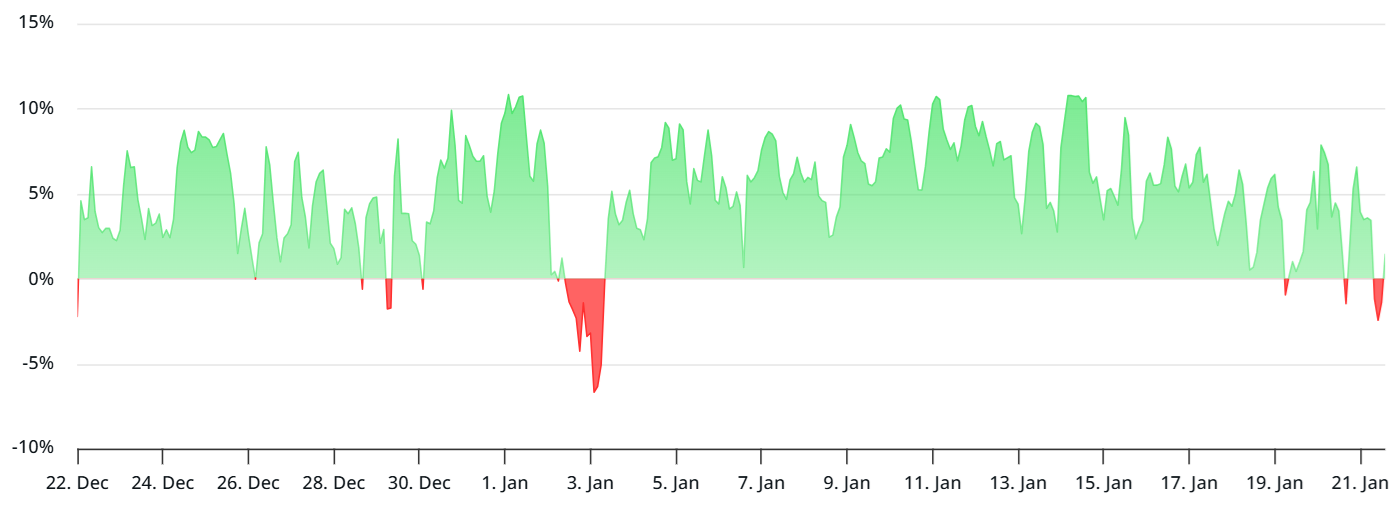
ETH perpetual futures funding briefly turned negative on Wednesday, according to Laevitas. Under neutral conditions, annualized funding typically ranged between 6% and 12%, favoring longs.
Negative funding meant short sellers paid to hold positions. That structure suggested positioning stress rather than outright bearish conviction.
Negative funding alone rarely confirms trend reversals. Similar episodes in past drawdowns often coincided with local bottoms. However, traders remained hesitant to rebuild leverage quickly. Ethereum price rebound lacked strong follow-through volume.
Options Market Signals Heightened Downside Anxiety
Options data pointed to growing demand for protection. ETH one-week options delta skew rose to 11%, Laevitas data showed.
That marked the highest downside premium in seven weeks. Market makers and large traders priced puts well above equivalent calls.
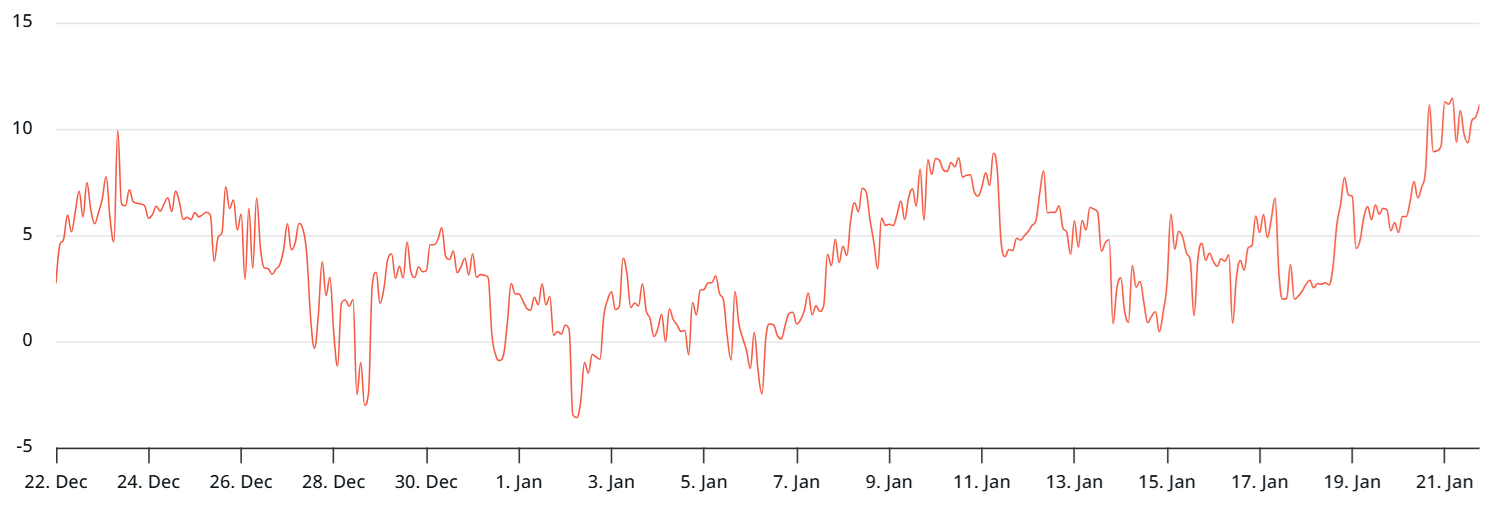
Historically, a skew above 8% reflected discomfort with near-term downside risk. Bullish phases typically pushed skew below minus 8%.
Current readings suggested fear, not aggressive bearish positioning. Repeated Ethereum price rejections near $3,400 over the past ten weeks weighed on sentiment.
Those rejections coincided with softer network activity. Traders linked the options premium to fading momentum rather than directional bets. The skew reflected caution after multiple failed rallies. Confidence weakened as follow-through stalled.
Ether ETF Outflows Add Structural Pressure
Spot exchange-traded fund flows added another layer of concern. U.S.-listed Ether ETFs recorded $230 million in net outflows on Friday, according to Farside Investors. The reversal followed a week averaging $96 million in daily inflows. Funds now hold over $17 billion worth of ETH.
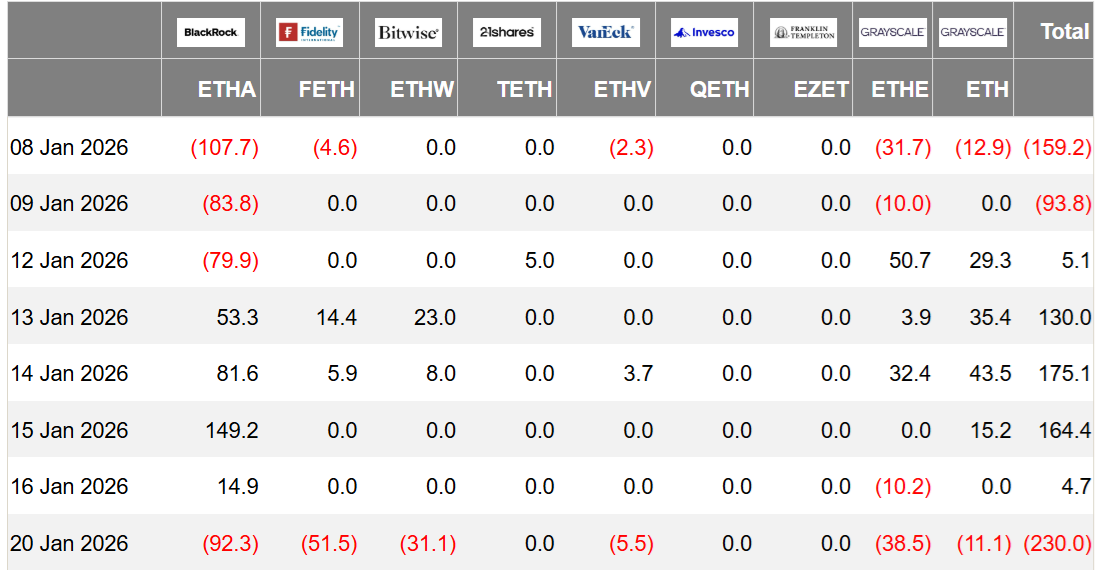
That inventory represented persistent supply overhang. Institutional flows had supported Ethereum price stability through much of the quarter. The sudden outflows raised questions about allocation durability. Some investors appeared unwilling to tolerate near-term volatility.
Corporate Ether treasuries also faced stress. Bitmine Immersion and Sharplink reported heavy accounting losses tied to ETH holdings. Those disclosures highlighted balance-sheet sensitivity to price swings. Corporate demand no longer looked one-directional.
Network Fees and Competition Undermine the Bull Case
On-chain metrics weakened alongside price. Ethereum network fees fell 20% from baseline over the past week, Nansen data showed. Lower fees reflected reduced transactional demand. That slowdown contrasted sharply with rival networks.
Solana recorded a 36% increase in weekly fees, while BNB Chain posted 27% growth. Transaction volume told a similar story. Combined Ethereum base-layer and scaling solutions processed fewer than 570 million transactions over seven days. Solana maintained clear leadership.
The divergence challenged Ethereum’s near-term narrative. Application activity increasingly favored faster, cheaper alternatives. Developers and users continued experimenting elsewhere. Those trends complicated attempts to reclaim higher price ranges.
Trading Narratives Clash With Market Data
Social media amplified bearish interpretations. DeFiTracer claimed Binance liquidated over $300 million in crypto positions in one day. The account framed the activity as manipulation. No on-chain or exchange confirmation supported coordinated dumping claims.
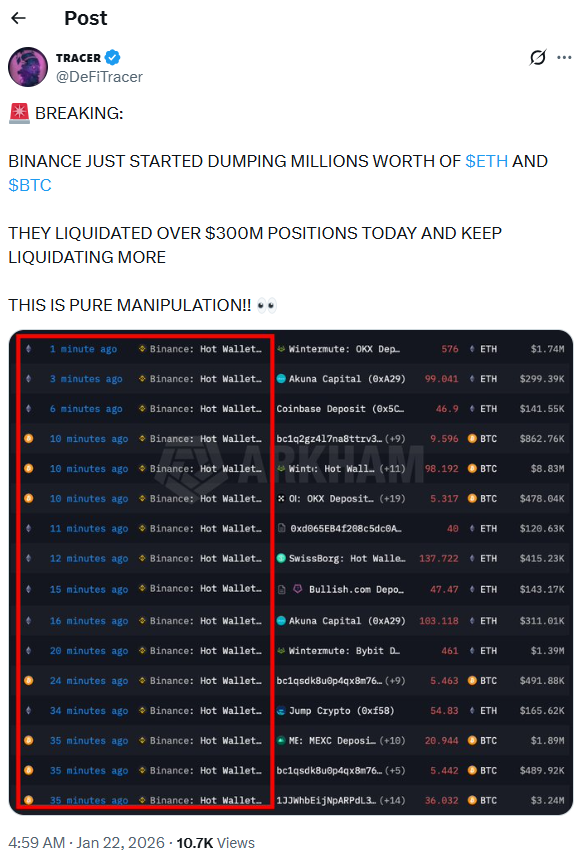
Large liquidations typically followed price moves rather than caused them. Risk systems automatically closed positions when margins were breached. Such mechanics often appeared dramatic during volatile periods. Traders nonetheless remained sensitive to exchange-related headlines.
Ethereum price action reflected that unease. Each rebound attempt met selling near prior resistance. Momentum indicators stayed muted. Market structure favored consolidation rather than expansion.
What Traders Watched Next for Ethereum Price
Near-term focus centred on $2,900 support and $3,100 resistance. A sustained break below $2,900 risked reopening the $2,700 zone flagged by several analysts. Holding above $3,000 kept recovery scenarios alive. Volume and funding trends remained key confirmation tools.
Macro visibility also mattered. Risk assets responded to shifting trade policy signals and geopolitical headlines. Ethereum price performance depended on broader confidence returning. Without leverage demand and stronger on-chain growth, rallies looked fragile.
For now, traders balanced reduced leverage against structural headwinds. ETF flows, options skew, and network metrics pointed to caution. Ethereum price held its ground, but conviction stayed thin. The next directional move is likely required by clearer macro or activity catalysts.


