Dacity Coin
 NEAR Protocol
 Quantus
 Bitcoin
 Celestia
 Pearl
Pearl Pudgy Penguins

Bybit stated that it does not operate in Singapore after the Monetary Authority of Singapore (MAS) added the exchange to its Investor Alert List. The exchange said it restricts Singapore-based users through its terms of service and blocks access from Singapore IP addresses.
The development places fresh regulatory attention on one of the world’s largest cryptocurrency exchanges as jurisdictions continue strengthening compliance requirements for digital asset platforms.
MAS Places Bybit on Investor Alert List
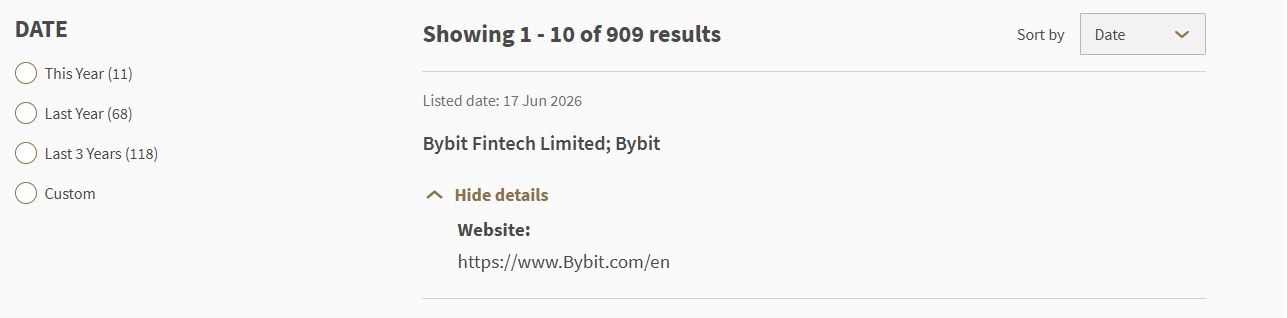
MAS included Bybit Fintech Limited on its Investor Alert List on June 17, listing the exchange URL. The Investor Alert List is a public warning list maintained by the regulator to warn users about entities that are not authorized or licensed by MAS to operate in the country.
Inclusion on the list is not a ban or a sign of wrongdoing of any kind. However, it could have a reputational impact on the entity or individuals added to the list. MAS has added 11 entities to the list in 2026
Given Bybit’s sizable reputation and operation in neighboring countries such as Malaysia, the MAS inclusion appears calculated to prevent any perception by investors that Bybit is also licensed to operate in Singapore.
MAS has been very strict with its licensing regime for crypto asset companies. In 2021, it added Binance to the same list.
Interestingly, Bybit recently secured removal from Malaysia’s Securities Commission Investor Alert List in April. The exchange engaged with regulators in the country and also invested in a local crypto entity, Hata. It will now be hoping to replicate the same thing in Singapore.
Crypto Regulatory Framework Tightens Globally
Meanwhile, MAS’s move highlights the broader regulatory environment for the crypto industry. In recent years, several countries and regions have tightened their regulatory framework for crypto platforms to operate.
This means crypto entities now have to obtain licenses and authorizations across multiple jurisdictions to stay compliant. While this has increased compliance focus, regulatory issues remain for crypto platforms.
The UK Secretary of State recently sanctioned Huobi Global SA, the operator of the HTX exchange. It claimed that the crypto exchange played a role in enabling the Russian government to launder funds and evade sanctions.
Binance is also facing challenges with securing a license in Greece that will allow it to operate in the European Union. With the transition period under the Market in Crypto Assets (MiCA) regulations set to end on July 1, reports indicate that the Greek regulator will reject its application.
Interestingly, Bybit has already secured its MiCA license through Austria’s Financial Market Authority (FMA), which means it could become one of the exchanges to benefit from the potential setback to Binance in the region.