
 Wisp
Wisp Doge Pepe
 Zylo Ecosystem
 Crawlerpad
 Pudgy Penguins
 Pearl
Pearl Basic Attention

Stablecoin issuer Tether has invested sted $20 million in Brazil’s biggest crypto platform, Mercado Bitcoin, in a strategic financing round. The firm announced the investment on July 7, noting that it is part of its commitment to supporting open and accessible financial infrastructure.
Mercado Bitcoin is the biggest digital assets exchange in Latin America, with 4.5 million users. The platform, which holds more than 10 licenses in Europe and Brazil, also offers banking infrastructure, tokenized products, and other blockchain-based financial services.
Tether Betting on Brazil’s Crypto Adoption
According to the Tether announcement, its investment in Mercado Bitcoin reinforces Brazil’s position as an advanced ecosystem for crypto adoption and blockchain technology. The USDT issuer described the country as a high-growth market.
It noted that financial services are increasingly moving onchain, and that Brazil is one of the global leaders in this transition. The country leads in crypto adoption in Latin America, and Tether highlights several attributes that make it ideal.
Tether CEO Paolo Ardoino noted that the exchange embodies Tether’s mission to build open, accessible, and efficient financial infrastructure for the world. “Mercado Bitcoin has built exactly that, a regulated, full-stack on-chain financial platform serving millions of users across one of the world’s most dynamic financial markets,” he said.
Interestingly, the investment comes a few weeks after Oobit, a payment app backed by Tether, integrated Brazil instant payments network PIX. This move allows users to finally deposit Brazilian Reais and hold their funds in USDT.
Mercado Bitcoin plans to spend the new funding on the next phase of its growth. It stated that capital will be allocated to scaling its offerings, including its payment infrastructure, tokenized products, credit capabilities, and others.
Tether to Issue USDT Natively on Bitcoin
Meanwhile, Tether is set to deploy USDT on Bitcoin, allowing the issuance of its stablecoin on the network. It plans to do this through the RGB Protocol, marking a return of USDT to the flagship blockchain where it started in 2014.
With this move, Bitcoin addresses will finally be able to transfer USDT and use it for transactions on the network. UTEXO is leading the commercial rollout of USDT on Bitcoin and plans to launch this month.
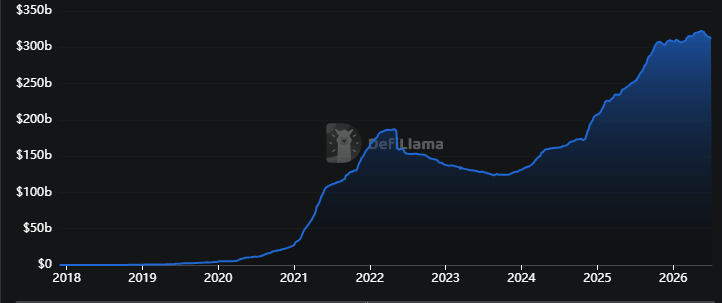
The issuance of USDT on Bitcoin represents an expansion for USDT, with the stablecoin already on several blockchain networks. Most of its supply remains on Tron and Ethereum, but it has been growing on Solana.
However, it remains unclear whether these efforts will translate into growth for USDT. The stablecoin’s circulating supply has been stuck around $180 billion for most of 2026. USDT stagnation highlights the broader struggle of the stablecoin market, where supply has also stayed in the $300 billion range for more than nine months.





