Bitcoin
 Solana
 Pearl
Pearl Zerebro
 Aerodrome Finance
 LayerZero
 NEAR Protocol

Key Insights:
- BlackRock purchased $34.7M in Ethereum as Bitcoin ETFs saw record outflows.
- Institutional Bitcoin exposure fell 23% in Q1 2025, per CoinShares data.
- Ethereum gained favor amid spot ETF anticipation and rising DeFi activity.
BlackRock bought $34.7 million worth of Ethereum while Bitcoin ETFs faced record outflows, highlighting a pivot in institutional preference as direct ETH allocations gain ground in Q2 2025.
Institutional Flow Shifts from BTC to ETH
Asset manager BlackRock has expanded its crypto portfolio with a fresh $34.7 million purchase of Ethereum (ETH), marking a shift in institutional sentiment as Bitcoin (BTC) exchange-traded fund (ETF) flows falter.
The news surfaced through social media accounts like @Ashcryptoreal and @rovercrc, both confirming BlackRock’s move into Ethereum with matching figures. The timing of the purchase came amid the largest daily outflow from BlackRock’s iShares Bitcoin Trust (IBIT) on record.

On May 30, IBIT saw more than $430 million in outflows, halting its 31-day streak of continuous inflows. That outflow followed a broader trend throughout the first quarter of 2025, during which institutional holdings in Bitcoin ETFs declined sharply.
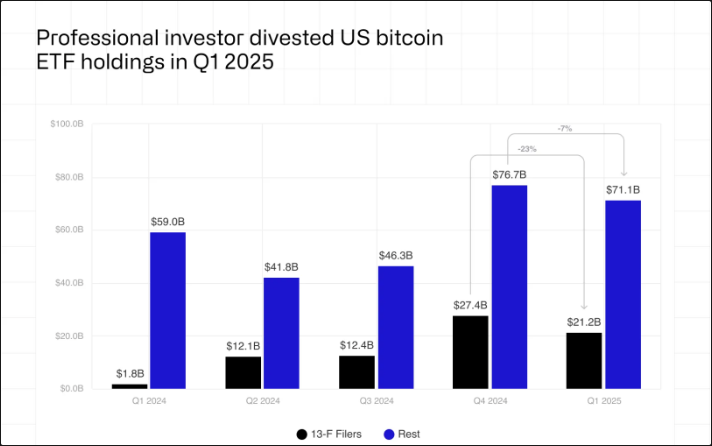
According to CoinShares data, total institutional Bitcoin exposure dropped from $27.4 billion in Q4 2024 to $21.2 billion in Q1 2025, a 23% decrease. While some of this reflected the 11% decline in Bitcoin’s price, the report noted active reductions in positions across several ETF vehicles.
ETH Demand Rises as Bitcoin Loses Favor
BlackRock’s Ethereum acquisition contrasts with its recent reduction in BTC-related inflows. The timing suggests a portfolio realignment strategy rather than wholesale exit from crypto exposure.
While institutional players reduced exposure to Bitcoin ETFs, companies used the same quarter to accumulate actual BTC for treasuries. CoinShares noted that Bitcoin treasury holdings hit 1.98 million BTC by the end of Q1, an 18.6% rise year-to-date. MicroStrategy alone added 15,355 BTC in late April and continued buying into June.
Meanwhile, Ethereum appears to be gaining favor among institutional allocators. The $34.7 million purchase adds to broader expectations of a spot Ethereum ETF approval in the U.S. this year. Traders see this as a potential catalyst for further ETH adoption.
Ethereum currently trades around $3,800, with rising capital inflows and increased network activity bolstering bullish outlooks. BlackRock’s direct allocation—outside an ETF wrapper—suggests growing institutional interest in Ethereum as a standalone asset.
Mixed ETF Sentiment Reflects Market Uncertainty
The diverging institutional trends between BTC and ETH arrive during a time of macro uncertainty. CoinShares noted that some money managers have shifted capital away from risk assets in favor of U.S. government bonds and cash equivalents.
However, that safety bid now shows signs of reversal as bond yields climb, making crypto assets like Ethereum more attractive in a low-confidence environment. CoinShares added that financial advisors actually increased their Bitcoin ETF holdings slightly during Q1, diverging from the trend of traditional asset managers.
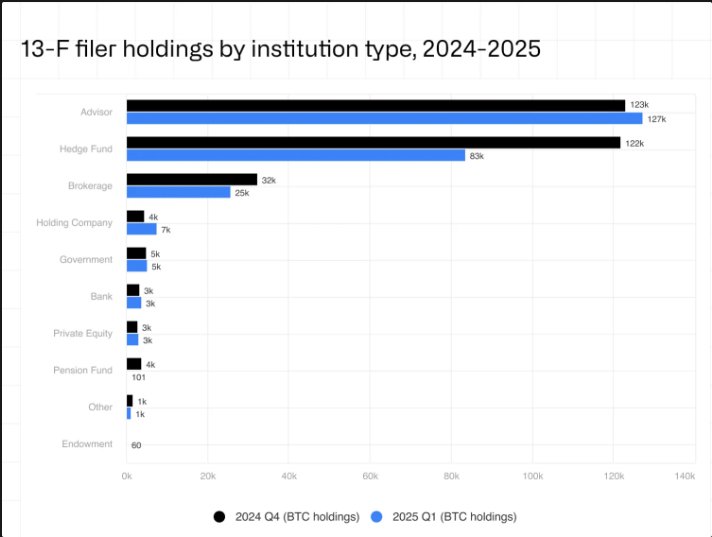
This divide points to changing strategies across institutional classes. While top-down ETF flows may show caution, bottom-up corporate treasury accumulation and select ETH purchases like BlackRock’s point toward long-term positioning.
ETH Outlook Brightens on Institutional Momentum
With over $34 million newly allocated, BlackRock has not only defied the broader BTC trend but may be signaling confidence in Ethereum’s next cycle.
Rising speculation over the approval of U.S. spot ETH ETFs continues to drive interest. Bloomberg analysts maintain that approvals are likely by the second half of 2025. SEC filings from firms like Fidelity and ARK Invest remain under review, with market observers closely watching regulatory developments.
BlackRock’s direct ETH acquisition could also be strategic front-running ahead of potential fund launches. The timing aligns with waning Bitcoin ETF enthusiasm, suggesting a pivot in institutional appetite.
The move reinforces Ethereum’s perceived resilience despite Bitcoin’s ETF-linked volatility. Data shows ETH outperformed BTC in Q2, supported by strong staking activity and rising decentralized finance (DeFi) volumes.
Bitcoin Remains Under Pressure
Despite large-scale treasury purchases by companies like MicroStrategy and Semler Scientific, Bitcoin ETF outflows continue to weigh on short-term sentiment.
IBIT’s $430 million daily outflow followed a strong month but highlighted growing profit-taking amid uncertainty. Bitcoin’s price hovered near $68,000 at the time, with volatility increasing ahead of the U.S. Federal Reserve’s June policy decision.
BlackRock’s dual exposure to both BTC and ETH underlines how large asset managers are navigating the shifting risk landscape. As ETF performance diverges from spot holdings, strategies appear to be evolving toward direct crypto allocation.
Disclaimer
In this article, the views and opinions stated by the author or any people named are for informational purposes only, and they don’t establish investment, financial, or any other advice. Trading or investing in cryptocurrency assets comes with a risk of financial loss.