no crying in the casino
 Pyth Network
 NEAR Protocol
 Starknet
 Quantus
 Pearl
Pearl Bitcoin
Key Highlights:
- TRON lending TVL drops by $2B despite TRX price gains and rising on-chain transaction activity
- Stablecoin usage on TRON grows 215% monthly, showing increased demand for payment settlements.
- TRX shows bullish signals on charts, but lending protocols see reduced participation across the network.
TRON (TRX) prices and network activity have been rising steadily. However, its lending protocols have seen a sharp $2 Billion drop in Total Value Locked (TVL).
This disconnect suggests shifting user behavior, with declining interest in lending on the platform. Meanwhile, stablecoin payments on TRON continue to surge.
Lending TVL Decline Amid Rising TRX Prices
According to the recent data, the lending TVL of TRX has decreased significantly. Nearly $2 billion in value has exited the network’s lending protocols quickly. This drop comes although the TRX token has been seeing a steady upward trend in price.
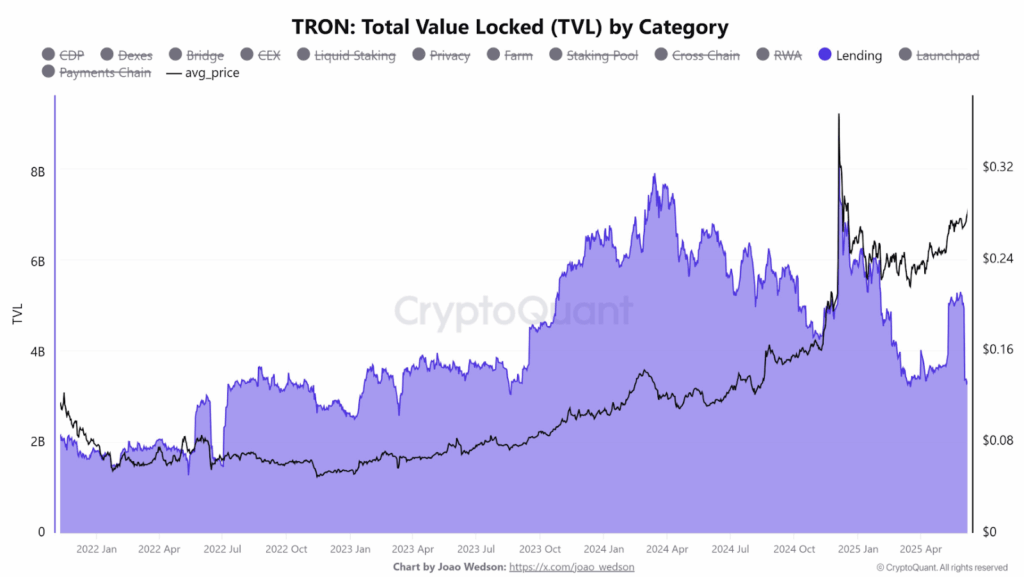
At press time, TRON was trading at $0.29169 with a 2% increase in the last 24 hours. Such a surge in price is usually a catalyst for more participation in lending platforms.
But here, the opposite is happening, lending protocols are dropping sharply. Traditionally, when the price goes up, more people lock their funds in lending platforms, but that seems to be changing.
TRON’s Growing Activity Despite Lending Drop
Even though lending has taken a downturn, TRON’s network activity has increased. Stablecoin usage on TRX has surged significantly. Over 60% of its on-chain transaction volume now consists of stablecoin payments.
Between January 2023 and February 2025, the TRON network has processed more than $94 Billion in stablecoin payments.
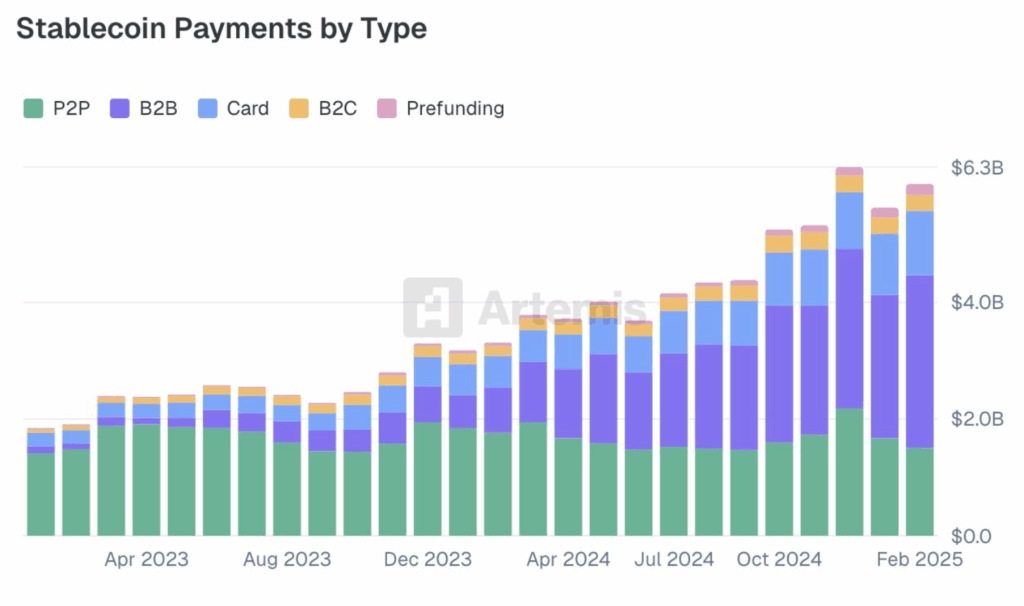
The increase in the usage of stablecoins shows the increasing need for cryptocurrency to be a settlement layer. Strong adoption has been shown by the 215% increase in monthly volume of stablecoin transactions on the network.
The platform’s dominant stablecoin is Tether (USDT), which accounts for over 80% of these transactions. Meanwhile, other TRON sectors are doing well, while lending is still stagnant.
Stablecoin transactions and the overall usage of the network are growing, which suggests the platform’s increasing influence. The number of daily active accounts on TRON constantly rises, with more than 3 million active users.
This also shows the relevance of the network in the blockchain ecosystem, as the network is rapidly adopted. TRON has significantly improved its on-chain fee processing.
Over the past year, it has handled more transactions than Ethereum, Bitcoin, and Solana combined. As a result of this boost in TRON’s network activity, the entire platform usage has increased.
One thing that stands out is that despite the overall activity rising, there is not much participation in lending protocols. This may imply that users are more interested in other ways of interacting with the network.
Technical Analysis of TRON’s Current Market Performance
Furthermore, on the 4-hour chart, TRX was in bullish momentum. This happened because the price had just broken through key resistance levels. The green Supertrend indicators indicate that the price is still on an uptrend and is currently trading at $0.29169.
The blue line is above the orange line, a positive cross on the MACD. It means that we are looking at a bullish outlook.
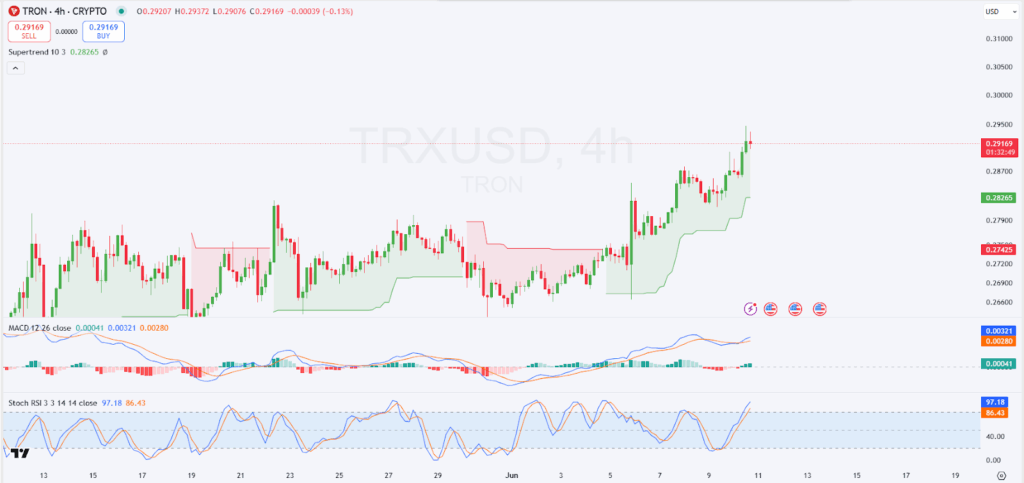
Stochastic RSI is at 97.18, which is in the overbought zone and shows strong bullish momentum. However, it also indicates that the asset may start pulling back soon.
TRON has consistently formed higher highs in the recent price movement, which means the surge could continue.
However, with the bullish indicators, caution is advised as the overbought level on the Stochastic RSI could trigger a reversal. If the selling pressure increases, the price may pull back and continue the bullish trend.
Disclaimer
In this article, the views and opinions stated by the author or any people named are for informational purposes only. And they don’t establish the investment, financial, or any other advice. Trading or investing in cryptocurrency assets comes with a risk of financial loss.