
 Bitcoin
 Starknet
 Pearl
Pearl ZKsync
 NEAR Protocol
 Quantus
 Zerebro

Key Insights:
- GameStop revenue missed Wall Street estimates, dropping 17% year-on-year.
- Company returned to profit, posting $44.8 million net income for Q1.
- GameStop bought 4,710 BTC, worth roughly $513 million between May 3 and June 10.
GameStop shares fell after-hours despite a turnaround profit and Bitcoin buy, as revenue disappointed Wall Street expectations.
Q1 Miss Sends GME Lower Despite Profit and BTC Purchase
GameStop Corp (NYSE:GME) dropped 3.5% in after-hours trading on Tuesday, slipping to just over $29 after posting mixed Q1 results. While the company swung to a net profit and confirmed a major Bitcoin purchase, revenue fell short of expectations.
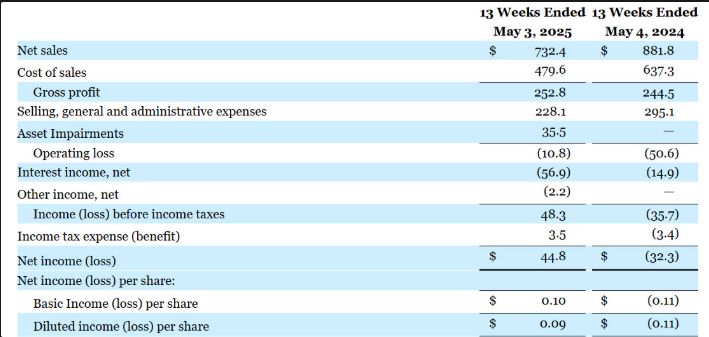
The video game retailer reported $732.4 million in net sales for the first quarter ending May 3, a 16.9% year-over-year decline and a 2.9% miss on Wall Street estimates of $754.2 million. That drop, down from $881.8 million in Q1 2024, highlights persistent demand challenges in the physical game sales business.
The firm’s net income reached $44.8 million—up from a $32.3 million loss in the same quarter last year—driven by a tighter cost structure and stronger gross margins. Operating losses narrowed sharply to $10.8 million from $50.6 million last year, reflecting what analysts described as “operational improvement” amid top-line contraction.
Bitcoin Makes Its Way to GameStop’s Balance Sheet
The quarterly filing also confirmed GameStop’s move into digital assets. Between May 3 and June 10, the company purchased 4,710 Bitcoin (BTC), worth approximately $513 million at the time of acquisition. GameStop said it would finance the buy through a $1.3 billion convertible notes offering announced in late May.
The decision places GameStop among a growing group of public companies, including MicroStrategy and Tesla, that now hold Bitcoin as a reserve asset. However, the company has not revealed a long-term holding target and left the door open to liquidating the stash if necessary.
A comment from Swan Bitcoin executive Andy Edstrom on X described GameStop’s move as one that would “bake the noodles” of traditional finance (TradFi), underscoring how legacy companies are increasingly adopting crypto.
Improved Margins, Yet Revenue Signals Ongoing Struggles
Despite the bullish narrative around profitability and Bitcoin adoption, revenue weakness remained the market’s focus. GameStop’s operating margin stood at -1.5%, a notable improvement from -5.7% in the prior year, while adjusted earnings per share hit $0.17—well above the analyst consensus of $0.04.
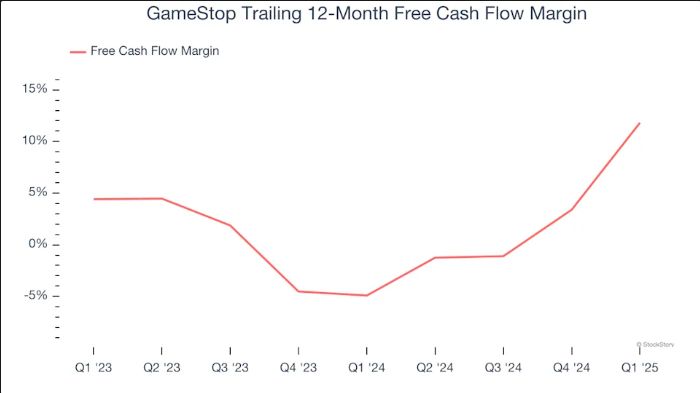
Free cash flow also turned positive, rising to $189.6 million from a negative $114.7 million last year. That boosted GameStop’s total liquidity to $6.4 billion in cash, equivalents, and marketable securities, up from $1 billion in the previous year. This sizable war chest could enable further strategic moves, including more Bitcoin acquisitions.
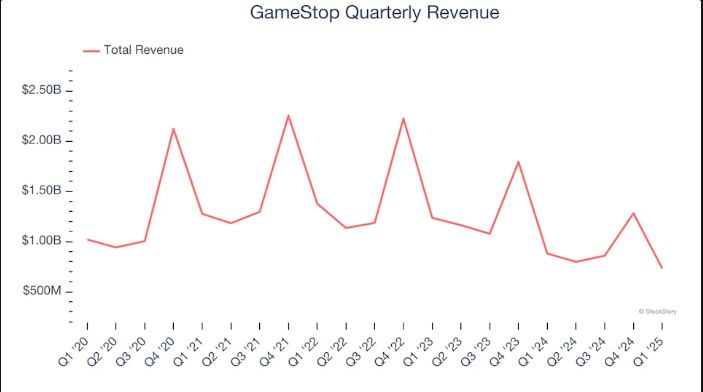
Still, long-term trends remain unfavorable. Over the past six years, GameStop’s sales have declined 12.3% annually. Sell-side analysts now expect another 6% drop in the next 12 months. The company, once central to the 2021 WallStreetBets frenzy, has yet to find a sustainable growth path post-pandemic.
Flat Price Action Signals Investor Uncertainty
GameStop stock has remained relatively flat over the past month and is down 3.8% year-to-date. The decline follows a modest rally earlier in May, when the company first hinted at its Bitcoin exposure. However, the after-hours dip post-earnings underscores investor concern that Bitcoin buys and profit surprises may not be enough to offset structural revenue issues.
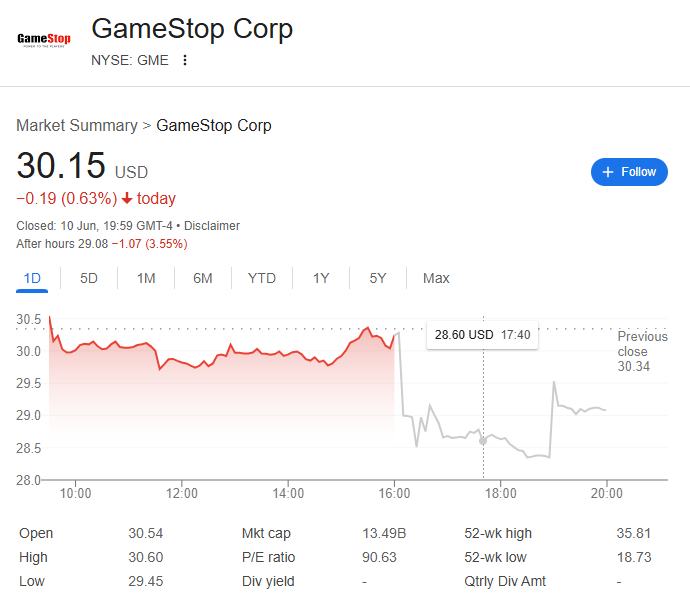
The stock reached an all-time high of just above $80 in Jan. 2021, during the height of the retail trading surge. Tuesday’s close at $29.08 reflects a 63% drop from that peak, reinforcing the market’s skepticism about GameStop’s transformation efforts.
While the firm’s crypto pivot and improved cash flows offer new optionality, its core business faces headwinds from digital game distribution and reduced in-store traffic.
GameStop’s Q1 results highlight a company in flux. Operational efficiency and digital asset adoption show promise, but shrinking sales and investor skepticism cloud the outlook. With a $13.57 billion market cap and a volatile stock history, GameStop’s next moves—especially in Bitcoin—will remain under tight market scrutiny.
Disclaimer
In this article, the views, and opinions stated by the author, or any people named are for informational purposes only, and they don’t establish the investment, financial, or any other advice. Trading or investing in cryptocurrency assets comes with a risk of financial loss.



