
 Doge Pepe
 Crawlerpad
 Quant
Quant Pearl
Pearl Starknet
 Optimism
 Zylo Ecosystem
Key Insights:
- The U.S. House passed the GENIUS Act 308–122, setting a federal stablecoin framework.
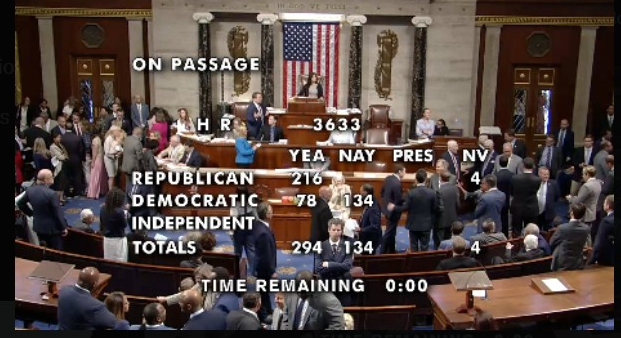
- The CLARITY Act passed 294–134, defining digital asset regulation and SEC–CFTC roles.
- President Trump is expected to sign the GENIUS Act into law at a White House event.
The U.S. House of Representatives passed two comprehensive crypto bills, the GENIUS Act and the CLARITY Act. This moved the United States toward enacting its first major federal crypto regulations.
After years of regulatory uncertainty and delay, the bipartisan votes mark a pivotal shift in Congress’s stance toward digital asset oversight.
Notably, the Guiding and Establishing National Innovation for U.S. Stablecoins (GENIUS) Act passed with a vote of 308–122 and now heads to President Donald Trump. The US president is expected to sign it into law on July 18 at a White House ceremony.
On the same day, the House also passed the Digital Asset Market Clarity Act (CLARITY) by a vote of 294–134, sending it to the Senate for further review.
GENIUS Act Establishes Federal Framework for Stablecoins
The GENIUS Act will introduce a national regulatory framework for issuing and supervising U.S. dollar-backed stablecoins. Its passage marks the first time Congress has passed specific legislation for stablecoin issuers operating within the United States.
Stablecoin issuers must maintain reserves equivalent to their token liabilities in high-quality liquid assets. These include cash, Treasury bills, and other short-term government instruments.
Under the GENIUS Act bill, insured depository institutions at the national level will fall under the supervision of the Federal Reserve. Concurrently, qualifying state-chartered entities can issue stablecoins under comparable standards.
The legislation includes provisions for reserve disclosure, risk management, and mandatory attestation filings to ensure transparency.
Moreover, consumer protections are also included in the framework. Stablecoin issuers must allow redemption at par value within defined time limits, and segregation rules have been introduced to prevent the unauthorized reuse of reserve assets.
These measures will ensure accountability and prevent misuse of customer funds, which has been a concern in past industry failures.
Clarity Act Defines Jurisdiction for Digital Asset Markets
On the other hand, Clarity Act sets boundaries for digital asset classification and creates a pathway for legal trading of decentralized tokens. The bill guides the United States Securities and Exchange Commission (SEC) and the Commodity Futures Trading Commission (CFTC) in developing a common registration framework.
This would allow the digital asset platforms to be registered with both the agencies and with similar custody, trading and disclosure standards.
Under this joint framework, digital assets that meet functional tests for decentralization and adequate public float would fall outside the scope of securities law. The act requires that issuers conducting sales to U.S. residents file initial information disclosures and provide scaled documentation based on market capitalization.
These steps are designed to facilitate legal token trading and improve investor visibility across platforms.
The legislation also calls for banking supervisors to formally recognize qualified custodians of both stablecoins and other digital assets. These custodians must comply with standardized segregation and auditing protocols to operate legally under the proposed rules.
Bipartisan Support Raises Expectations for Senate Review
Also, a bipartisan trend seen in the House votes indicated a changed attitude in Congress regarding the legislation of digital assets. More than 100 democrats voted with the republicans to approve the GENIUS Act. This result will be one of the reasons that pressure the Senate to take action.
Chair of the Senate Banking Committee, Senator Tim Scott, hoped to have Senate market structure legislation passed by September 30. He acknowledged that the House’s version provided a viable starting point for further Senate action.
However, the Senate chamber is expected to introduce changes, reflecting its policy preferences and ongoing drafting work.
Presidential Action Set to Finalize First U.S. Crypto Law
In the meantime, the GENIUS Act has now been put in a position to be the first significant U.S. crypto-related law ever signed into action. The leadership in the House made it possible to enroll the bill on the same day after approval, making it easier to prepare to be presented before the president.
President Donald Trump recently reaffirmed his commitment to pass the crypto legislation, vowing to push the GENIUS Stablecoin Act through.
According to statements from sources, including Galaxy’s head of research, Alex Thorn, Trump will sign the GENIUS Act during a Friday event at the White House.

The CLARITY Act, meanwhile, faces a longer legislative path in the Senate. Nonetheless, the two acts represent the most advanced and coordinated federal effort to regulate digital assets in the US.





