
 Pearl
Pearl Bitway
 Pudgy Penguins
 Optimism
 Walrus
 NEAR Protocol
 Pons
Pons

Bitcoin price narrative shifted this week after BlackRock CEO Larry Fink acknowledged his past criticism of crypto and admitted his views had changed. His comments arrived as the U.S. Securities and Exchange Commission blocked several 3–5x leveraged crypto ETF applications, citing existing exposure limits under the Investment Company Act of 1940. The two developments created a contrasting backdrop for institutional sentiment and crypto market structure.
Fink once called Bitcoin “an index for money laundering and thieves.” He now leads the world’s largest Bitcoin exchange-traded fund through BlackRock’s IBIT product. He said strong views do not guarantee correctness and pointed to thousands of conversations with clients and policymakers as the catalyst for updating his stance. His remarks underscored a broader institutional willingness to reconsider Bitcoin after heavy engagement with regulated products.
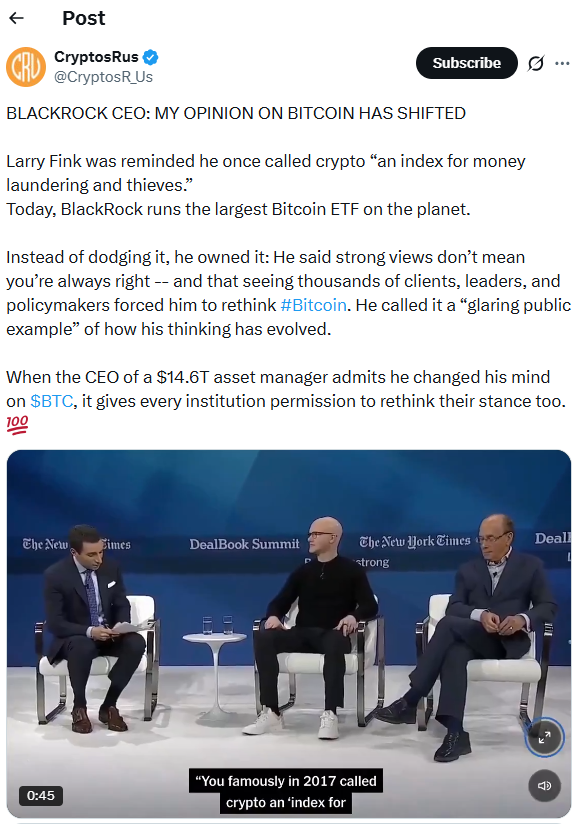
The comments circulated widely after CryptosRus shared excerpts on X. He highlighted Fink’s decision to “own” his shift rather than evade it. Observers noted the timing, given BlackRock’s growing ETF footprint and persistent institutional demand for regulated Bitcoin exposure.
SEC Blocks Leveraged Bitcoin Crypto ETFs as Risk Limits Hit
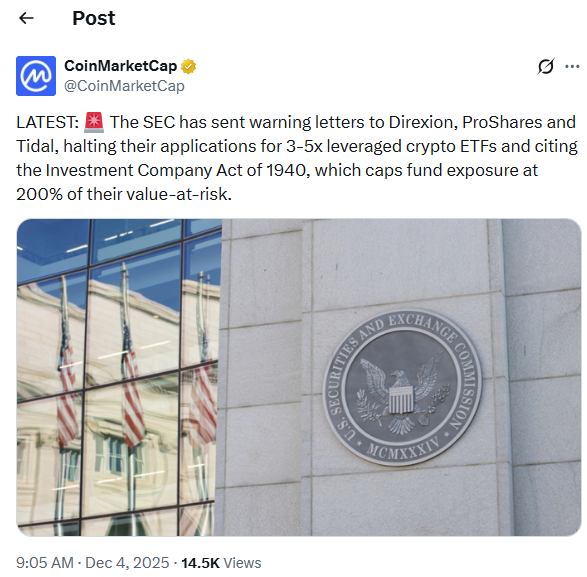
The regulatory environment tightened hours later. The SEC halted high-risk 3–5x leveraged crypto and stock ETF proposals. The warning letters cited Rule 18f-4, which caps fund exposure at 200 percent of value-at-risk. Volatility Shares submitted the boldest applications, seeking 5x leveraged ETFs tied to Bitcoin, Ether, Tesla, and Nvidia.
These products aimed to magnify a 10 percent daily move into a 50 percent swing, raising questions about risk concentration. The firm filed 27 different leveraged ETF proposals across crypto and equities. The list included products covering Solana, XRP, and Strategy. The freeze reaffirmed the agency’s long-standing position that 2x leverage is the practical ceiling under current rules.
CoinMarketCap reported that Direxion, ProShares, and Tidal also received warning letters. The letters halted their 3–5x applications as well. The agency cited the same exposure rules, reinforcing its unified stance across issuers. The action effectively paused expansion of leveraged crypto ETFs until Congress or regulators revise the structural framework.
Market analysts said the halt removed near-term speculation about aggressive leveraged crypto products entering mainstream trading. It also highlighted the regulatory contrast between spot approvals and leverage restrictions. The decision created a clear boundary between passive exposure and amplified directional bets.
Bitcoin Crypto ETFs Break Inflow Streak as Institutional Dynamics Shift
The ETF news coincided with new fund flow data. Wu Blockchain reported that U.S. spot Bitcoin ETFs saw a net outflow of 14.90 million dollars on Dec. 3. The move ended a five-day inflow streak. It introduced a minor cooling period after steady demand through late November.
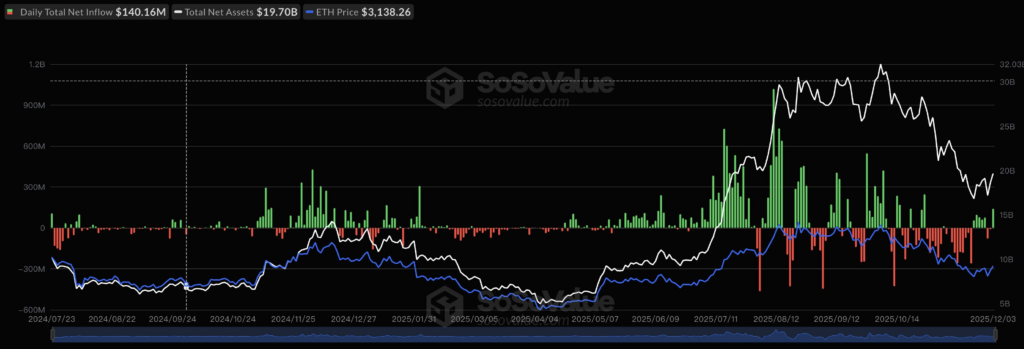
BlackRock’s IBIT posted a daily inflow of 42.24 million dollars, leading all issuers. The strength reflected persistent demand from institutional allocators who prefer the largest and most liquid product. Meanwhile, spot Ether ETFs recorded 140 million dollars in net inflows. U.S. Solana spot ETFs reported $ 32.19 million in net outflows.
The rotation across assets indicated shifting institutional preferences. Ether’s inflows contrasted with Bitcoin’s brief outflow. Solana’s outflows suggested declining appetite for higher-beta exposure. Market participants viewed the data as a normal adjustment phase rather than a structural reversal.
The Bitcoin price hovered within recent ranges as these flows circulated. Traders monitored whether renewed institutional optimism from BlackRock’s leadership would outweigh the regulatory freeze on leveraged products.
Fink’s Shift Raises Institutional Questions Amid Tight Regulation
Fink’s public reversal placed renewed attention on Bitcoin’s role in global portfolios. He said leadership required adapting to new evidence and feedback. His comments framed Bitcoin as a “glaring public example” of evolving thinking inside major asset managers. The remarks signaled acceptance rather than enthusiasm, but the tone suggested durable institutional engagement.
The timing mattered. BlackRock’s ETF already commands heavy volume and large custodial activity. Institutions tend to follow liquidity, and liquidity now converges around IBIT. Fink’s comments may support continued inflows as allocators justify internal policy shifts.
However, the SEC’s freeze reminded markets that institutional growth still depends on regulatory boundaries. The agency maintained strict limits on leverage despite expanding the spot ETF market. The dual messaging created a nuanced landscape: broader access to Bitcoin, but disciplined guardrails around high-risk derivatives.
Wu Blockchain’s data reinforced this theme. Strong IBIT inflows amid sector-wide outflows suggested institutions favored stability over speculation. Ether’s inflows added another layer, as traders positioned around ecosystem developments and ETF demand.
Market Outlook as Bitcoin Price Holds Key Range
The Bitcoin price held steady despite the contrasting signals. Traders balanced cautious ETF flows against Fink’s updated stance. They monitored regulatory tightening while acknowledging expanding institutional comfort.
The week demonstrated how Bitcoin’s institutional narrative continued to evolve through leadership pivots, regulatory decisions, and shifting fund flows.




