
 Pearl
Pearl Bitway
 Pudgy Penguins
 Optimism
 Walrus
 NEAR Protocol
 Pons
Pons

South Korea’s stablecoin race is gaining speed as fintech firms, banks, and technology groups move early to secure a place in the next phase of digital finance. Toss, operated by Viva Republica, has now made its position clear after saying it wants to participate in both stablecoin issuance and distribution.
Seo Chang-hoon, managing director at Viva Republica, presented Toss’s stablecoin strategy at the 2026 Blockchain Meetup Conference in Seoul. He said the company sees stablecoins as part of a new financial structure in which value flows through protocols rather than through multiple financial intermediaries.
Stablecoin News: Toss Sets out Dual Role in Issuance and Distribution
In recent stablecoin news, Toss framed its strategy around what it called the shift from “Money 2.0” to “Money 3.0.” In that model, stablecoins move beyond standard digital payments and become programmable financial tools. The company wants to build an infrastructure that combines artificial intelligence, blockchain, and stablecoin-based services into a single consumer-facing ecosystem.
Additionally, the company said its large user base could help support adoption without requiring separate wallets or complex onboarding. That approach matters in South Korea, where digital payments are already deeply embedded in daily life. Toss also pointed to its role in remittances and digital finance as a base for expanding into stablecoin services.
Seo said Toss is preparing for both issuance and distribution rather than taking a narrower role. That position gives the company room to compete across several layers of the stablecoin value chain. It also places Toss in direct competition with banks seeking a stronger role in issuance and with technology firms seeking control over retail distribution.
Lee Jae-myung’s pro-crypto agenda could give more momentum to stablecoin development in South Korea as firms position ahead of clearer rules. In that setting, Toss’s plan to handle both issuance and distribution puts it in competition with banks on issuance and tech platforms on retail reach.
Korea’s Stablecoin Market Draws Banks and Tech Firms
South Korea has become one of the most active retail markets for digital assets and digital payments. More than 18 million people are estimated to have exposure to digital assets, while digital payment tools already reach most of the population. That makes the country a natural testing ground for stablecoin adoption across consumer and merchant use cases.
South Korea’s interest in a KRW stablecoin is linked to the structure of its financial market. Local companies and policymakers want to reduce dependence on dollar-backed stablecoins. A won-based stablecoin could strengthen local payment systems, speed up settlement, and keep more reserve value within South Korea’s financial sector.
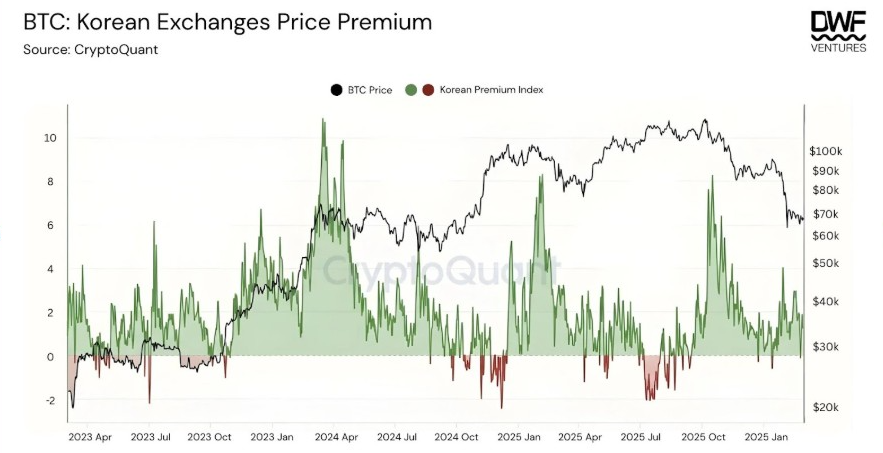
BTC has often traded at a premium on Korean exchanges, with spreads reaching as high as 10% during periods of stronger demand. That pricing gap points to demand for deeper KRW liquidity and supports the case for a local stablecoin market.
The stablecoin news shows banks remain central to the discussion as regulators have shown support for strong compliance controls. Meanwhile, firms similar to Toss, linked projects and foreign stablecoin players are positioning for roles in payments, wallets, infrastructure, and on-chain settlement.
Stablecoin Regulation and Trust Now Shape the Next Phase
The future of the KRW stablecoin market now depends on regulation, issuer control, and trust. South Korean lawmakers are weighing the framework that will govern stablecoin issuance and digital asset operations. The main policy question is whether issuance will stay bank-led or whether private fintech and technology firms will gain direct access.
Trust remains a key issue because stablecoins need clear oversight and transparent backing. Toss said its financial licenses, data systems, user authentication tools, and offline payment network could help support adoption within regulatory rules. The company also said these features could make blockchain-based financial services easier for users to access.
The broader debate also covers reserve management, verifiability, anti-money laundering controls, and the structure of redemption and settlement. These rules will likely determine which firms can lead issuance and which will focus on distribution, infrastructure, or consumer applications.




