Zylo Ecosystem
 Walrus
 Pudgy Penguins
 Pearl
Pearl Bitcoin
 Aerodrome Finance
 Quantus
- Axelar network provides a universal interoperability solution for the Web3 ecosystem.
- It is based on CGP, and CTP protocols and provides SDKs and APIs to developers.
Blockchains today offer interesting features of decentralized networks, dApps, meta-games, NFT marketplaces, and cryptocurrencies among others, but still, they are in their infancy. A major issue within the Web3 ecosystem is the interoperability within the several blockchains. While using a Web2 application like Google Meet, people are not worried about the underlying network which connects the people. We deal with more important issues like internet connectivity, mic, and camera problems, along with buffering issues. Such a seamless and smooth experience which is fundamental for Web2 is still far from Web3.
The different blockchain networks like Ethereum, Cardano, Celo, Near, and Cosmos among others have several dApps on their platforms. However, their use is limited only to the people who hold the native tokens of these blockchains, limiting the use of the ecosystem. To bridge so many networks, many advancements are required, which prompts a serious scaling issue.
There have been some previous attempts to address the issues of interoperability by using centralized exchanges, interoperability ecosystems, token bridges, or wrapped assets. Polkadot and Avalabs use interchain communication protocols to allow interoperability among their various sidechains. Centralized exchanges can list different assets on their platforms. However, they have security issues along with not being transparent and having closed governance. All these solutions require heavy work from application builders and developers and are difficult to understand by a common user.
Is it possible to allow developers to choose the best platform for developing and still access the user base of other blockchains? Can the users interact with any dApp of any network with a single wallet? There is a need for a universal network.
What Is Axelar?
Simply put, Axelar is another blockchain that bridges other blockchains. It provides a universal interoperability solution for Web3 through an infrastructure that allows dApps to interact with any other app on any chain with a single click. The platform runs on Delegated Proof-of-Stake Consensus (DPoS) and is composed of routing architecture, gateway contracts, software development kits (SDKs), and Application Programming Interfaces (APIs) to allow cross-chain communication.
Technology, Protocols, and Features
- Cross-chain Gateway Protocol (CGP)
This protocol allows multiple blockchains to communicate with themselves and helps in routing across them. Using these protocols, the developers do not need to make any specific changes in their system or use any custom-built language. Possibilities through this protocol:
- Post an Ethereum block header to the Bitcoin network.
- Transfer of ether to the Bitcoin blockchain and back to the Ethereum network.
- Cross-Chain Transfer Protocol (CTP)
This protocol is a typical example of Application Level Protocol which rests above routing technologies like CGP and allows developers to connect their apps with different chains and fulfill cross-chain requests. CTP queries are analogous to HTTP/HTTPS on the internet. These applications are run using three components:
- a front-end user interface
- an intermediary node, and
- smart contracts running on one chain.
- Decentralized Network
This consists of independent validators that are responsible for executing transactions and maintaining the network. They ensure that a transaction is valid and then forward it to the blockchain it belongs to. It also helps track its finality.
- Gateway Smart Contracts
These gateways and network validators form the base of Axelar infrastructure. These gateways are smart contracts enabling communication between Axelar and other Layer-1 blockchains.
- Developer Tools
These are the tools and libraries that allow easy access for developers to Axelar. These APIs and SDKs allow developers to jump across two chains in a single jump.
The Axeler Network can be accessed in four ways.
- A developer through APIs and SDKs.
- A node and validator who participates in the underlying functioning of the network.
- A person who is handling the amalgamation of a new network and Axelar.
- A user using Axelers latest inter-chain asset transfer platform, Satelite.
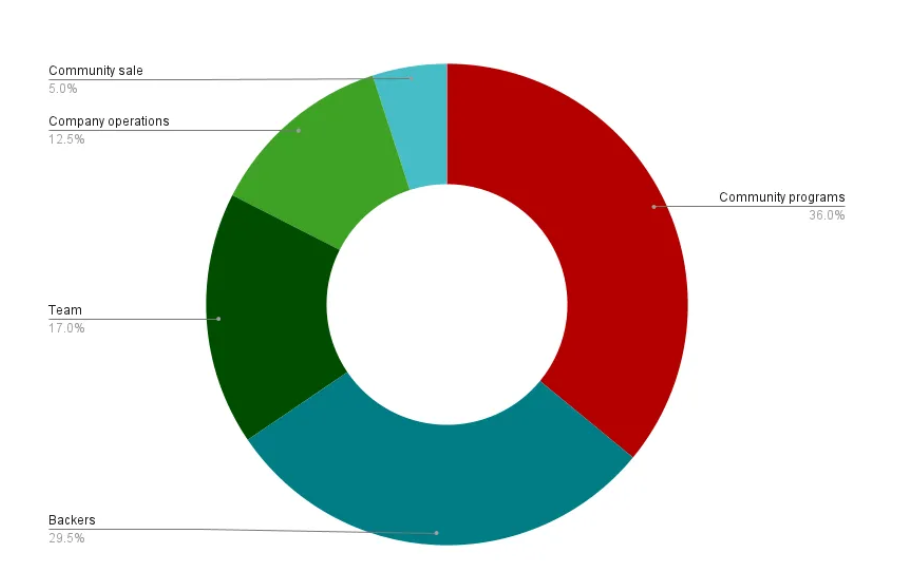
Tokenomics AXL
AXL is the native token of the network. It is used by validators for staking under PoS, collecting rewards in AXL, and participating in voting and governance-related decisions. It also aids in paying the transaction fees. The network has also launched axlUSDC which is the wrapped USDC coin for Axelar.
Final Thoughts
Web3 is still in its developmental stage. Axelar holds the potential to make Web3 interoperable and produce immense opportunities for users across the globe. The network is powered by Tendermint and assisted by permissionless validators committed to making the network secure and more decentralized.