
 astronaut
 Pearl
Pearl Zcash
Zcash Walrus
 NEAR Protocol
 Starknet
 Pudgy Penguins

Bitcoin price hovered near short-term support on Dec. 10 as traders positioned ahead of the Federal Open Market Committee decision. Historical data showed six corrections after seven meetings this year. Only one produced a brief rally, according to Ali Martinez.
That pattern mattered because Bitcoin traded inside a fragile technical structure. A rate-cut decision was already factored into market expectations. Traders watched for another “buy the rumor, sell the news” response.
Bitcoin price also moved higher while derivatives participation weakened. That divergence raised questions about the durability of the latest rebound. On-chain data pointed to base-building, not recovery, according to CryptosRus.
FOMC History Shows Bitcoin Struggled After Most Decisions
Martinez said Bitcoin corrected after six of seven FOMC meetings in 2025. Only one meeting delivered a short-term upside move. The rest produced pullbacks within days.
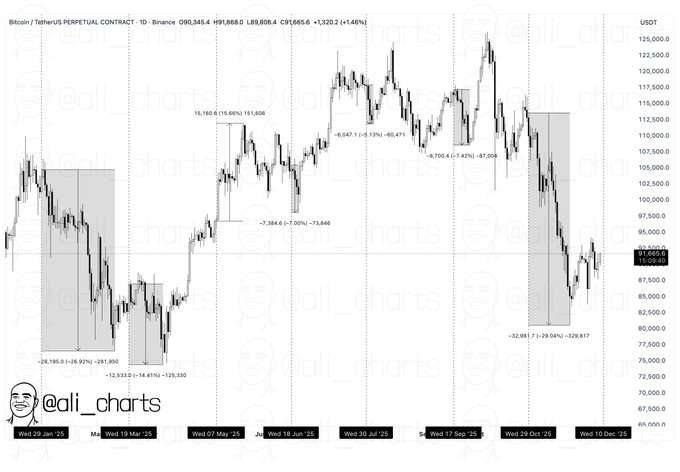
Historical context supported that view. A 25-basis-point cut in Sept. 2025 triggered a muted Bitcoin reaction. In another case, Bitcoin hit a four-week high before sliding about $2,000.
Volatility also increased after prior rate decisions. Bitcoin was ahead of announcements in Sept. and Oct., then faded afterwards. Traders repeatedly sold strength once policy clarity arrived.
That pattern reinforced the “buy the rumor, sell the news” setup. Liquidity and leverage conditions decided the size of each move. The current meeting followed the same pre-event structure.
Open Interest Fell While Bitcoin Price Recovered
Derivatives data added another layer of caution. Bitcoin price advanced while open interest continued to slide after Nov. 21. That divergence suggested the rebound relied on spot demand, not leverage.
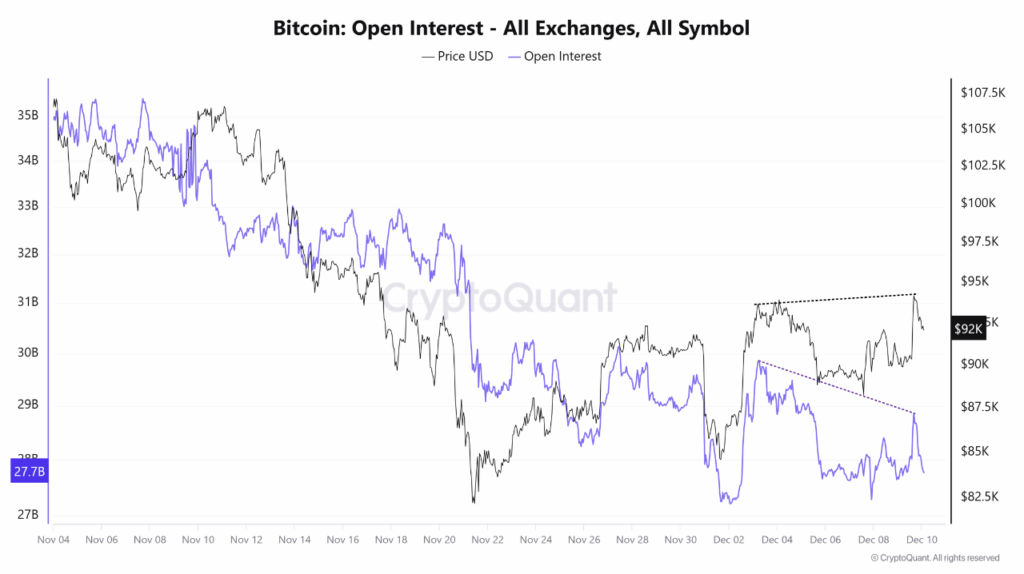
Market data showed open interest fell steadily even as Bitcoin printed higher highs. Analysts said that pattern limited follow-through potential. Strong trend expansions usually require rising leverage participation.
Derivatives volume still dwarfed spot activity. The Bitcoin trading volume ratio showed that spot accounted for only about 10% of total market volume. Futures continued to dominate price discovery.
That structure made Bitcoin price sensitive to positioning shifts. A leverage reset often preceded both strong rallies and sharp reversals. Current data showed neither aggressive long buildup nor panic unwinding.
On-Chain Data Framed the Move as Base Formation
CryptosRus described the market phase as foundation-building, not recovery. The 30-day realized profit and loss ratio remained below the flip point. That showed traders had not entered profit-driven distribution.
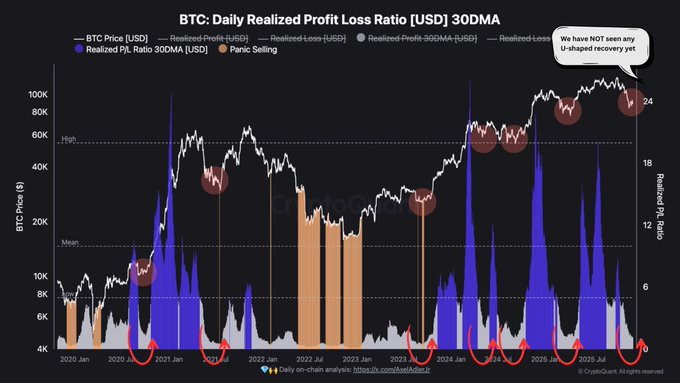
There was also no surge in panic selling. Weak hands exited earlier during the corrective phase from October. Price then moved sideways as stronger holders absorbed supply.
The analyst said durable bases formed through time, not speed. Price usually chopped within a range before broader participation returned. Sentiment often improved before the structure was confirmed.
That view aligned with weakening derivatives interest. Without speculation-driven leverage, the price moved more slowly but steadier. The setup favored positional traders over momentum chasers.
Federal Reserve Rate Cut Expectations Already Priced In
Market commentary warned that the expected rate cut already sat inside current Bitcoin price action. Lower rates typically weakened the U.S. dollar and supported risk assets. Still, immediate crypto reactions often remained mixed.
Past examples showed Bitcoin reacting briefly, then fading. Even a supportive macro policy failed to lift prices sustainably without leverage expansion. Traders remained cautious ahead of confirmation.
Funding rates and open interest remained key short-term indicators. Rising long-side funding would signal renewed speculative appetite. That signal had not appeared yet.
Exchange flows and exchange-traded fund activity also stayed under watch. Liquidity from those channels often dictated directional follow-through after macro announcements.
Technical Structure Shows Bitcoin Coiling Near Support
The current chart structure showed Bitcoin price holding above short-term rising support. The rebound followed a deeper November drawdown. Price remained trapped beneath a broader descending resistance zone.
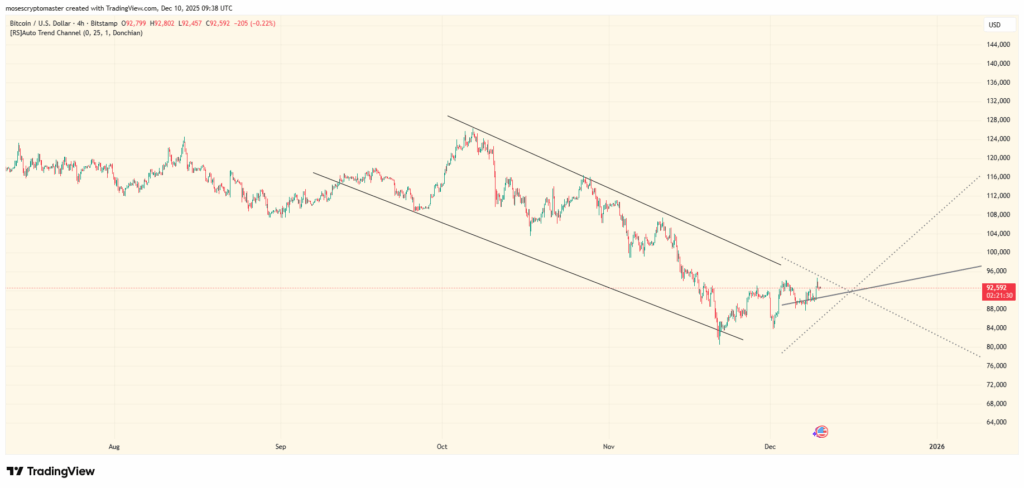
That structure reflected compression rather than breakout. Bulls defended the lower boundary near recent lows. Sellers controlled upside reactions near the falling trendline.
A breakout would require both price expansion and rising derivatives interest. Without open interest confirmation, upside attempts risked fading into resistance.
A downside break would place prior November lows back into focus. That scenario would likely coincide with falling funding rates and renewed spot outflows.
What Traders Watched After the FOMC Decision
The immediate reaction to the Federal Reserve decision remained critical. Traders watched whether funding rates and open interest turned higher alongside price. A synchronized move would signal renewed trend energy.
If Bitcoin price pushed higher without leverage support, fades remained likely. That pattern defined most of 2025’s post-meeting performance. History leaned toward caution, not follow-through.
If downside volatility emerged, analysts expected buyers near the base structure. That area represented the zone where long-term holders previously absorbed supply. A clean break below would invalidate the base thesis.
Bitcoin price sat between fading sell-the-news risk and slow accumulation behavior. The next derivatives signal, not the rate cut itself, likely decided the next directional move.




