
 Puffer
 ZKsync
 Bitcoin
 NEAR Protocol
 Pearl
Pearl Quantus
 Sui
Sui
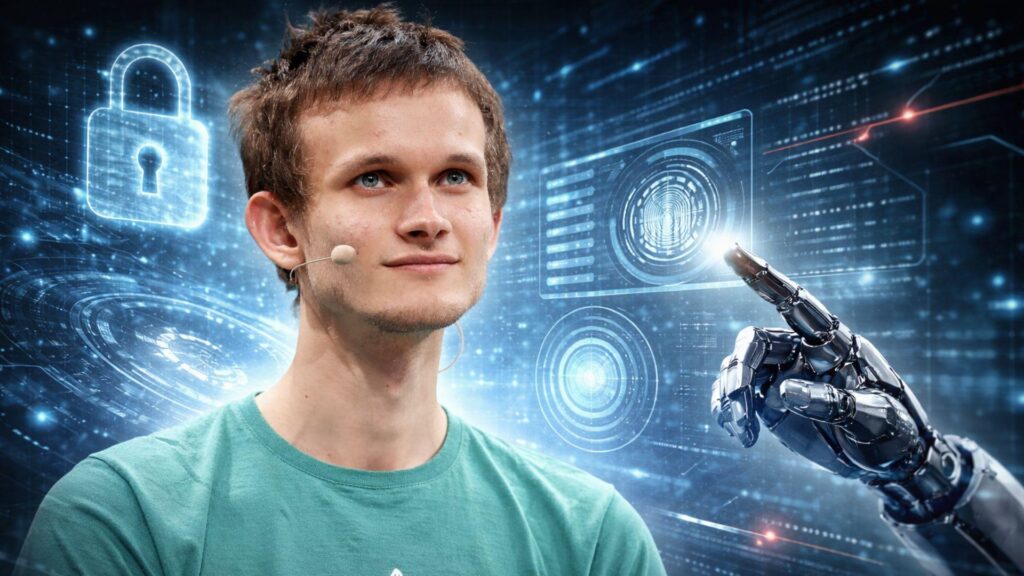
Artificial intelligence tools are becoming more capable, but the privacy risks they pose are increasingly hard to ignore. Ethereum co-founder Vitalik Buterin has drawn attention to that shift, warning that newer AI systems may expose users to data leaks, external interference, and actions taken without clear approval. His concern centers on AI agents that can go beyond answering questions to perform tasks, access files, and interact with other software. In response, he has pointed to local-first AI setups as a safer way to reduce reliance on cloud-based systems and keep sensitive data closer to users.
Vitalik Buterin: Remote AI Systems Face Growing Security Questions
In a recent blog post, Buterin argued that many current AI products rely too heavily on remote infrastructure. That model often requires users to send personal data through servers controlled by outside providers. As a result, emails, documents, browsing activity, and other private information may be exposed to risks beyond users’ ability to fully monitor.
The concern grows as AI tools move from chatbot functions to autonomous agents. These systems can follow instructions, connect to external services, and complete multi-step actions with little friction. That convenience also creates new openings for abuse, especially when malicious prompts or harmful web content influence the model’s behavior.
He cited existing research showing that some of these weaknesses are already evident in practice. In one example, an AI agent reportedly processed a malicious webpage and then executed a shell script, giving outside actors control over part of the system. Other findings showed that some tools could leak data through hidden network requests. A separate review found that around 15% of observed agent skills contained harmful instructions.
Local-First AI Gains Attention
To limit those risks, Vitalik Buterin described a local-first setup built around on-device inference, local storage, and strict process sandboxing. The idea is to keep AI tasks on the user’s machine whenever possible rather than routing them through third-party servers. That approach can reduce exposure to data collection and make it harder for external actors to interfere with the system.

He also raised concerns about how some models are built and distributed. In his view, many tools labeled as open-source do not offer full transparency into how they operate. That leaves users with fewer ways to examine hidden triggers, model behavior, or built-in weaknesses that may only appear under certain conditions.
In other recent Ethereum news, Vitalik Buterin drew attention to the Fast Confirmation Rule, a proposed change that could cut ETH deposit confirmation times to about 13 seconds without a hard fork. He also noted that FCR does not replace full finality, as the proposal still depends on validator attestations, network synchrony, and broader trust assumptions that continue to draw scrutiny.
Performance remains a major factor in whether local AI can work well in daily use. Vitalik Buterin tested several setups, including a laptop with an NVIDIA 5090 graphics card, an AMD Ryzen AI Max Pro platform with 128 GB of unified memory, and DGX Spark hardware.
Based on those results, Vitalik noted that speeds below 50 tokens per second begin to hurt usability. That is why he leaned toward high-performance laptops instead of more specialized hardware for local use.
Meanwhile, in recent Ethereum price predictions, analysts pointed to ETF flows and on-chain activity as two key catalysts that could shape ETH’s performance in April 2026. They also noted that ETH has stayed between $1,755 and $2,405 and may rebound if the inverted head-and-shoulders pattern plays out.


