
 astronaut
 Pearl
Pearl Zylo Ecosystem
 Bitcoin
 Bitway
 NEAR Protocol
 Zcash
Zcash

Ethereum price is showing stronger network activity as ETH crypto trades near $1,921 after recovering from the $1,770 region over the past two weeks. The recovery comes as smart contract deployments, stablecoin inflows, funding rates and staking activity rise together. This creates a setup that could decide whether ETH crypto reclaims $2,000 or faces sharper volatility.
Ethereum Price Rebuilds Above $1,900
Ethereum price has recovered from around $1,770 to nearly $1,930 over the past two weeks, marking an 8.5% move from recent lows. The asset also touched an intraday high near $1,945, its highest level since June.
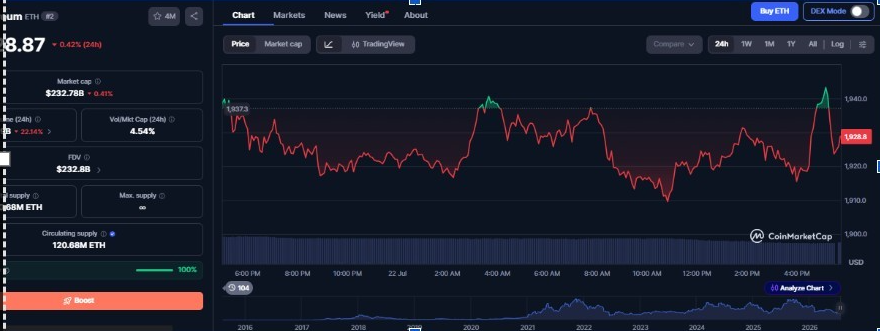
That move puts the $2,000 level back in focus. A push above $1,945 would strengthen the short-term recovery and bring the psychological $2,000 area into play.
However, Ethereum price still needs stronger confirmation. The current advance follows a period of uneven price action, meaning buyers must hold the reclaimed zone instead of allowing another rejection below $1,900.
If ETH crypto holds above the $1,900 region, momentum could extend toward $2,000. If price slips back below that area, traders may watch whether the recovery base near $1,770 remains intact.
Smart Contract Deployments Show Network Strength
CryptoQuant analyst CryptoOnchain noted that Ethereum smart contract deployments are now about 192% above their 90-day average. Deployments have also risen 57% over the past week.
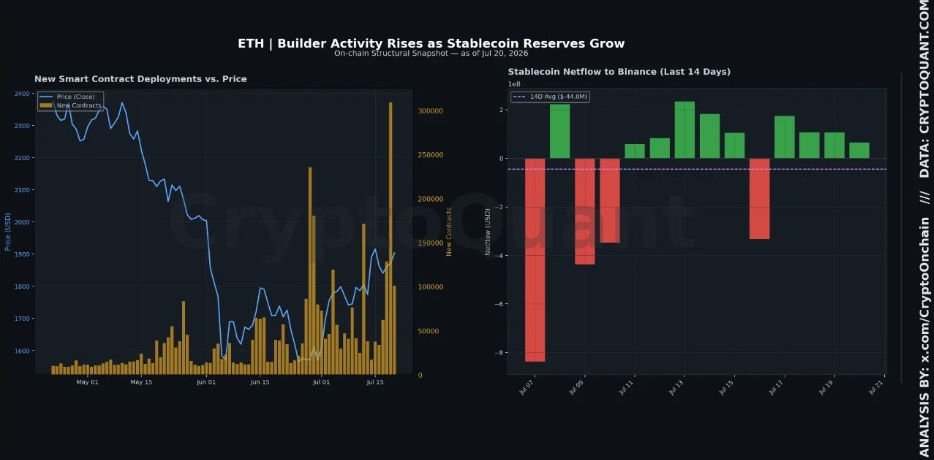
This increase points to stronger builder activity across the Ethereum network. It can reflect new protocol launches, contract upgrades, redeployments or testing before wider product releases.
Notably, this kind of activity is not speculative trading. As mentioned, the number of contracts is increasing, indicating that developers continue to take advantage of the network despite the price fluctuation of Ethereum.
That matters for Ethereum’s broader market structure. If higher developer activity continues alongside improving price action, ETH could attract stronger market attention beyond short-term trading flows.
Exchange Liquidity and Leverage Expand Together
Meanwhile, Binance has recorded a sharp rise in stablecoin inflows. CryptoOnchain reported that net stablecoin flows are nearly 370% above their three-month average, with daily inflows topping $58 million.
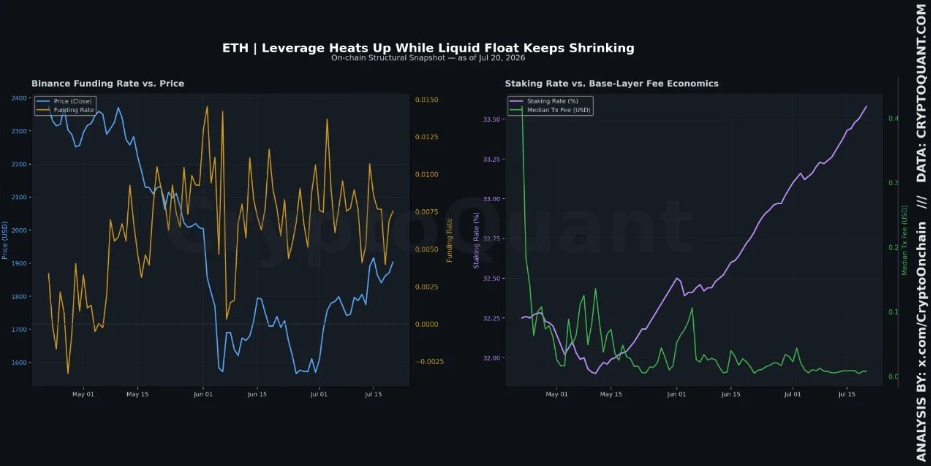
This suggests capital is moving onto exchanges and waiting for deployment. In many cases, rising stablecoin balances can support buying pressure if traders rotate into spot positions.
At the same time, Binance funding rates have climbed to roughly 220% above their 90-day average. Higher funding rates usually show stronger demand for leveraged long exposure.
For ETH, this means the next move may not be quiet. Higher stablecoin inflows and elevated funding often increase two-way volatility, especially near major resistance levels.
Staking and Low Fees Shape Supply Conditions
Ethereum’s base-layer transaction costs remain low despite stronger activity. Median transaction fees are down more than 96% from levels seen three months ago, keeping the network cheaper for users and developers.
At the same time, Ethereum staking has reached a record 33.58%. As more ETH enters staking, less supply remains freely available for trading across liquid markets.
This means there is a supply-side support factor. An increase in the staking ratio can negatively impact the immediate liquidity (quotes) on the sell side, particularly if spot market demand or exchange flows, or institutional products, increase.
Nevertheless, the impact depends on demand. Record staking can tighten available supply, but price still needs steady buying pressure to convert that supply structure into a sustained rally.
The key short-term level is the recent high near $1,945. If ETH price breaks and holds above that level, buyers could attempt a move toward $2,000. A daily close above $2,000 would offer stronger confirmation that the recovery is turning into a broader breakout.




