
 Puffer
 ZKsync
 Bitcoin
 NEAR Protocol
 Pearl
Pearl Quantus
 Sui
Sui

New York sued Polymarket on Sept. 24, alleging its U.S. prediction market violates state gambling laws. Attorney General Letitia James and Governor Kathy Hochul said the platform operates without a New York State Gaming Commission license. The state is seeking an order restricting Polymarket’s operations and financial penalties.
The case adds to a wider dispute over how prediction markets should be regulated. Polymarket US holds federal registration as a Commodity Futures Trading Commission-designated contract market. New York argues that registration does not displace its gambling laws.
New York Alleges Polymarket is Operating Illegal Gambling
According to James, Polymarket is running an illegal gambling platform and “skirting” the laws of the state.
A statement from the Office of the Attorney General claimed that its investigation shows that Polymarket exposes New Yorkers, including those below the gambling age, to personal and financial risk.
The gambling age in New York is 21, whereas Polymarket allows anyone above 18 to register and use the platform.
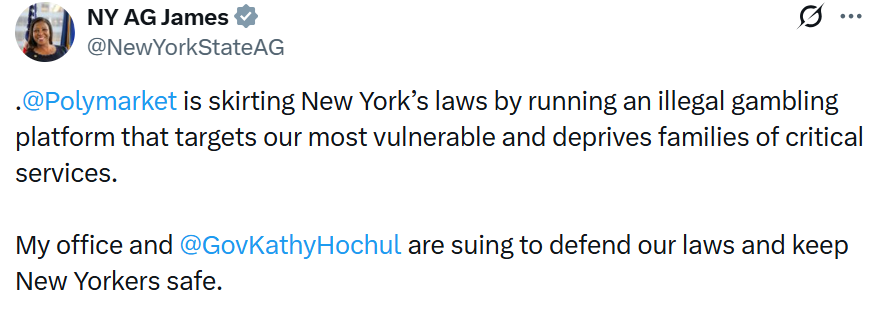
James said, “By running an unlicensed gambling operation, Polymarket has done more than just knowingly violate state law; they have put New Yorkers at risk.”
The lawsuit now seeks to block the prediction platform from operating in the state. It is also asking for Polymarket to stop advertising until it registers.
New York is also seeking to fine Polymarket, get restitution for users, and forfeiture of all gains.
Meanwhile, Governor Hochul also emphasized that prediction markets are gambling on X, stating, “Calling it a ‘prediction market’ doesn’t change the facts. If you’re taking bets in New York, our gambling laws apply.”
Prediction Market Faces Stiff Opposition from US States
The New York lawsuit against Polymarket is only the latest legal action against platforms operating prediction markets. The state announced a similar lawsuit against Kalshi in July 2026, and before that, it had sued Coinbase and Gemini on the same grounds.
The governor had also issued an executive order in April 2026 banning all state employees from engaging in insider trading through prediction platforms.
However, it is far from being the only state going after prediction platforms. More than 10 states have instituted legal action against prediction platforms, claiming that they are offering illegal gambling.
Most of these lawsuits revolve around sports betting, which states argue falls under their jurisdiction. While prediction markets became popular due to markets about the 2024 US elections, sports now account for the majority of their trading volume.
The Commodity Futures Trading Commission (CFTC) has backed prediction market platforms in their argument that what they offer are derivatives, which fall under federal jurisdiction.
So far, courts are divided on prediction markets and sports betting. With even federal appeals courts holding divergent views, the Supreme Court is expected to eventually decide the matter.
This article is for informational purposes only and does not constitute legal, financial or investment advice. The allegations remain subject to ongoing litigation.




