
 IGNITION
 streamoors
 Injective
 NEAR Protocol
 Pearl
Pearl LayerZero
 Quantus
Key Insights:
- Dogecoin’s daily active addresses have dropped below 60,000, marking the lowest level since October 2024.
- Whale transactions above $1 million have declined to 66 per day, reflecting reduced large-holder activity.
- Dogecoin’s price pattern suggests a possible breakout, aligning with past bullish cycles seen since 2014.
Dogecoin (DOGE) extended its losses on Monday, trading around $0.23 after declining 6.6% over the past two weeks. During the latest trading session, DOGE stood at $0.2306, marking a 5.39% drop in the past 24 hours and a 12.51% decline over the last seven days.
The downturn aligns with weakening activity in Dogecoin’s ecosystem, as an analyst highlighted declining key metrics.
Falling Dogecoin User Engagement
Recent data shared by Ali Martinez shows a notable drop in Dogecoin’s daily active addresses. The number of active addresses has now fallen below 60,000 per day, reaching the lowest level since October 2024.
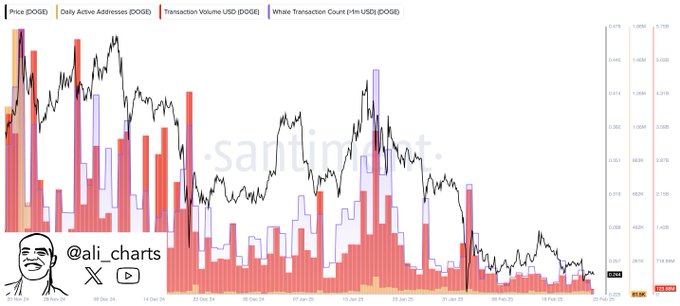
Transaction volume has also mirrored this decline. The volume, measured in USD, has diminished in tandem with the falling number of active addresses and DOGE’s price. Although transaction volume experienced brief spikes during price peaks, it has steadily declined over time, reflecting lower overall market activity.
Meanwhile, whale transactions, involving amounts exceeding $1 million, have significantly decreased. The number of these large transactions has fallen to just 66 per day. In previous price surges, whale transactions were more frequent, but the current low figures suggest reduced involvement from major holders. The decline in whale transactions could have an impact on DOGE’s price stability and market volatility, as large investors play a critical role in liquidity and market movements.
Shift in Holding Patterns
Another set of data tracking Dogecoin holdings over different time frames reveals a shifting trend. A slight drop of 2.67% was recorded recently, followed by a more significant 11.81% decline. In contrast, holdings saw a notable increase of 107.45% over a different period.
This change in holding patterns aligns with the decrease in whale transactions and active addresses.
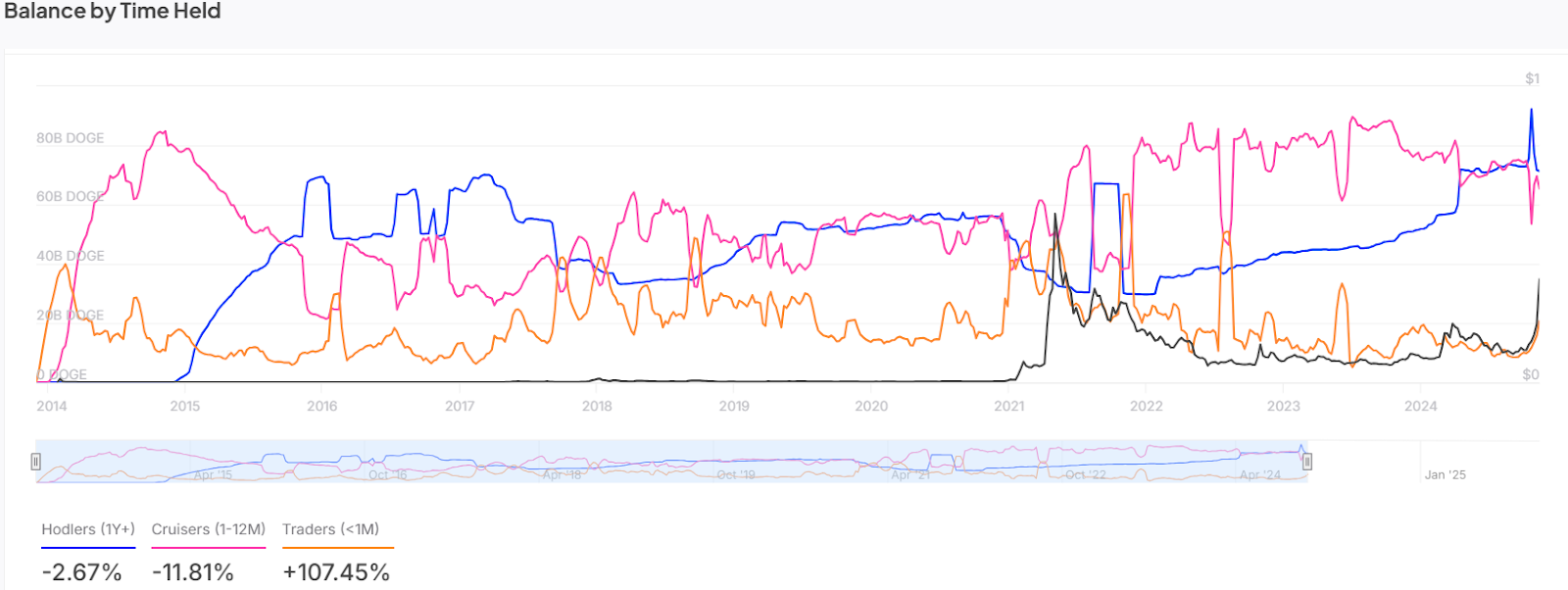
The reduction in long-term holders suggests that a segment of investors is reducing exposure to DOGE. At the same time, an increase in short-term holders indicates that more traders are entering the market, potentially reacting to price movements rather than maintaining long-term positions.
The decline in whale activity and the change in the pattern of holding represents a changing market dynamic. However, as less large investors are involved in the market, the price of DOGE may be more volatile and prone to short term trading rather than long accumulation perspective.
Potential Technical Breakout in Dogecoin price
According to another technical analyst by Trader Tardigrade, DOGE shows signs that it will finish its fourth falling wedge pattern in the ongoing market deterioration. Dogecoin has shown major price growth in past occasions when it broke out of these trading patterns. The previous three breakouts from this pattern led to price increases of 88% along with 208% and 445% respectively.
Elsewhere, a distinct evaluation of Dogecoin prices over 2014 to 2025 identified three fundamental stages as recovery phase (accumulation), mark up phase (bull run) and mark down phase (correction). The cycle has reappeared in previous market cycles.
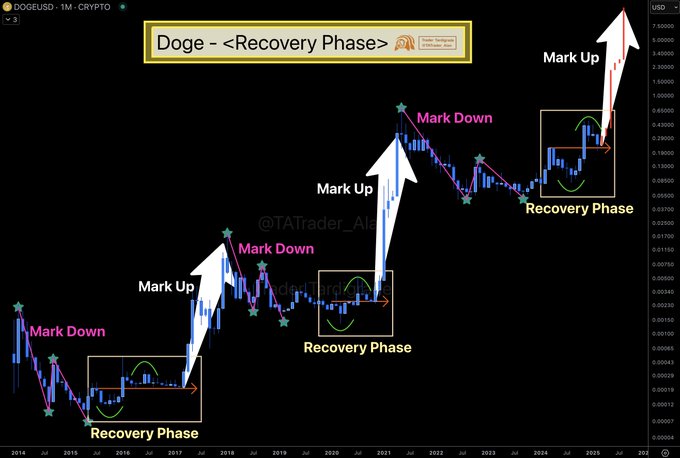
The analysis indicates Dogecoin appear to have finished its recovery phase. Next it is moving towards the mark up phase. Per the analysis, Dogecoin shows indicators of breaking out in 2025 following its past trends that have led to price increases. However, the reduced investor involvement in Dogecoin markets might affect the speed and magnitude of a potential market appreciation.
Disclaimer
In this article, the views, and opinions stated by the author, or any people named are for informational purposes only, and they don’t establish the investment, financial, or any other advice. Trading or investing in cryptocurrency assets comes with a risk of financial loss.




