
 astronaut
 Pearl
Pearl NEAR Protocol
 Walrus
 Zylo Ecosystem
 Bitcoin
 Hyperliquid

Key Insights:
- Bitcoin dropped 53% in 2021 vs. 28% in 2025 despite trade war fears
- Bitcoin hashrate hits 924.1B, showing network strength and growth
- SOPR near 1 signals low panic selling and possible market stability
China’s Mining Ban Shook the Market in 2021 Crash
The Chinese government banned cryptocurrency mining in 2021 in a move to cut energy use and reduce financial risk. In a chart by CryptoQuant, this sudden ban resulted in a sharp 53% decline in Bitcoin’s price. It undermined confidence in the network and forced many miners offline, causing a steep drop in hashrate.
Miners quickly relocated to other countries. While the network eventually recovered, short-term price and sentiment suffered heavy damage. After the ban, the hashrate plummeted, reflecting a widespread mining shutdown in China.
Since then, the hashrate has rebounded and is now at an all-time high of 924.1 billion hashes per second.
This mining rebound reflects growing decentralization and network resilience. Although China still reportedly accounts for 55% of the hashrate, more infrastructure now exists globally.
North American miners, in particular, are focused on long-term gains and continue operations despite falling prices.
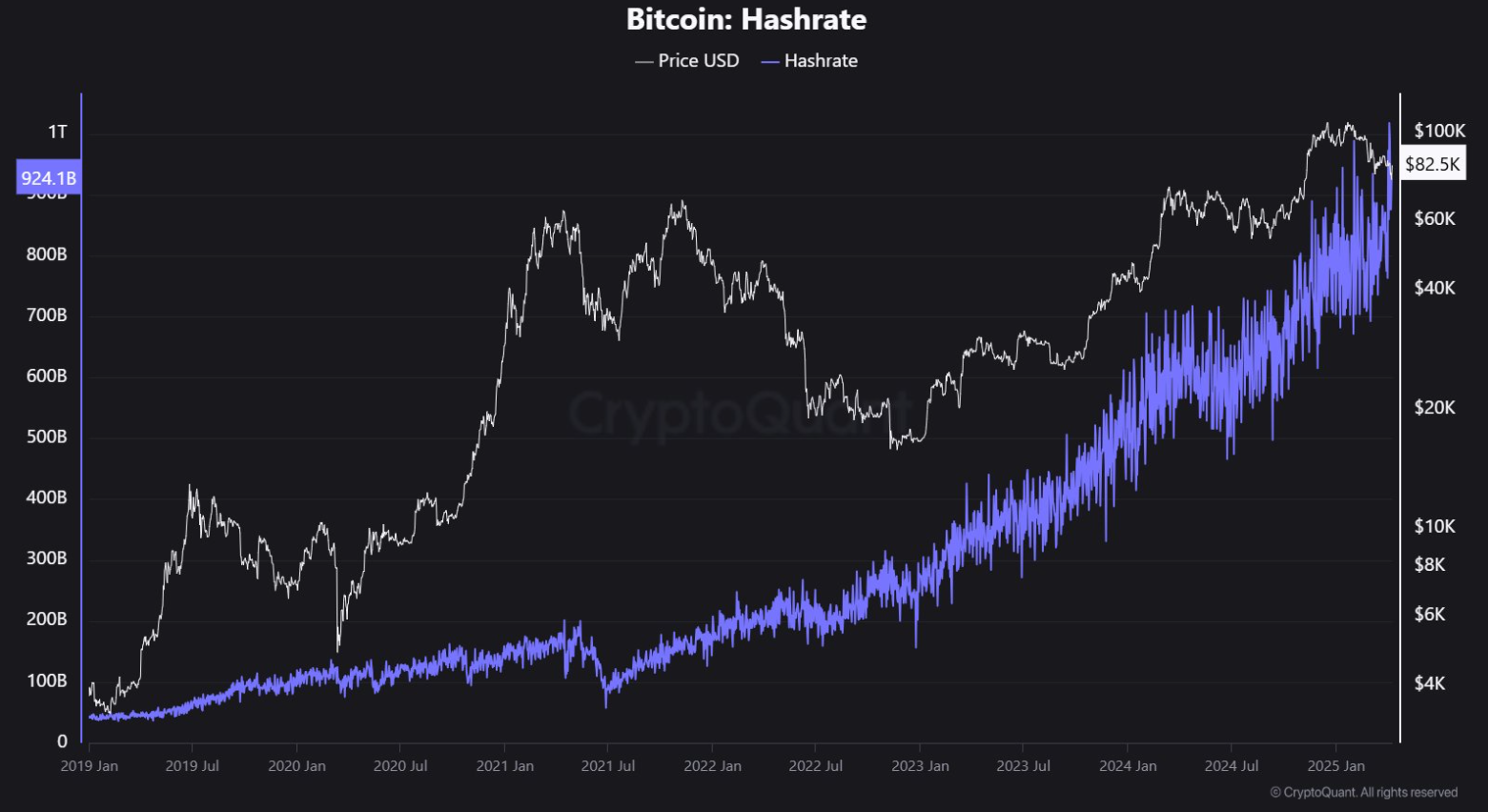
This mining strength rebound is a sign that the network has decentralized and strengthened. While China still reportedly has 55% of the hashrate, much of the infrastructure is now more geographically diverse.
Long-term gains are the focus for North American miners, who seem to be continuing to mine even when prices fall.
Trade War Brings Uncertainty, But BTC Price Holds in 2025
Jump to April 2025 and tensions between the U.S. and China are flaring once more. China retaliated with 84% tariffs on all U.S. goods after U.S. President Donald Trump hiked tariffs on Chinese goods to 125%.
A 90-day pause on reciprocal tariffs for other countries provided temporary global market relief—but also added pressure.
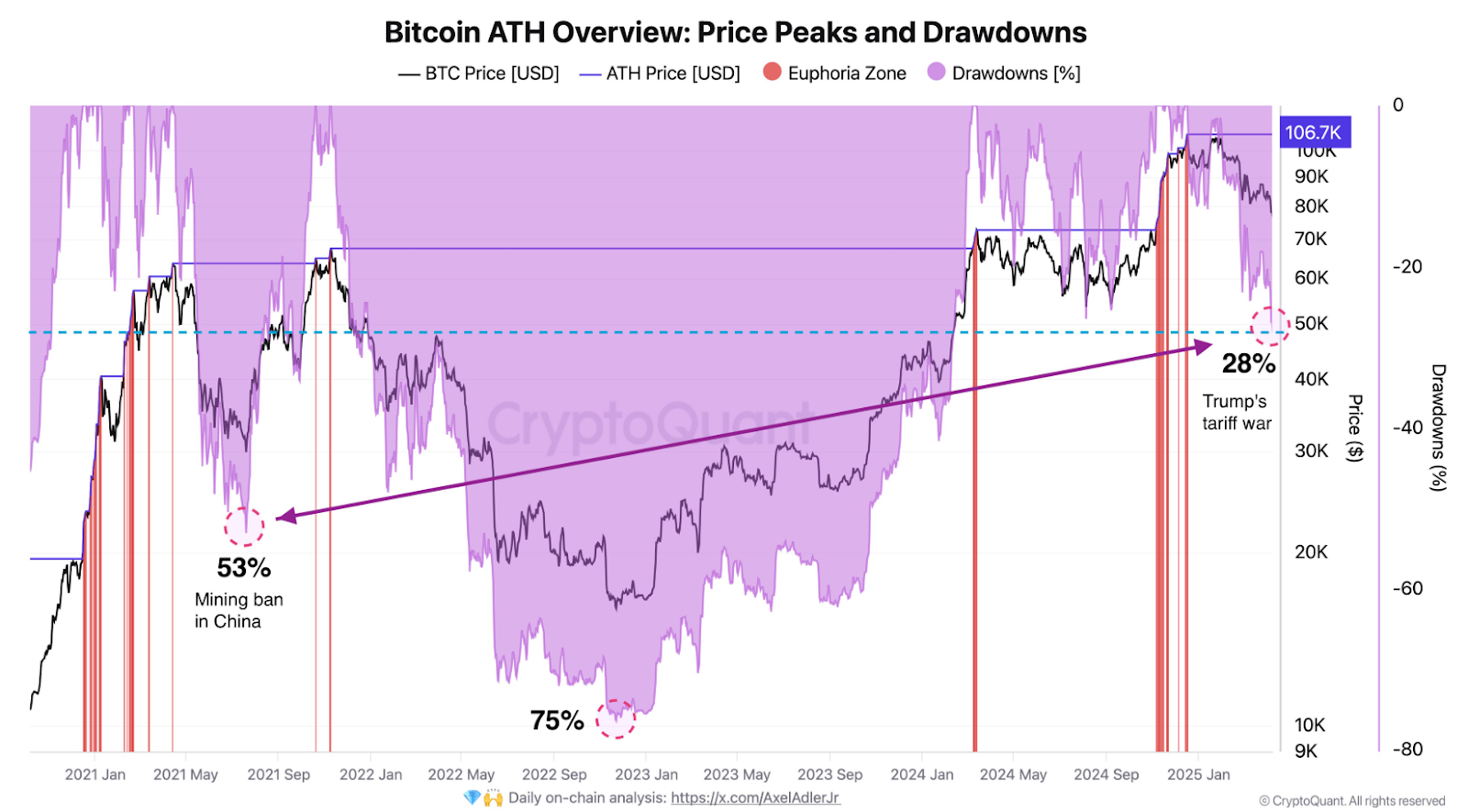
Despite trade war fears, Bitcoin’s correction sits at about 28%, far less than the 2021 crash.
The nature of the threat makes the difference, according to analyst Axel Adler Jr. “The mining ban in China had fundamental consequences,” he explained. In contrast, trade wars highlight Bitcoin’s resilience to external economic shocks.
Macroeconomic risks have not triggered the same panic selling seen in 2021. Bitcoin holders appear more confident, despite temporary market uncertainty.
SOPR Levels Show Stability Around Break-Even
SOPR (Spent Output Profit Ratio) is a metric that measures whether Bitcoin is being sold at a profit or a loss. Values in the current SOPR chart are close to 1. This implies that many sellers are making no profit on their trades.
Conversely, SOPR below 1 normally means panic selling at a loss, which is usually a signal of market bottoming.
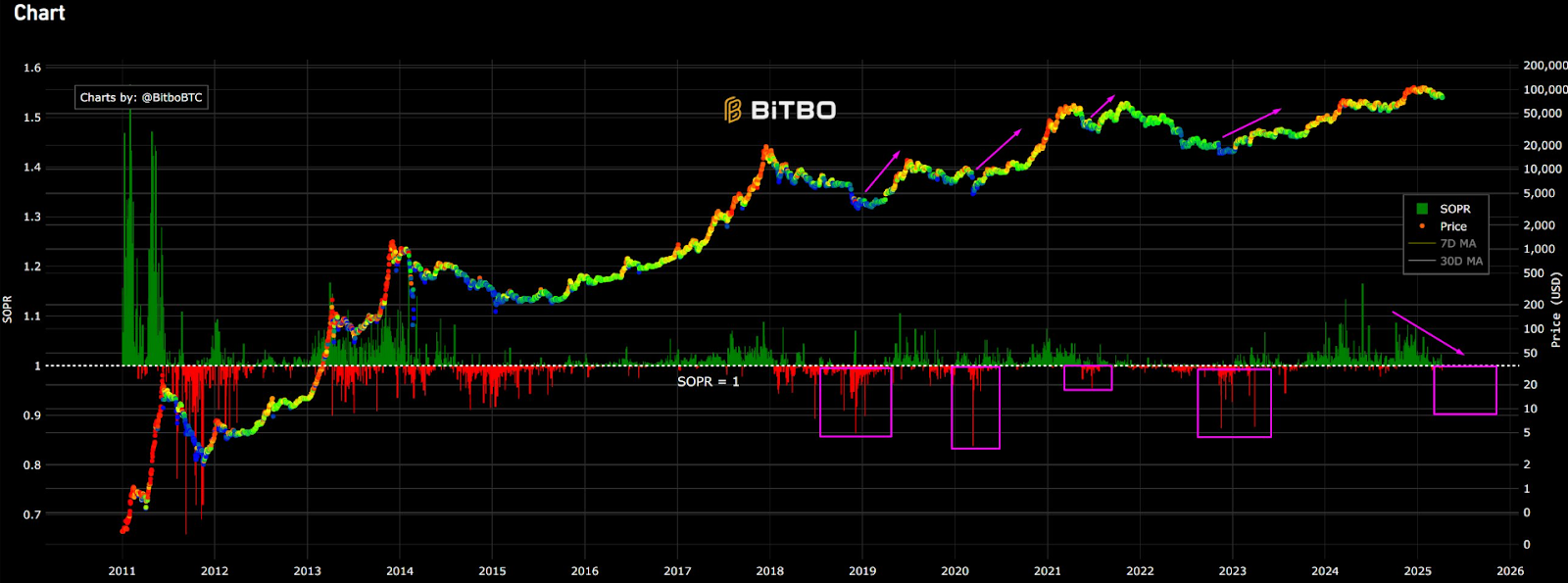
Historical data has proven that major recoveries have often followed periods when SOPR was below 1. This was the case in 2019, in 2020, and in 2023.
At this moment, the market is close to this threshold, but not yet in full capitulation mode. This backs up the theory that the current correction is a consolidation and not a major breakdown.
Meanwhile, Bitcoin’s price is still above $80,000, indicating that many long-term holders are not in a hurry to exit the market. SOPR is close to 1, so there is no clear sign of widespread selling at a loss.
Short-Term Reserve Fluctuations Point to Calm Sentiment
Furthermore, as per data from CryptoQuant, Binance’s Bitcoin reserves increased from 569,017 BTC on March 27 to 590,354 BTC on April 8. This 21,337 BTC increase may be due to some traders preparing to sell or rebalance portfolios during volatility.
However, reserves dipped slightly to 587,743 BTC by Apr. 10, hinting that selling pressure may already be fading.
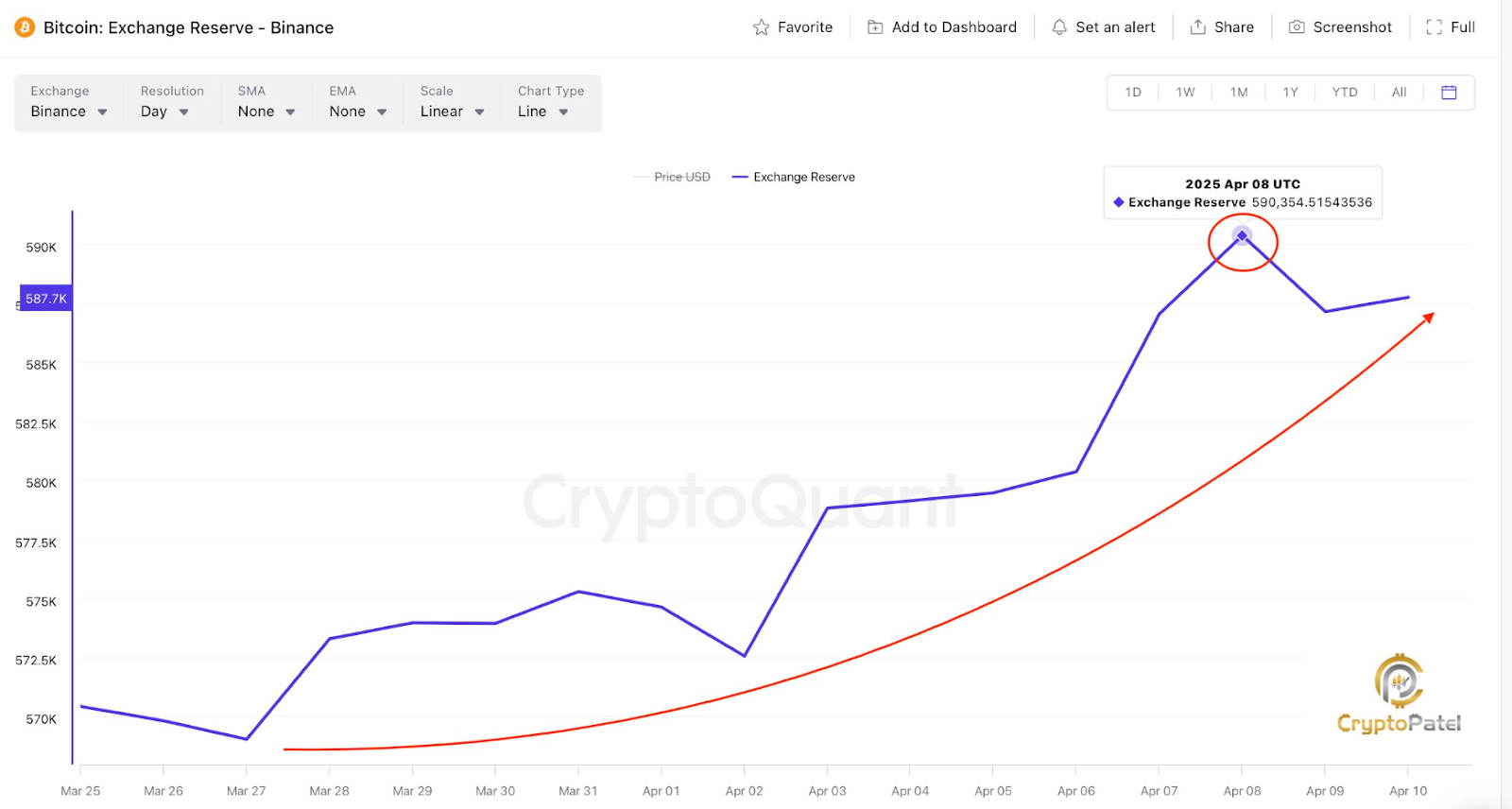
Usually, when reserves are increasing on exchanges, it means investors are preparing to trade. However, the absence of a sharp increase after April 8 may suggest that investors are either hesitant or confident about BTC’s current price.
Disclaimer
In this article, the views and opinions stated by the author or any people named are for informational purposes only, and they don’t establish the investment, financial, or any other advice. Trading or investing in cryptocurrency assets comes with a risk of financial loss.




