
 streamoors
 Sword Inu
 Altai the Tiger
 IGNITION
 no crying in the casino
 NEAR Protocol
 Pudgy Penguins
Key Insights:
- Guotai Junan Securities secures approval for virtual asset trading.
- Hong Kong’s crypto policy shift enables new virtual asset services.
- Beijing’s white paper boosts blockchain support amid Hong Kong’s growth.
Guotai Junan Securities (Hong Kong), a subsidiary of Guotai Junan International, has become the first brokerage from mainland China to secure approval for providing virtual asset trading services in Hong Kong.
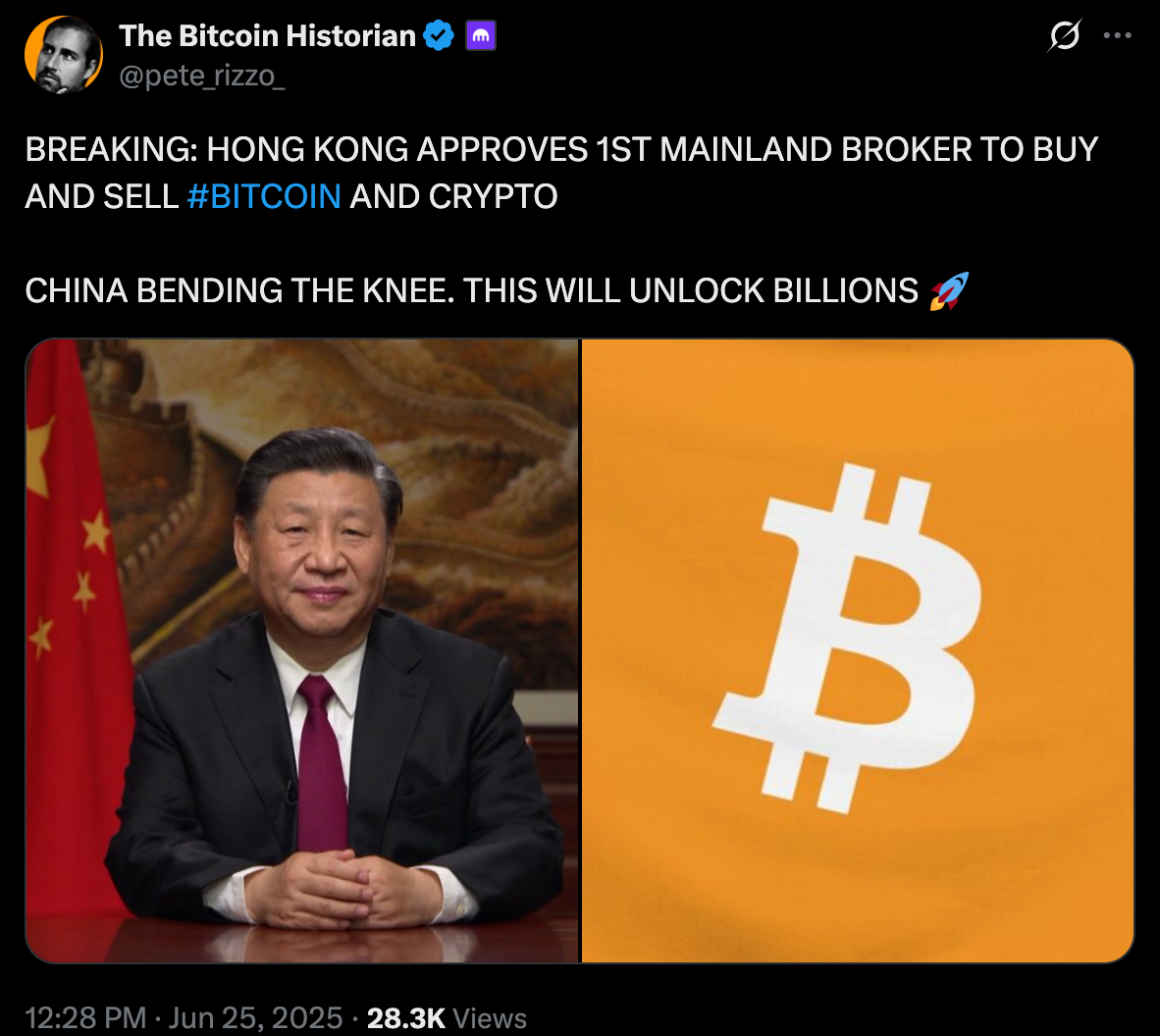
This milestone comes after the Hong Kong Securities and Futures Commission granted the firm an upgraded license, allowing it to offer services related to major digital currencies. The approval reflects Hong Kong’s ongoing push to integrate cryptocurrency trading into its regulatory framework, despite mainland China’s ban on crypto activities.
SFC License Upgrade Opens New Horizons for Investors
On June 24, Guotai Junan Securities received approval from the SFC to upgrade its Type 1 license for dealing in securities, allowing it to facilitate virtual asset trading. This license enables the firm to offer cryptocurrency services, including trading in Bitcoin, Ethereum, and stablecoins, to investors through an omnibus account structure with other SFC-licensed platforms. This development marks a significant step forward in Hong Kong’s evolving cryptocurrency ecosystem, where the SFC has introduced a new licensing system for virtual asset service providers.
Guotai Junan Securities has all the potential with the license at hand to meet the increasing investor demand in the digital assets. Through the approval, they will have the provision of various well-established cryptocurrencies and will further anchor Hong Kong as one of the hubs where the trade in digital assets takes place in the region.
In the meantime, the transition is a part of the effort that Hong Kong has recently undertaken to make the adjustments between the desire to innovate in the field of crypto and the need to exercise a certain degree of regulation.
A Change in the Virtual Asset Policy in Hong Kong
The territory of Hong Kong has since changed its position on the virtual assets, and as of recent years the region is cautiously opening its doors to buying and selling cryptocurrencies. This move started in June when the SFC declared a new directive that enabled single traders to purchase and sell high-market-cap cryptocurrencies, including Bitcoin and Ether, on a regulated-and-controlled framework.
As of June 1, a whole new system of licensing was implemented, and there are rather strict laws that govern exchanges that are to work in the area. With such regulations, the unlicensed exchanges will no longer be able to sell to the investors in Hong Kong.
Hong Kong tends to take a different route because Chinese authorities have prohibited crypto trading and crypto mining activities in the country. With this policy drift, a substantial increase in the cryptocurrency exchanges has been witnessed seeking a license under the new arrangement, like OSL Digital Securities Limited and Hash Blockchain Limited. Other prominent trading platforms, such as Huobi and OKX, have also shown their plans to receive the required license.
Regulatory Support for Blockchain and Web3 Innovation
The timing of Guotai Junan Securities’ license upgrade aligns with other developments within the broader Chinese and Hong Kong blockchain landscape. Over the weekend, the Beijing Municipal Science and Technology Commission and the Zhongguancun Science and Technology Park Management Committee released a white paper focused on Web3 technologies.
The document, which has garnered attention, appears to signal a commitment to supporting blockchain and related industries, particularly as Hong Kong moves forward with its new crypto regulatory regime.
Moreover, the approval of virtual asset trading services coincides with significant movements in the global cryptocurrency market. In the U.S., the recent launch of BTC spot exchange-traded funds (ETFs) has caught the attention of major financial firms.
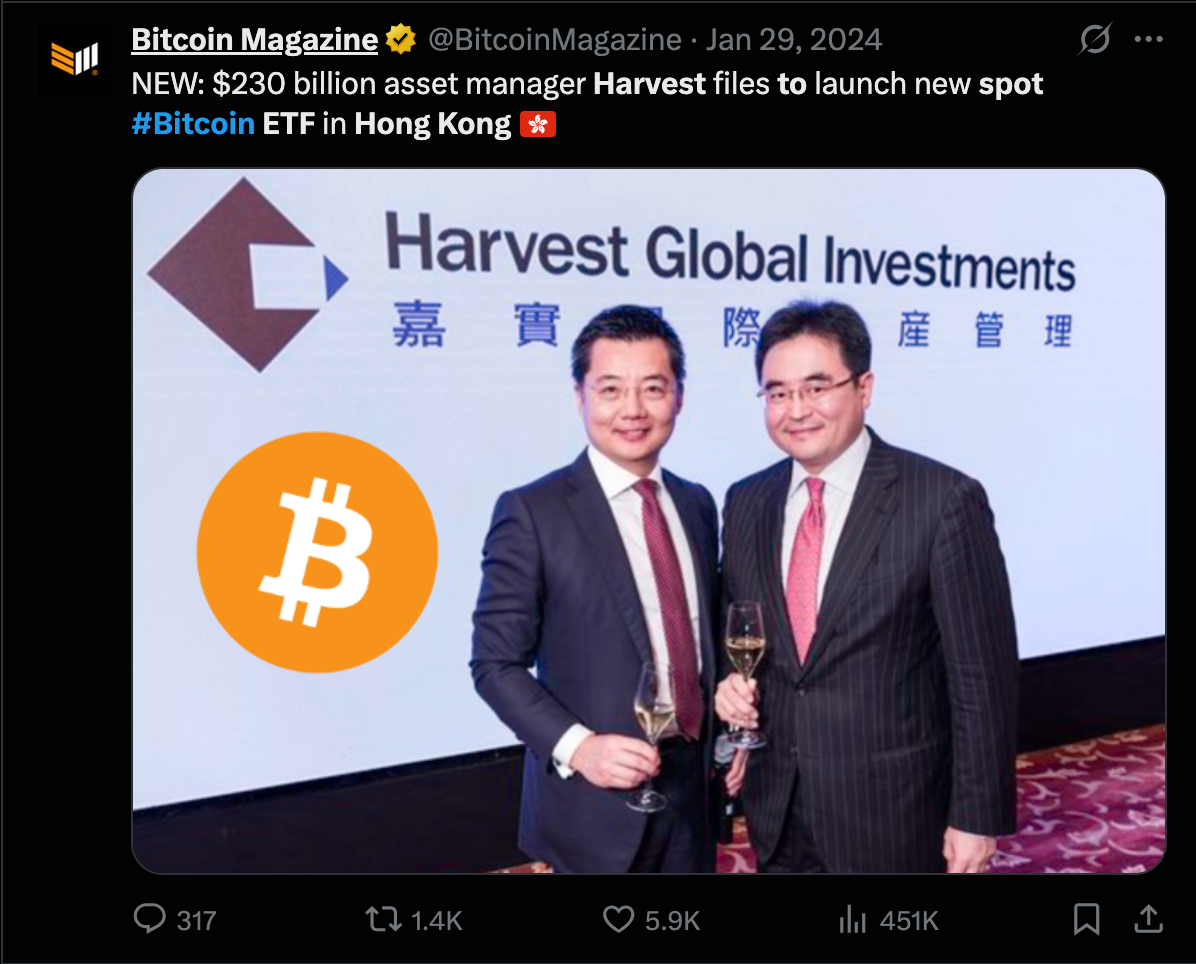
Among them, Harvest Global Investments, one of China’s largest fund companies, has applied to launch a Bitcoin spot ETF in Hong Kong. The company submitted its application on January 26, hoping to become the first to offer such a product in the region.
These developments suggest a growing integration of digital assets into traditional financial markets, with Hong Kong playing a key role in bridging the gap between the two. As the regulatory landscape in Hong Kong and China continues to evolve, it remains to be seen how other market players will adapt to the changing environment.
Disclaimer
This article is for informational purposes only and provides no financial, investment, or other advice. The author or any people mentioned in this article are not responsible for any financial loss that may occur from investing in or trading. Please do your research before making any financial decisions.




