
 astronaut
 Pearl
Pearl Hyperliquid
 Walrus
 Pudgy Penguins
 Bitcoin
 NEAR Protocol
Key Insights:
- Bitcoin ETFs posted $2.22B in inflows last week alone.
- BlackRock leads with $1.31B deposited in one week.
- ETF inflows now total $4.6B over the past 3 weeks.
Bitcoin spot ETFs in the U.S. posted a net inflow of $2.22 billion from June 23 to June 27. This marks the third consecutive week of gains and a 14-day streak of daily net inflows. Despite subdued market price action, institutional interest continues to grow, reinforcing long-term conviction in Bitcoin.
Spot ETF Flows Accelerate With Continued Institutional Participation
ETF inflows continued to rise sharply, with $501 million recorded on June 27 alone. This significant daily figure helped push the weekly total to $2.22 billion across all U.S. spot Bitcoin ETFs. The consistent buying signals sustained confidence from institutions despite market price consolidation.
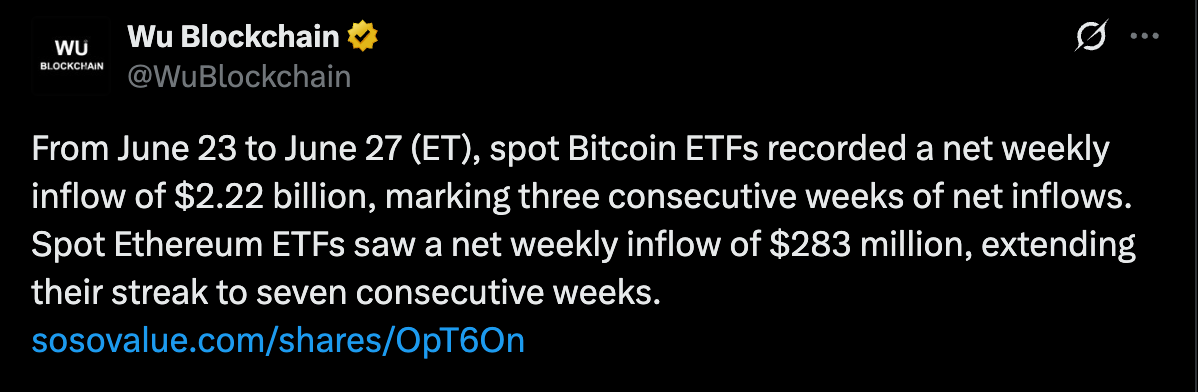
Over the past three weeks, cumulative inflows into Bitcoin spot ETFs have now reached $4.63 billion. This strong recovery follows a weak start to June, which saw net outflows of $128.81 million in the first week. Since then, the turnaround in demand has been robust and uninterrupted.
BlackRock’s IBIT ETF led inflows last week with $1.31 billion deposited. Fidelity’s FBTC added $504.4 million in net flows, followed by Ark/21 Shares’ ARKB with $268.1 million. These three funds accounted for the majority of the week’s total inflows, cementing their lead among U.S. issuers.
ETF Landscape Signals Confidence Despite Market Weakness
While BlackRock dominates weekly inflows, smaller issuers also recorded moderate net additions. VanEck, Invesco, and Valkyrie each brought in between $1 million and $25 million. Grayscale’s GBTC remained the only product to register net outflows, losing $5.69 million.
Despite the loss, GBTC still ranks as the third-largest ETF by assets under management with $19.79 billion. The product’s higher fee structure may be contributing to its declining preference among institutional allocators. In contrast, lower-cost options like BlackRock and Fidelity ETFs continue to attract inflows.
Analysts suggest that ETF flows are increasingly decoupled from short-term price action. Instead, they indicate long-term positioning by funds seeking regulated access to Bitcoin exposure. This is consistent with how institutions treat other asset classes, such as commodities and sovereign debt.
Retail Demand Weakens as Institutional Allocation Grows
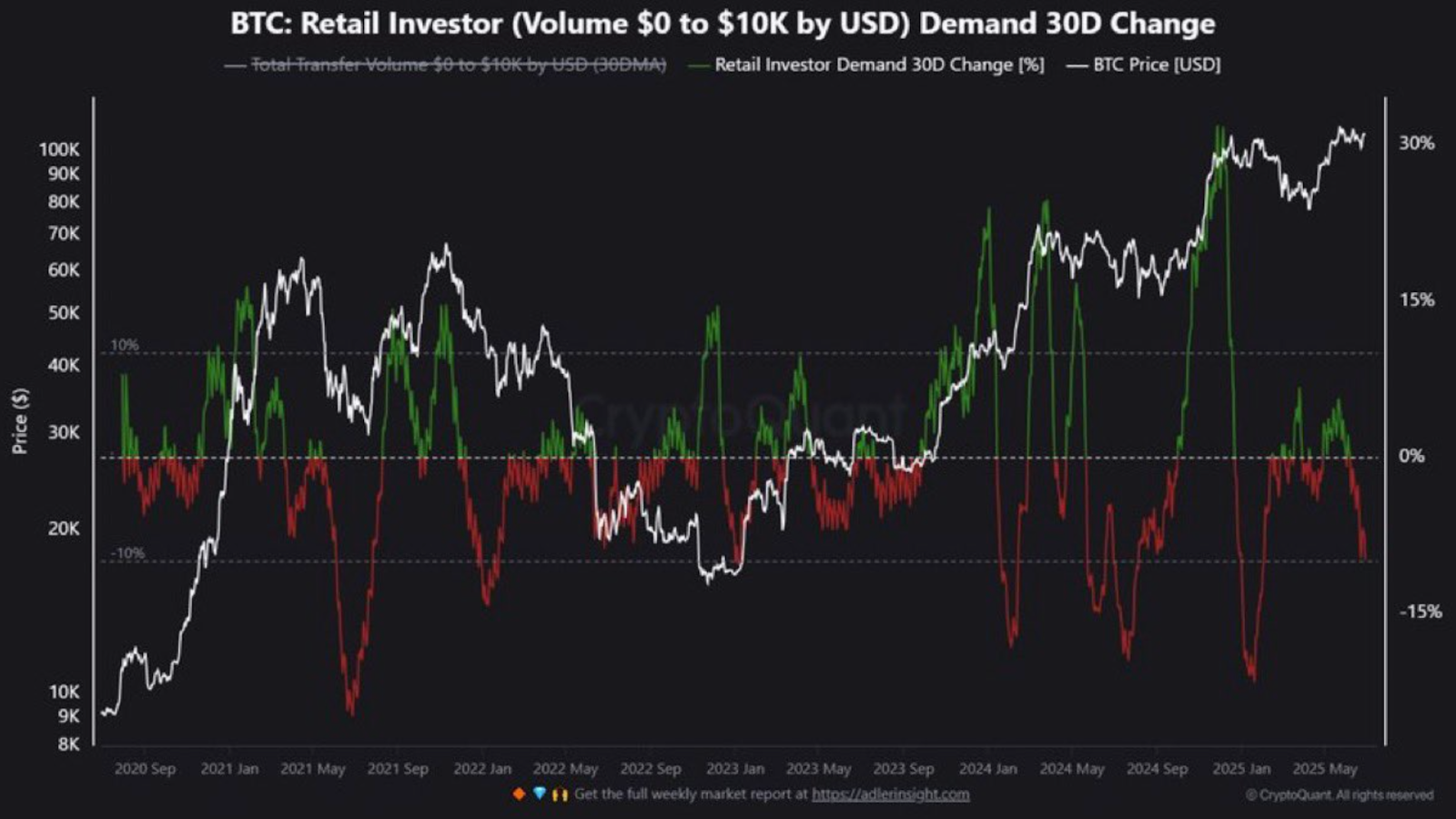
Institutional flows are still robust but there is weakness on the part of retail participation. According to CryptoQuant, retail investor demand, measured by low transfer volumes, is now at a six-month low. Such a drop is an indication of conservative mood among minor investors and traders.
Meanwhile, apparent demand of Bitcoin has turned negative, first time in several months. This indicator is the net demand upon consideration of the number of coins that come into the market with the long-term holders and the miners. The bearish interpretation implies that Bitcoin is sold more than it is purchased.
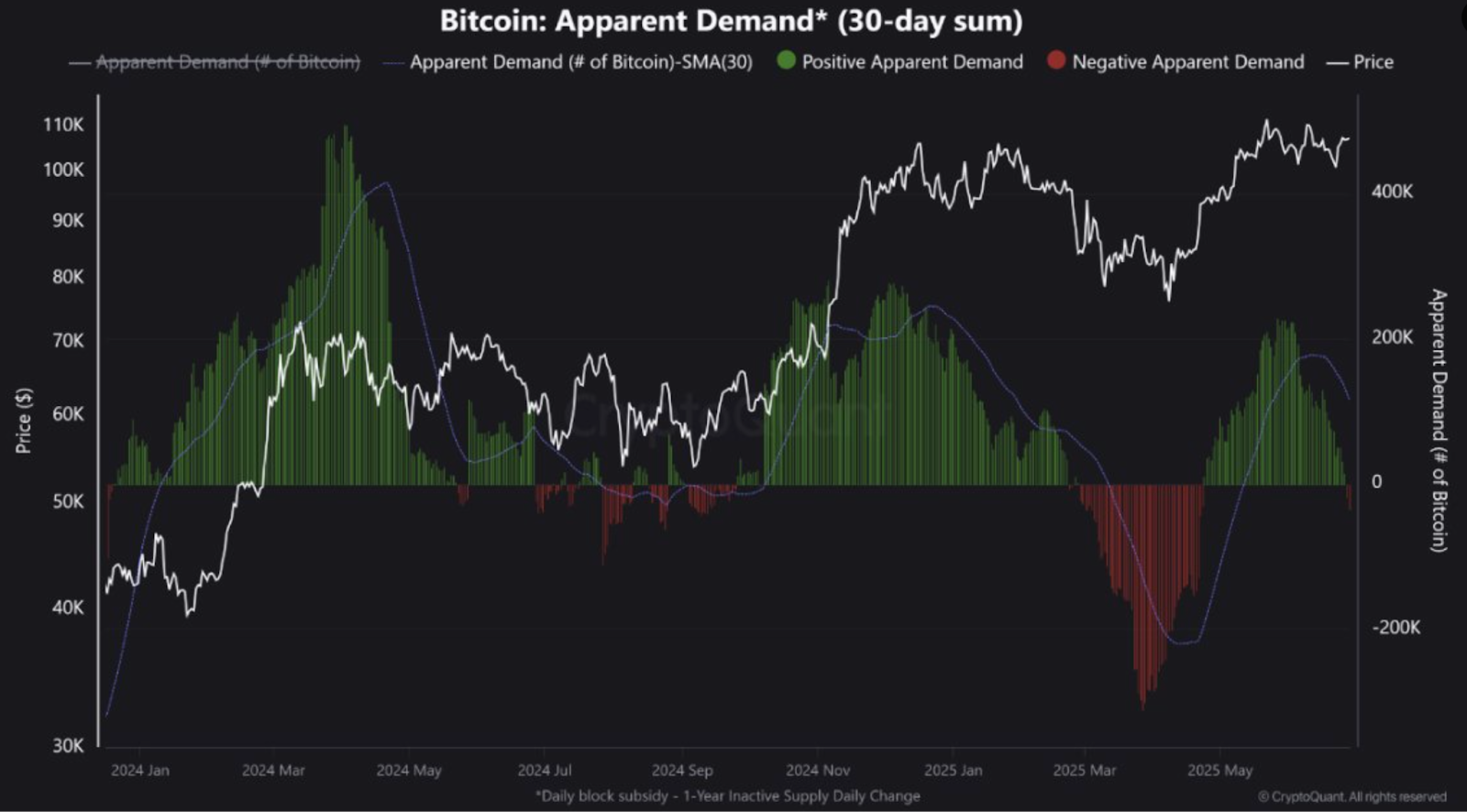
The activity is a profit-realization by long-term holders and miner sell-offs and not a new phase of retail accumulation. But this supply side pressure seems to be countered by the continued inflow into ETFs. Structured and regulated products are being taken up by institutional buyers that are absorbing the available supply.
Moreover, analyst Titan crypto note gaps at 108,300-107,800 and 106,600-106,300. Such technical imbalances tend to draw price corrections hence Bitcoin may witness a retracement back to such levels before making another upward swing.
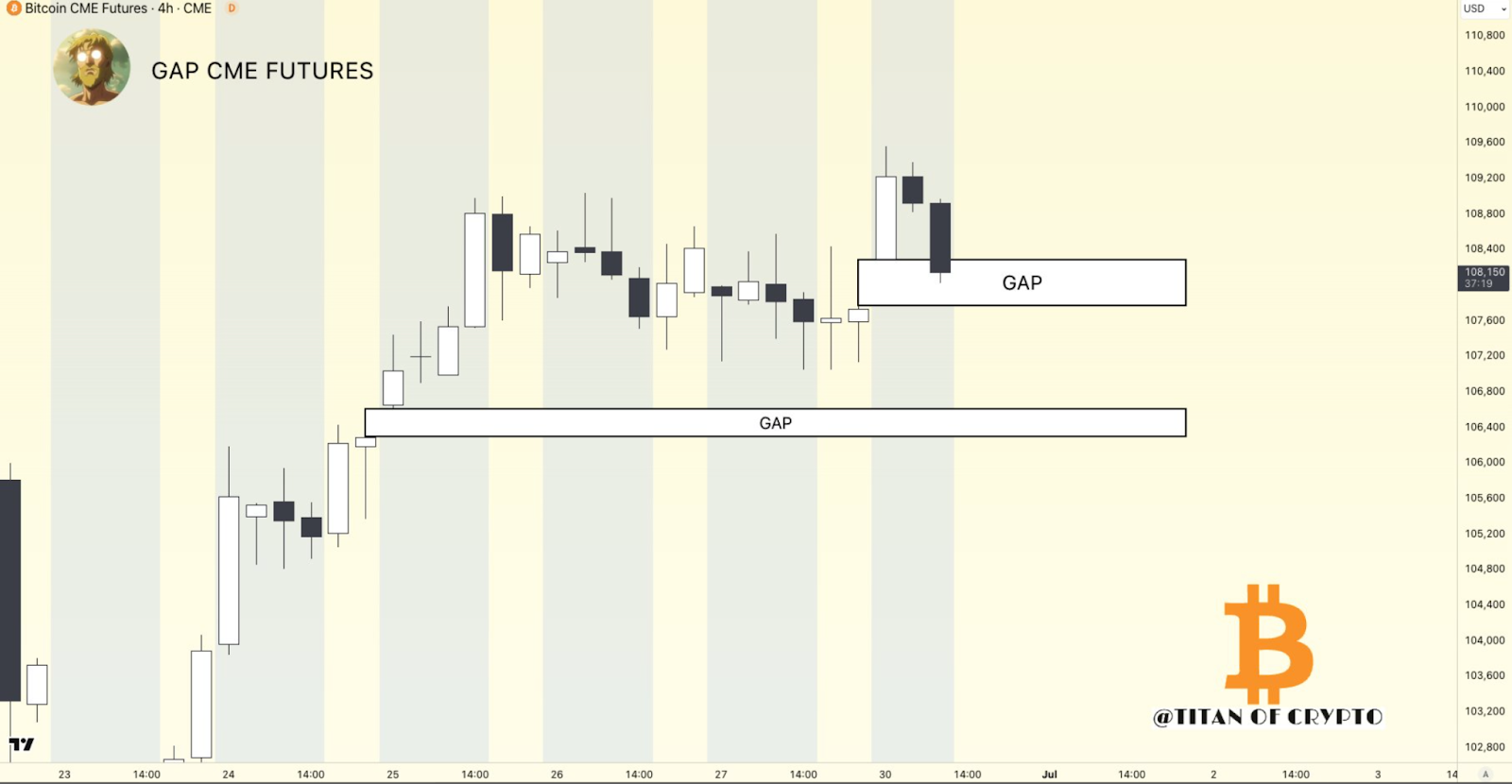
Despite the short-term sentiment being neutral to cautious, the ETF inflow trend suggests the long-term confidence. As traditional capital allocators continue to increase their Bitcoin exposure, it adds credibility to the cryptocurrency’s investment thesis.
Bitcoin ETFs are in high gear as the month of June draws to a close. The fact that the inflows continue, even without new highs, underlines the changing structure of the Bitcoin market. Conventional financial products are increasingly influencing the liquidity and price discovery of Bitcoin.
Disclaimer
This article is for informational purposes only and provides no financial, investment, or other advice. The author or any people mentioned in this article are not responsible for any financial loss that may occur from investing in or trading. Please do your research before making any financial decisions.




