
 Zylo Ecosystem
 astronaut
 Pearl
Pearl Walrus
 Starknet
 Pudgy Penguins
 Bitcoin

As global markets face a dense calendar of macroeconomic events, Japan is preparing to begin a long-planned reduction of its massive exchange-traded fund holdings. The Bank of Japan is expected to start selling ETFs as early as next month, introducing a carefully paced process designed to avoid market disruption. The move comes as investors already brace for volatility driven by U.S. labor data, inflation reports, and major central bank decisions.
Crypto News coverage has centered on how these dates can tighten liquidity conditions. Traders often reduce risk before the releases. They also widen bid-ask spreads and cut leverage. Those shifts can lead to price swings across equities, foreign exchange, and cryptocurrencies.
Crypto News: Why This Week’s Event Calendar Lifts Market Volatility
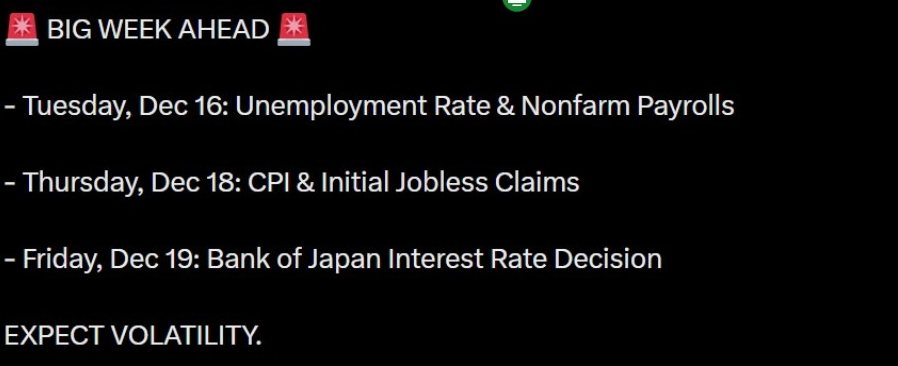
The shared weekly schedule shows three main market volatility windows. Tuesday brings U.S. unemployment and Nonfarm Payrolls. Thursday brings CPI and initial jobless claims. Friday brings the Bank of Japan interest rate decision.
Markets react because each event can change the expected rate path. Rate expectations move bond yields and the U.S. dollar fast. Those moves influence risk appetite and impact crypto markets. This is because crypto often follows that risk cycle during macro weeks.
Jobs Data Can Shift Rate Bets in One Print
Meanwhile, the Nonfarm Payrolls report remains a top volatility driver. According to recent forecasts, they call for about 50,000 new jobs, whereas the prior reading showed 119,000 jobs. Moreover, the unemployment rate is expected to be near 4.5%, up from 4.4%.
If jobs weaken, traders may price earlier rate cuts. That can pull yields lower and ease dollar strength. In that setup, Bitcoin and large-cap altcoins often stabilize. Short squeezes can also appear after crowded bearish positioning.
However, if job opportunities are unexpectedly high, the opposite risk increases. Yields can climb quickly and push the dollar up. That can put pressure on both equities and crypto news at the same time.
CPI and Claims Add a Second Volatility Layer
Additionally, the upcoming CPI data on December 18th can reset inflation expectations. A softer CPI tends to lower yields and support risk assets. A hotter CPI can lift yields and revive tightening fears. Traders then reprice growth and liquidity conditions.
Initial jobless claims are released on the same day as the CPI, so traders often read them together rather than in isolation. When claims rise, markets can lean toward a more cautious growth view, which may temper rate expectations. When claims fall, investors may read that as a steadier labor backdrop, which can keep policy expectations firmer.
If CPI and claims send conflicting messages, price action becomes uneven as traders adjust their positions quickly, and this back-and-forth can increase realized volatility. Crypto markets closely track this because leverage tends to adjust in response to CPI. Perpetual funding often shifts ahead of the release.
Bank of Japan Decision and ETF Sales Add a Risk Node
Friday’s BOJ rate decision sits at the center of global risk pricing this week. Any policy shift can prompt a rapid movement of the yen, forcing investors to rebalance carry trades and adjust their currency hedges. When the yen swings, equity futures often follow, including major U.S. contracts, as portfolios tend to de-risk during sudden foreign exchange moves.
Japan’s ETF unwind adds another volatility driver at the same time. The BOJ holds approximately ¥83 trillion in ETFs by market value, while the book value stands at nearly ¥37.1 trillion. Officials approved annual sales of about ¥330 billion, using book value as the reference point. That pace suggests a multi-decade exit, with a steady monthly flow intended to keep a low profile.
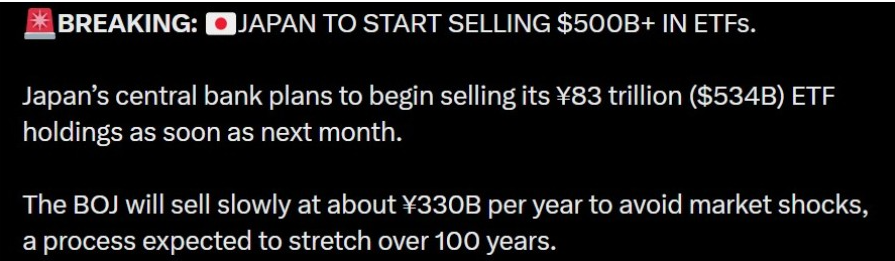
Policymakers have also built in a stop mechanism to prevent markets from facing systemic stress. The BOJ selected Sumitomo Mitsui Trust Bank to execute the sales program, setting up the operational start of the plan.
Regional markets have already demonstrated sensitivity to shifts in risk. Asia-Pacific indexes fell amid weak China data and a pullback in AI-linked shares. Moves in Japan’s Nikkei and Topix can feed global sentiment. That mood can be transmitted to crypto through risk-on and risk-off rotations.



