
 Pearl
Pearl Bitway
 Monad
Monad Ondo
Ondo Derive
 Walrus
 Zcash
Zcash

Digital assets manager Grayscale has predicted that Bitcoin will reach a new all-time high in 2026. The firm shared this prediction as part of its 2026 Digital Asset Outlook.
The bullish sentiment comes at a time when Bitcoin is having a volatile performance. However, several analysts believe 2026 will mark the start of the crypto institutional era.
Regulatory Clarity and Macro Conditions to Drive Bitcoin to ATH in 2026 H1
Grayscale’s bullish sentiments about Bitcoin are based on the regulatory clarity that the industry is finally having. A clear regulatory framework will help integrate blockchain technology with traditional finance. It will also support steady, long‑term capital inflows.
The firm also anticipates increased demand for Bitcoin and Ether in 2026, citing the rise in public debt. The firm says the two cryptocurrencies serve as alternative stores of value alongside precious metals. It expects their demand to rise.
So far, Bitcoin has had a rollercoaster year, hitting an all-time high in October and then dropping by around 30%. This had led to speculations that the bull run is over, with many expecting 2026 to be a challenging year for crypto.
However, Grayscale believes there will be a rising valuation in 2026. The firm analysts believe Bitcoin is in a sustained bull run and expect Bitcoin to finally reach a new high by the first half of 2026.
They said:
Grayscale Says 2026 Will Mark the End of the 4-Year Cycle
Meanwhile, Grayscale also believes that 2026 will mark the end of a 4-year crypto cycle. It was characterized by market peaks followed by massive drawdowns.
This sentiment aligns with that of Bitwise Chief Investment Officer Matt Hougan. He also expects Bitcoin to reach a new high in 2026.
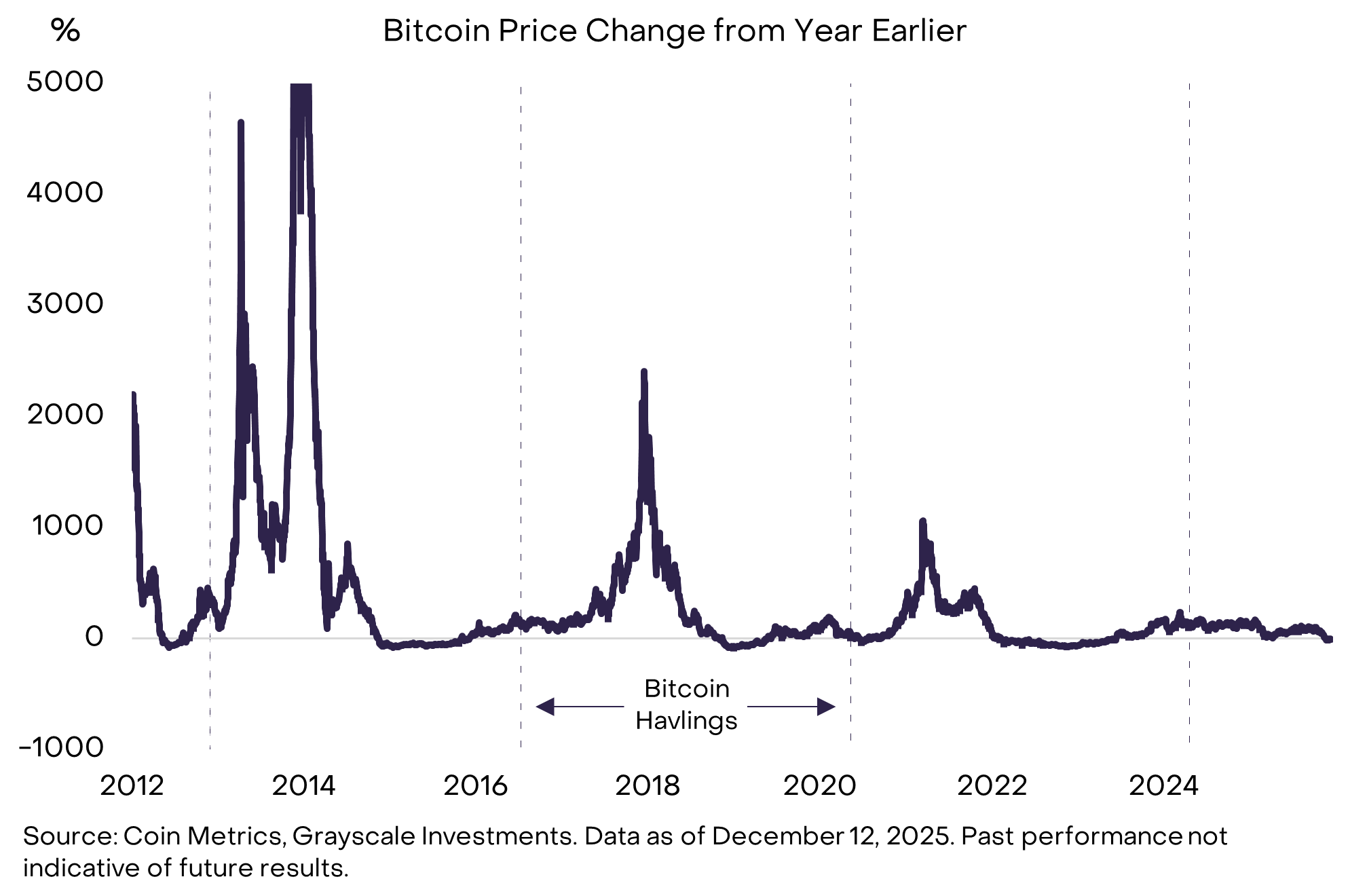
The firm noted that this cycle will end because the factors driving price performance have changed. Institutional capital is now driving price, and this has led to a more measured performance. This limits any potential for massive cyclical drawdown.
It said:
The report says the last two Bitcoin peaks happened during periods of Fed rate hikes. It highlights that those peaks aligned with tightening cycles.
It notes that the Fed has already cut rates three times in 2025. It adds that more cuts appear likely in 2026. It points out that a new Fed chair could accelerate this shift.


