
 streamoors
 IGNITION
 Sui
Sui Quantus
 Bitcoin
 Pearl
Pearl Solana

Bitcoin price remained inside a narrow range this week as investors assessed the Federal Reserve’s latest interest-rate decision.
BTC traded near $64,000 on July 29 after failing to establish a sustained recovery above its short-term resistance levels.
The consolidation also coincided with four consecutive sessions of spot Bitcoin ETF outflows.
Federal Reserve Holds Rates as Hike Expectations Rise
Traders are boosting their odds that the Federal Reserve will hike interest rates as inflation remains stubbornly high.
While most analysts expect the bank to leave rates unchanged today, odds of a September and October hike have jumped to 69% and 72%, respectively. Most notably, the probability that the bank will hike rates in December has jumped to 76%.
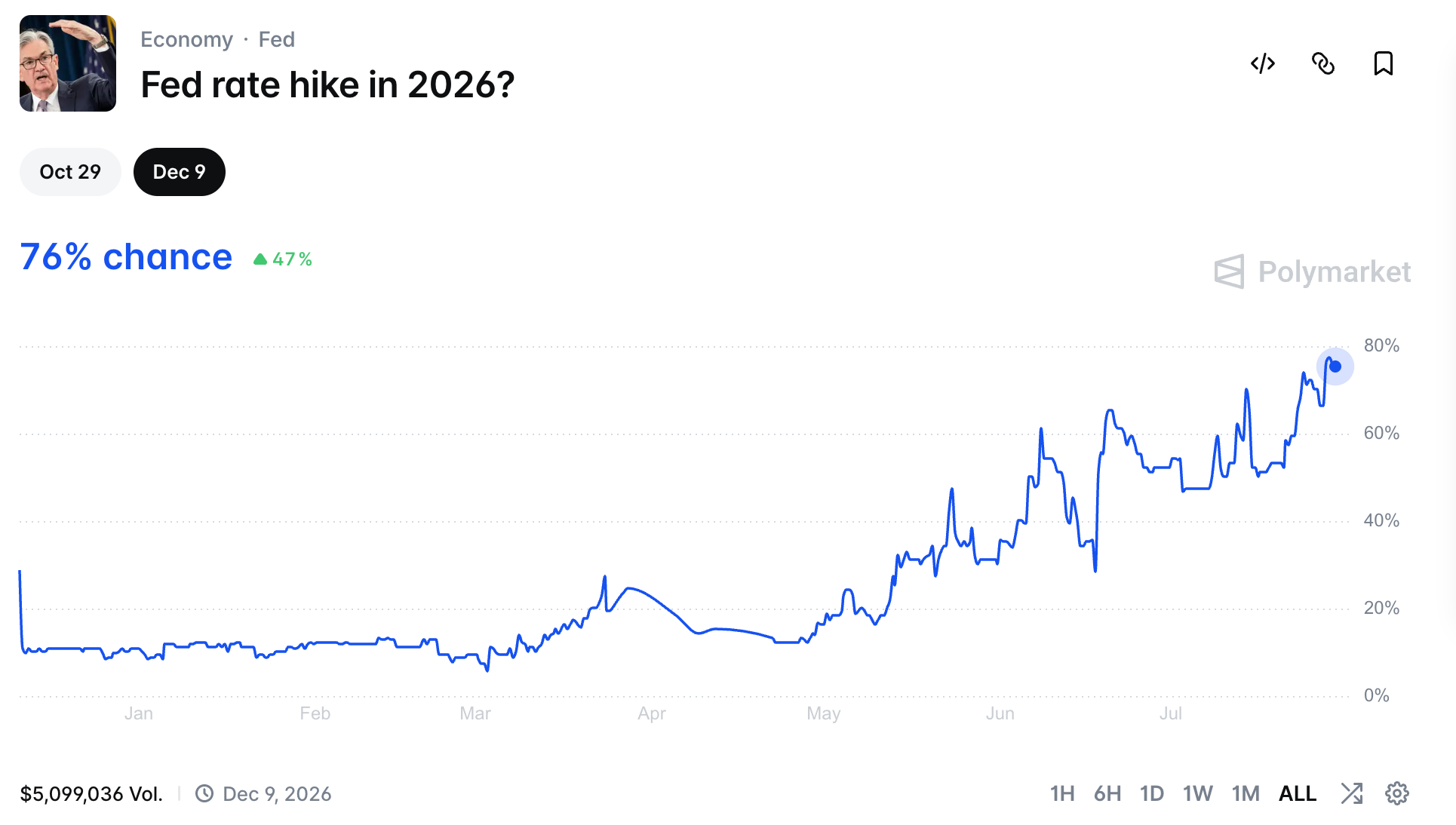
These odds have jumped even after a recent report showed that the US headline and core inflation dropped in June. The headline CPI dropped to 3.5%, while the core CPI that excludes the volatile food and energy prices, dropped to 2.5%.
The risk, however, is that the ongoing escalation between the US and Iran has pushed inflation higher. For example, data compiled by AAA shows that the average gasoline price has jumped to over $4.
Gas prices will likely continue rising now that the US and Iran have resumed their strikes. In a statement to Fox News, President Donald Trump insisted that the US will strike Iran hard after the latter launched a major attack against US bases in Jordan.
Iran will also respond to any US attacks, meaning that the escalation will likely continue in the near term. Such a move will push crude oil and natural gas prices higher, driving inflation above the Federal Reserve’s target of 2.0% for longer than expected.
Bitcoin and other cryptocurrencies tend to underperform other assets in a period when the Federal Reserve is hiking interest rates.
Spot Bitcoin ETF Outflows are Rising
The ongoing Bitcoin price consolidation has led to a surge in ETF outflows. Data shows that these ETFs have shed millions in assets in the past four days. ETF outflows rose to nearly $50 million on Tuesday, a big increase from the $11 million they lost a day earlier.
In total, these funds have shed over $525 million in the last four days. These outflows mean that the net inflows stand at about $172 million this month. Before the outflows started, spot Bitcoin ETFs had inflows for eight consecutive days.
This is happening at a time when Bitcoin treasury companies are no longer accumulating these coins. For example, Strategy, the biggest Digital Asset Treasury (DAT) has not bought any coins in the past few weeks. Indeed, its last Bitcoin transaction was selling coins worth over $200 million. Companies like Strive, American Bitcoin, and Metaplanet have not bought any coins in the past few days.
Bitcoin Price Technical Analysis Suggests Further Weakness
Bitcoin price remained in a broader downtrend after falling from its previous peak near $126,200. BTC traded near $64,000 after struggling to recover above its 100-day moving average.
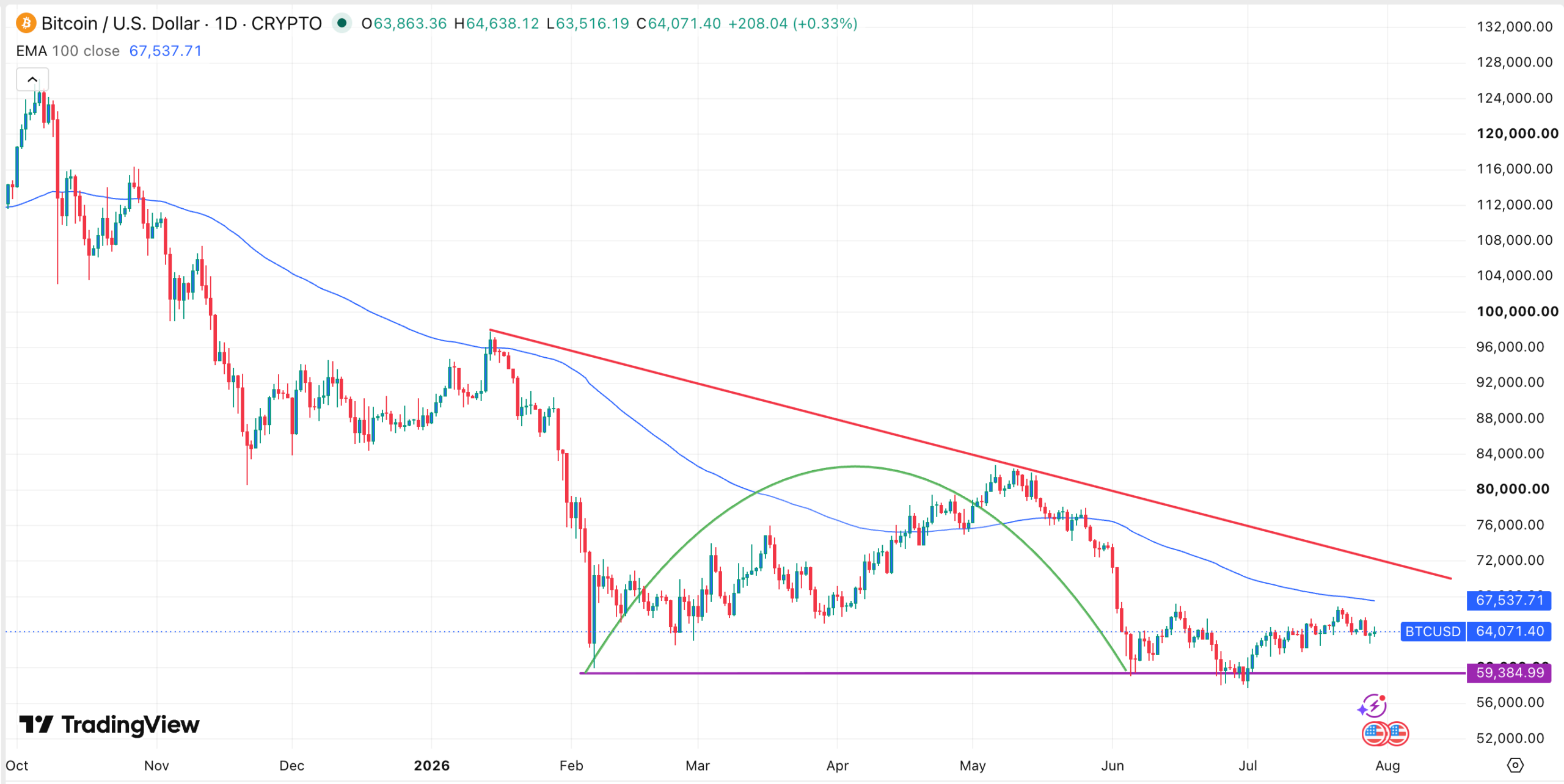
The chart also showed price remaining below a descending trendline connecting the major swing highs since Jan. 14. Bitcoin appeared to be forming an inverted cup-and-handle pattern. The rounded decline formed the cup, while the recent sideways consolidation represented the possible handle.
Traders generally consider the formation bearish after price breaks below its support line. The pattern remains incomplete without that confirmation.
Bitcoin’s first important support sits near the year-to-date low around $57,800.
A decisive daily close below that level could expose the psychological support at $50,000.
However, describing $57,800 as the “most likely” target would overstate the chart’s predictive value.
The bearish scenario remains conditional on Bitcoin losing its current range and confirming the inverted cup-and-handle pattern.
A move above the 100-day moving average would weaken the immediate bearish case.
Bitcoin would then need to break the descending trendline and establish a higher high before confirming a broader reversal.
The near-term Bitcoin price outlook remains tied to ETF flows, inflation expectations and the market’s interpretation of the Federal Reserve’s July decision.




