
 Altai the Tiger
 IGNITION
 streamoors
 Sword Inu
 NEAR Protocol
 Injective
 Quantus
- The Chainalysis report reveals there are more than 400M crypto wallets with positive balances.
- Stablecoins dominate on-chain transactions, surpassing major cryptos.
- Bitcoin hit $100K amid Trump’s pro-crypto regulatory promises.
In a December 5 report, Chainalysis highlighted a transformative phase for the cryptocurrency industry. It was marked by growing global adoption, continuous innovation, and increased integration into traditional financial systems.
Bitcoin (BTC) set new all-time highs in March and December, signaling unprecedented demand and positioning this moment as a pivotal turning point rather than a typical market cycle.
Organizations are no longer merely adapting to the evolving crypto landscape, instead they are actively shaping it. Much of this momentum has unfolded following the U.S. elections, as the market buzzed with consecutive Bitcoin-related news.
President-elect Donald Trump has outlined ambitious plans to revamp the regulatory framework for cryptocurrencies. His initiatives include replacing SEC Chair Gary Gensler with Paul Atkins, a known crypto advocate, and appointing David Sacks as “Crypto Czar” to oversee streamlined regulations. These pro-crypto moves have bolstered market sentiment, propelling Bitcoin to its historic $100K milestone.
Additionally, Chainalysis reported a surge in active crypto wallets with non-zero balances during this bull run. It reflected increased participation and confidence in the market’s future.
Continue reading for more insights on the crypto sector and how new developments shape the future of the market.
Crypto Wallets with a Positive Balance Surged Over 400 Million
More than 400 million crypto wallets now hold positive balances, signaling growing interest as the bull market gains momentum, according to a December 5 report from Chainalysis. The ongoing rally has drawn both institutional investors and retail participants, particularly those utilizing dollar-pegged stablecoins.
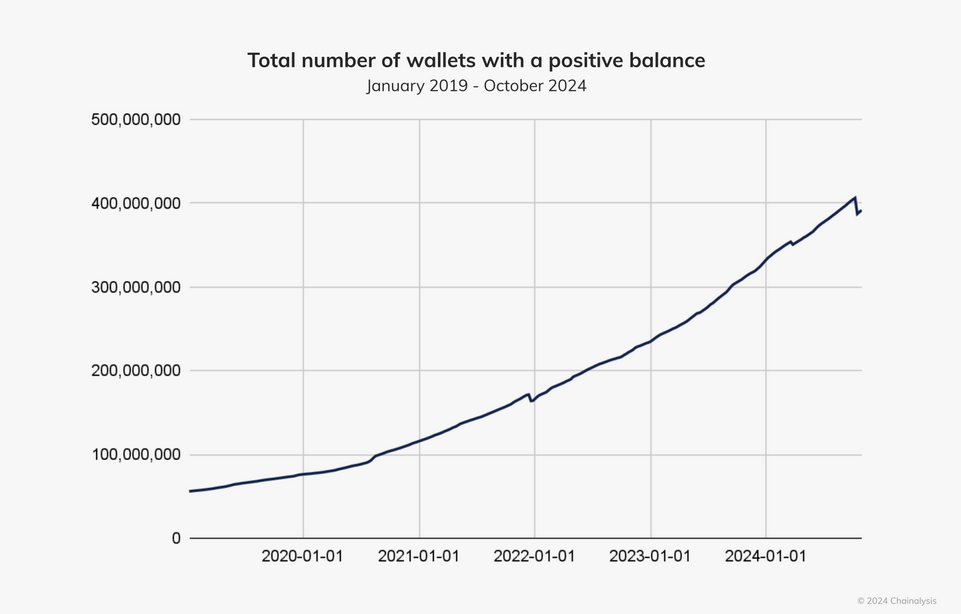
The rise in the number of cryptocurrency wallets with non-zero balances underscores a steady increase in crypto adoption. However, wallet addresses do not directly reflect the number of active blockchain users.
“It is clear that we’re experiencing a seismic shift in both perception and usage,” the Chainalysis team wrote.
Researchers highlighted that this market cycle’s adoption surge is defined by a “merging” of the digital economy with traditional financial institutions, as evidenced by the introduction of exchange-traded funds (ETFs) and similar financial products entering the crypto space.
Are Stablecoins Taking Over On-Chain Transaction Activity?
Stablecoins, which are typically pegged 1:1 to the U.S. dollar or other fiat currencies, offer the benefits of cryptocurrency. The benefits, such as efficiency, security, and transparency, are without extreme price fluctuations.
Major cryptocurrencies like Bitcoin (BTC) and Ethereum (ETH) often dominate headlines due to their potential for significant gains. Conversely, stablecoins have quietly outpaced all other crypto assets in adoption. In recent months, they’ve accounted for over half and sometimes up to 75% of all on-chain transaction volume, as stated in the blog.
Traditionally seen as gateways for entering and exiting the crypto market, stablecoins are increasingly being used as a store of value, particularly in emerging economies, according to a previous Chainalysis report.
By providing global access to the stability of the U.S. dollar, they serve as a lifeline for individuals in regions plagued by currency instability. It is helping preserve savings and facilitate commerce.
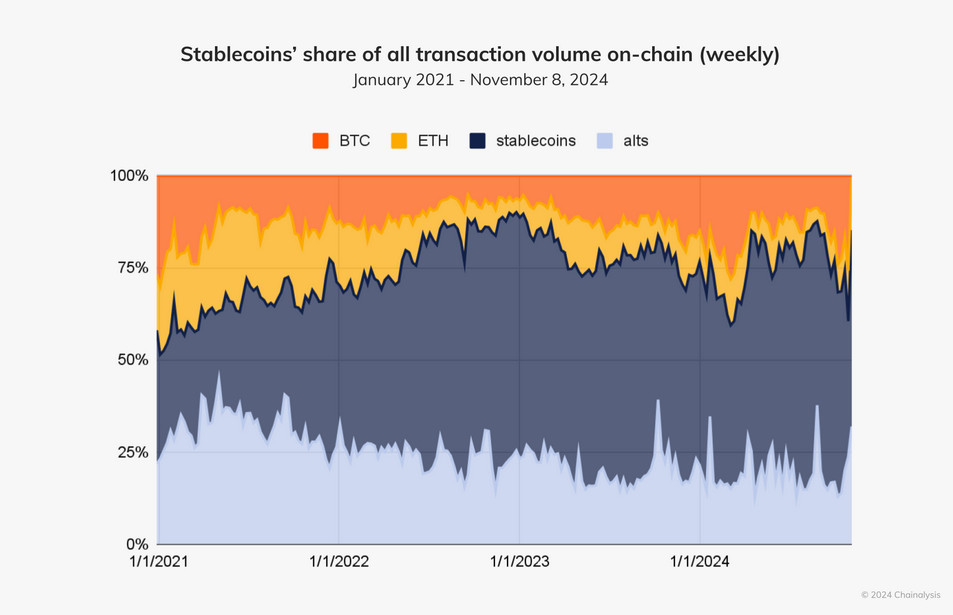
The surge in stablecoin transaction activity highlights their growing utility within the crypto ecosystem. Popular examples include USDT and USDC, with new entrants like XRP‘s RLUSD promising to expand this space further.
RWA Tokenizations are Increasing
Real-world assets (RWAs) include tangible and intangible assets like real estate, art, or intellectual property. Through tokenization, these assets are represented as blockchain-based tokens, making them easier to trade, more accessible, and transparent.
The tokenization of RWAs is reshaping asset management, with major players like Franklin Templeton entering the space. Current projects focus on stable instruments like U.S. treasury bills, with platforms like Goldfinch and Ondo Finance leading the market.
As of now, the total market cap of tokenized assets has surpassed $100 billion. It is signaling a shift toward a more seamless global financial system.
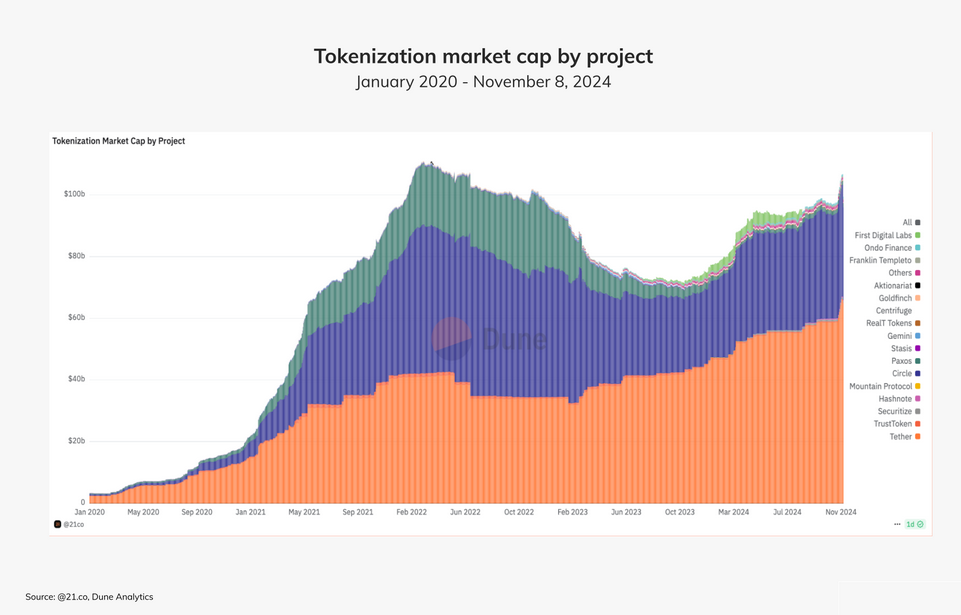
Though still in its beginning stages, the rise of RWAs marks a significant move toward a future where most value transactions happen on the blockchain. They are enabling a more seamless, transparent, and interconnected global marketplace.
Disclaimer
In this article, the views, and opinions stated by the author, or any people named are for informational purposes only, and they don’t establish the investment, financial, or any other advice. Trading or investing in cryptocurrency assets comes with a risk of financial loss.




