Dacity Coin
 Pearl
Pearl Bitcoin
 Injective
 Pudgy Penguins
 Quantus
 Starknet
- Bitcoin price has crossed $105,000 since the Federal Reserve’s rate decision.
- Short liquidations fuel BTC’s rally, with resistance between $105K and $106K.
- Institutional demand rises as whales increase accumulation.
Bitcoin Price surged past $105,237, gaining 2.47% in the past 24 hours. All this happened when the Federal Reserve decided to keep interest rates unchanged.
The move aligned with market expectations. That triggered a wave of short liquidations and reinforced institutional investor confidence.
Bitcoin Holds $100K as Fed Signals Policy Continuity
Leading into the Federal Open Market Committee (FOMC) announcement, the Bitcoin price hovered around $102,000. Following this, the bull attempted to avoid a retest of the $100,000 support level.
Data from TradingView showed that BTC dipped toward $100,000. This happened before recovering as traders positioned themselves ahead of the Fed’s statement.
Market participants had been in a “wait and see” mode, anticipating Fed Chair Jerome Powell’s stance on interest rates. Powell reiterated that inflation remains “somewhat elevated.”
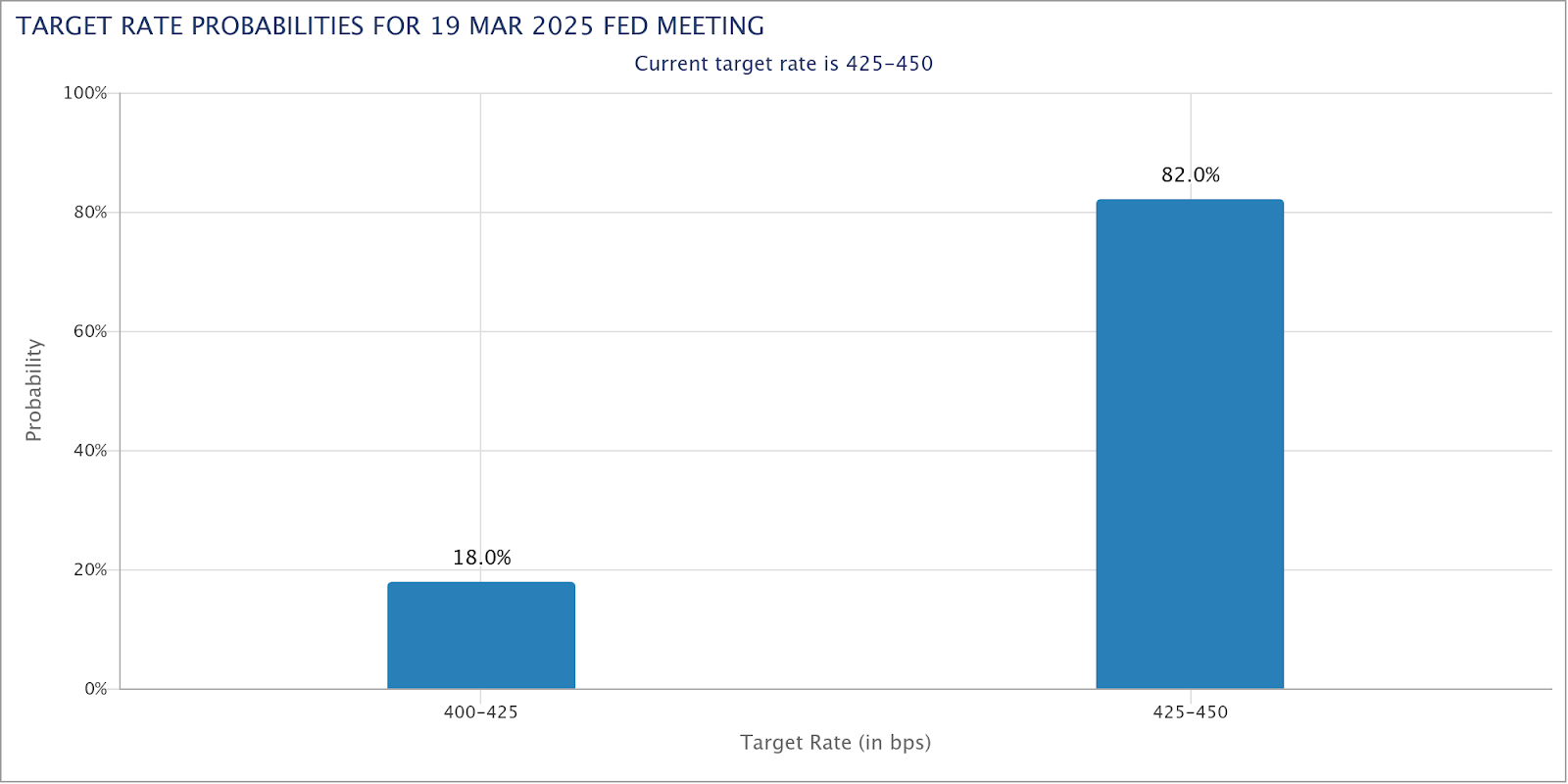
However, the central bank left its benchmark rate at 4.25%–4.50%. The decision followed three consecutive cuts since September. A shift has provided support for risk assets, including Bitcoin.
Traders had widely anticipated the Fed’s move, with CME FedWatch Tool pricing in just a 28% probability of a rate cut in March. The Fed’s stance aligns with its December meeting outlook. The policymakers projected two rate cuts this year—down from the four expected in September.
Bitcoin price initially dropped after the announcement but quickly rebounded, reflecting bullish sentiment. The following key test is breaking $105,000, where sellers remain active.
Short Squeeze Triggers Bitcoin Price Rally
Bitcoin’s post-FOMC price action was primarily driven by futures market activity. Data from Velo indicated that $15 Million in short positions were liquidated within an hour. This fueled the Bitcoin price surge to an intraday high of $104,782.
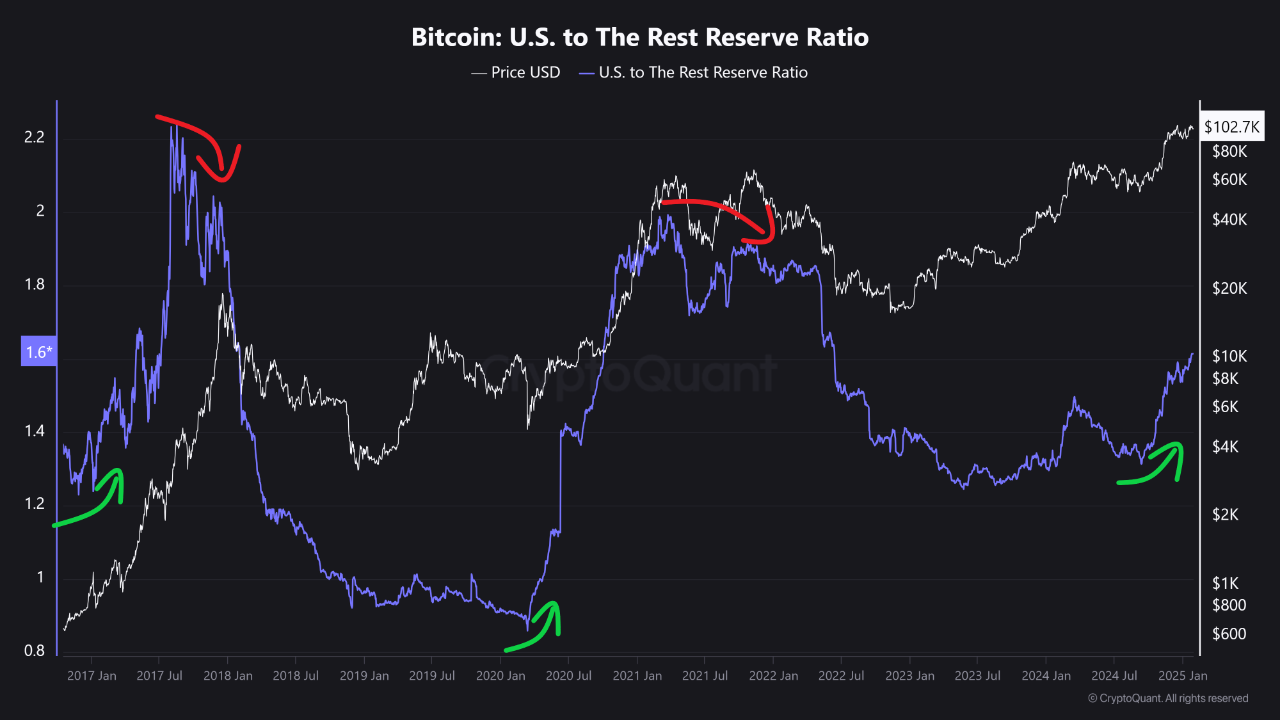
CryptoQuant analysts observed that a key liquidation level was reached as BTC crossed $103,000, triggering a breakout. However, with heavy resistance between $104,000 and $106,000, sustaining the rally would require increased spot market buying.
“Powell’s day usually comes with several waves of volatility,” crypto trader Pierre noted. He added that the Bitcoin price must hold $96,000 as support while clearing $103,000 to confirm a breakout.
Institutional Demand Rises as Whales Accumulate BTC
Bitcoin whales have resumed accumulation. Furthermore, CryptoQuant data showed inflows exceeding 22,770 BTC into large wallets. The rise in over-the-counter (OTC) purchases signaled increasing institutional interest.
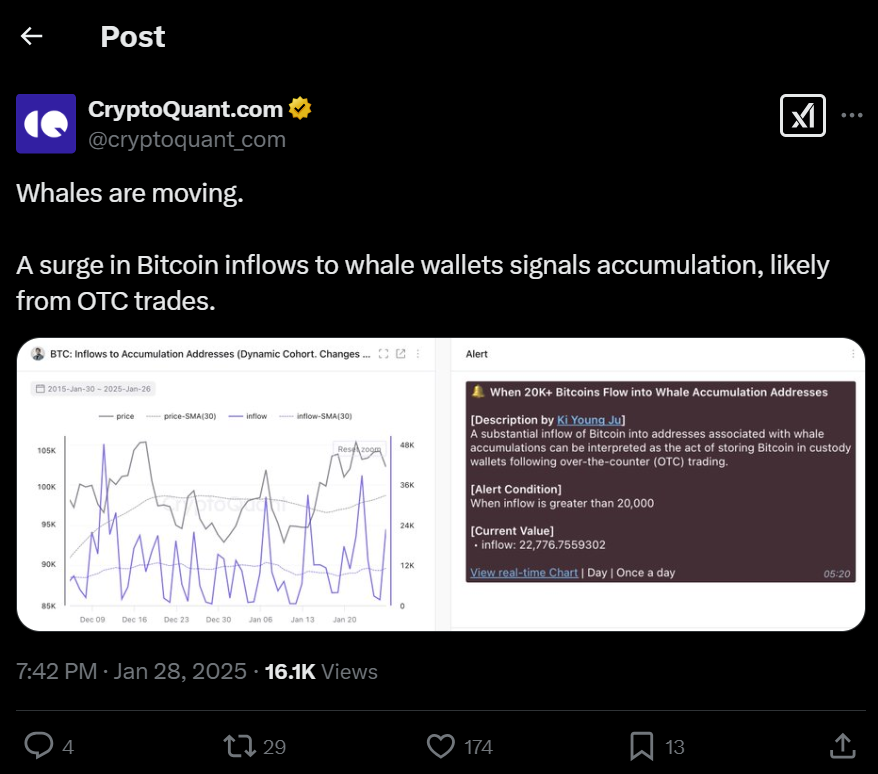
Coinbase Prime Brokerage, a central U.S. institutional trading platform, has reported a surge in Bitcoin transactions. This reinforced the notion that American investors are driving this accumulation phase.
Over 50% of Bitcoin’s spot trading volume now comes from U.S. entities, including hedge funds and banks.
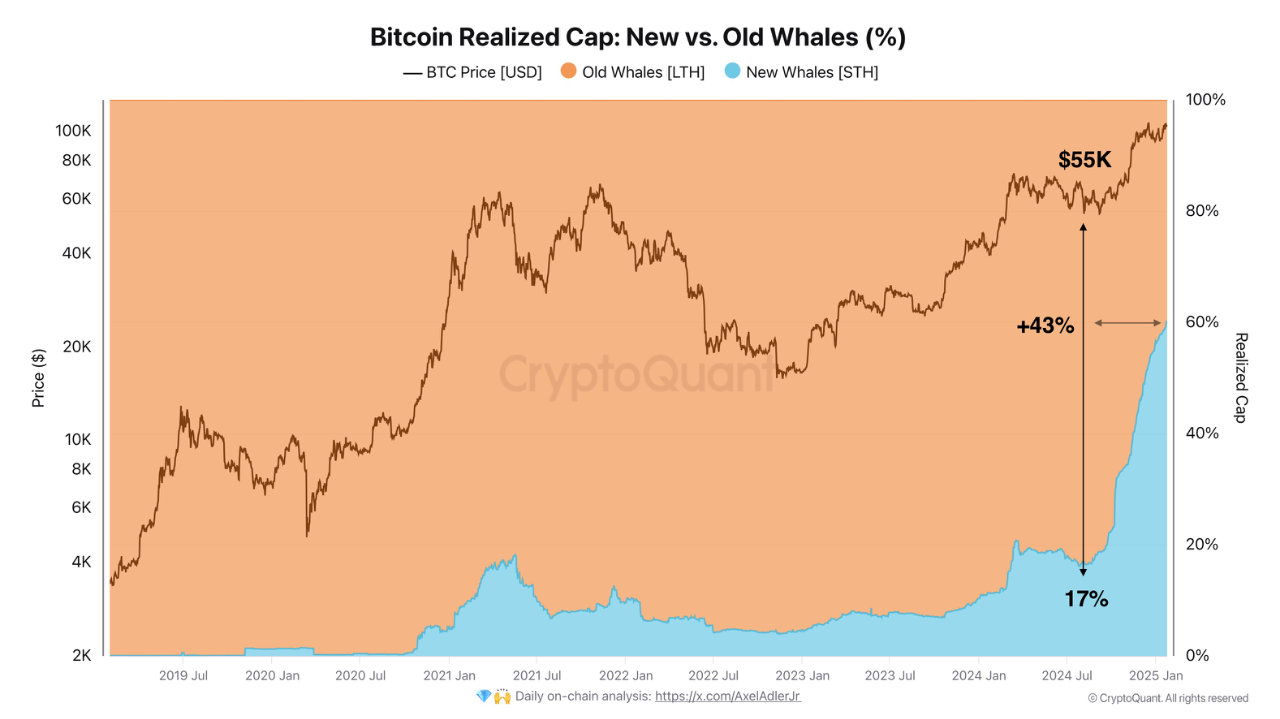
Furthermore, the number of new whales has climbed to 60% of total large-player capitalization. This group has expanded by 43% since Bitcoin reached $55,000 last year, indicating strong confidence in BTC’s long-term prospects.
Bitcoin’s Breakout Test: Can Bulls Clear $106K?
Bitcoin price has been battling resistance between $104,000 and $106,000. This is a key zone for a breakout.
Rekt Capital notes BTC is testing its light blue diagonal resistance within the $101,000–$106,000 range. A daily close above this level must confirm a breakout and push toward range highs.
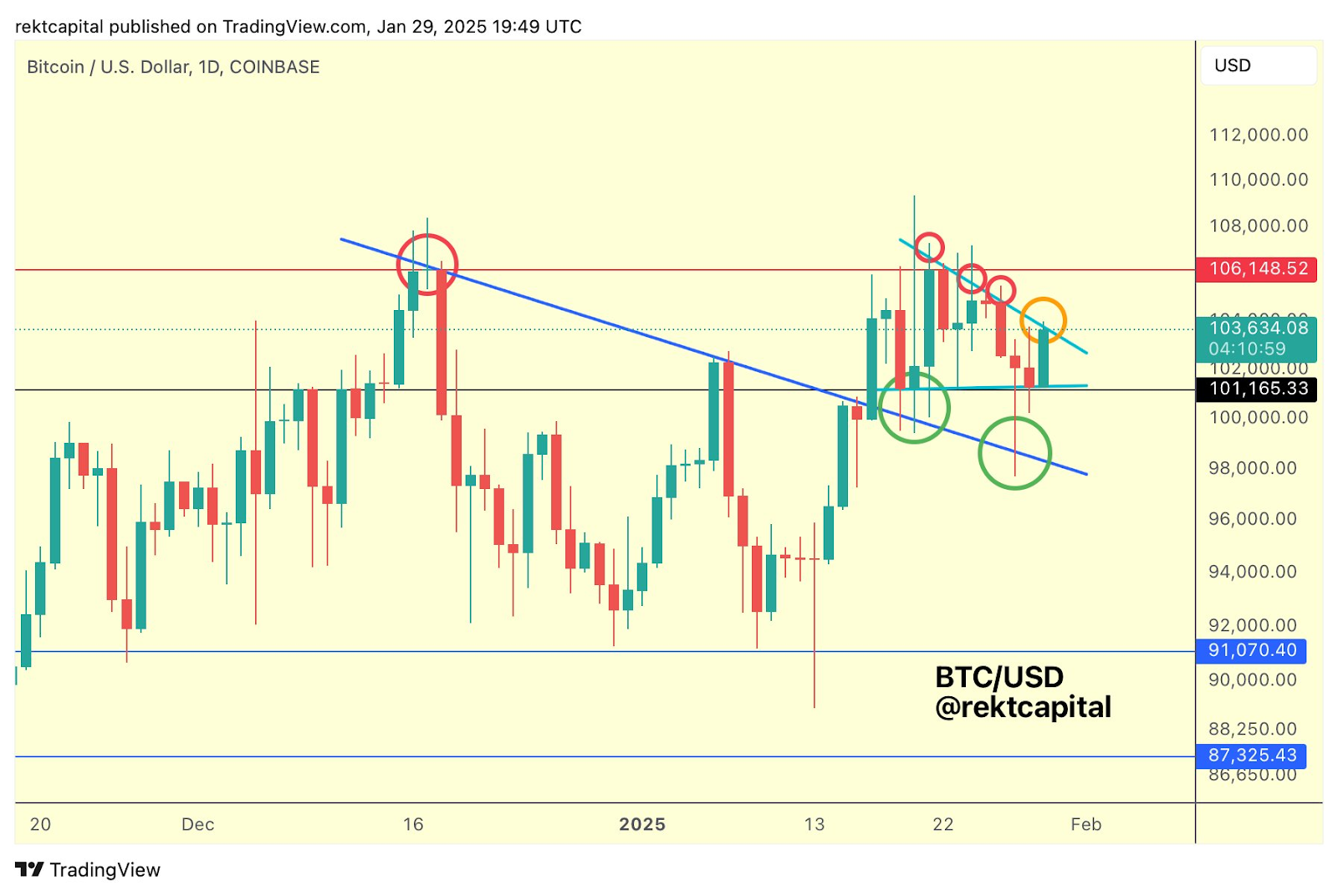
CoinGlass data shows strong liquidity, just below $104,000, indicating active sellers. Previous attempts to break resistance led to FOMO wicks—temporary spikes followed by rejections.
Institutional demand and whale accumulation could fuel an upward move. However, macroeconomic factors, including Federal Reserve policy, will shape BTC’s direction.
Disclaimer
This article is for informational purposes only and provides no financial, investment, or other advice. The author or any people mentioned in this article are not responsible for any financial loss that may occur from investing in or trading. Please do your research before making any financial decisions.