
 Zylo Ecosystem
 Walrus
 Bitcoin
 Sui
Sui Quantus
 Quant
Quant Starknet
Key Insights:
- Ripple and SEC agreed to pause appeals and await final settlement approval from SEC commissioners.
- The proposed deal would resolve all charges against Ripple’s top executives.
- Legal experts say an injunction review by Judge Torres could influence the outcome of the settlement.
The Ripple vs. SEC legal battle appears headed for a resolution after more than three years of litigation. On April 10, Ripple Labs and the United States Securities and Exchange Commission filed a joint motion to pause their appeals.
This move signaled anticipation of reaching a final settlement agreement. The joint motion follows months of back-and-forth legal maneuvers that saw Ripple and the SEC challenge parts of a 2023 ruling.
If approved, the agreement will resolve the SEC’s appeal and Ripple’s cross-appeal. It will also address the remaining charges against Ripple executives Brad Garlinghouse and Chris Larsen.
Court Filing Suggests Final Phase in Ripple vs. SEC Case
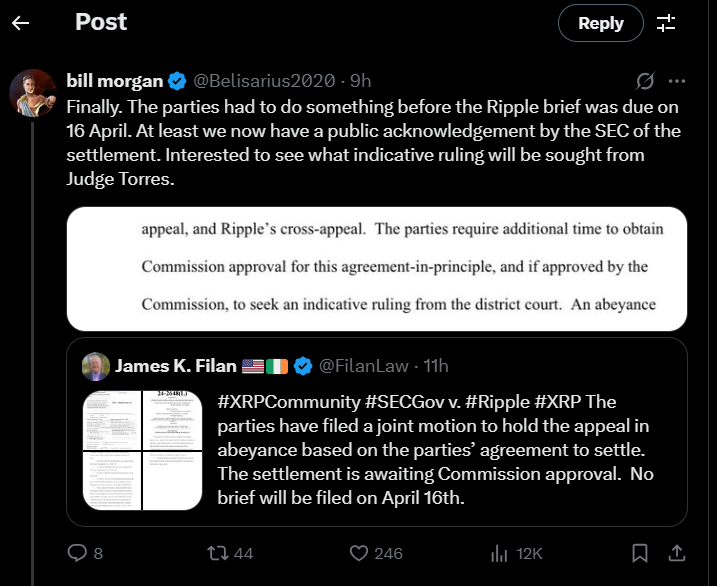
James K. Filan, a US defense attorney following the case, shared the news on X. He stated that in the Ripple vs. SEC case, both parties filed a joint motion to pause the appeal due to their agreement to settle. The settlement is awaiting Commission approval. No brief will be filed on April 16th.”
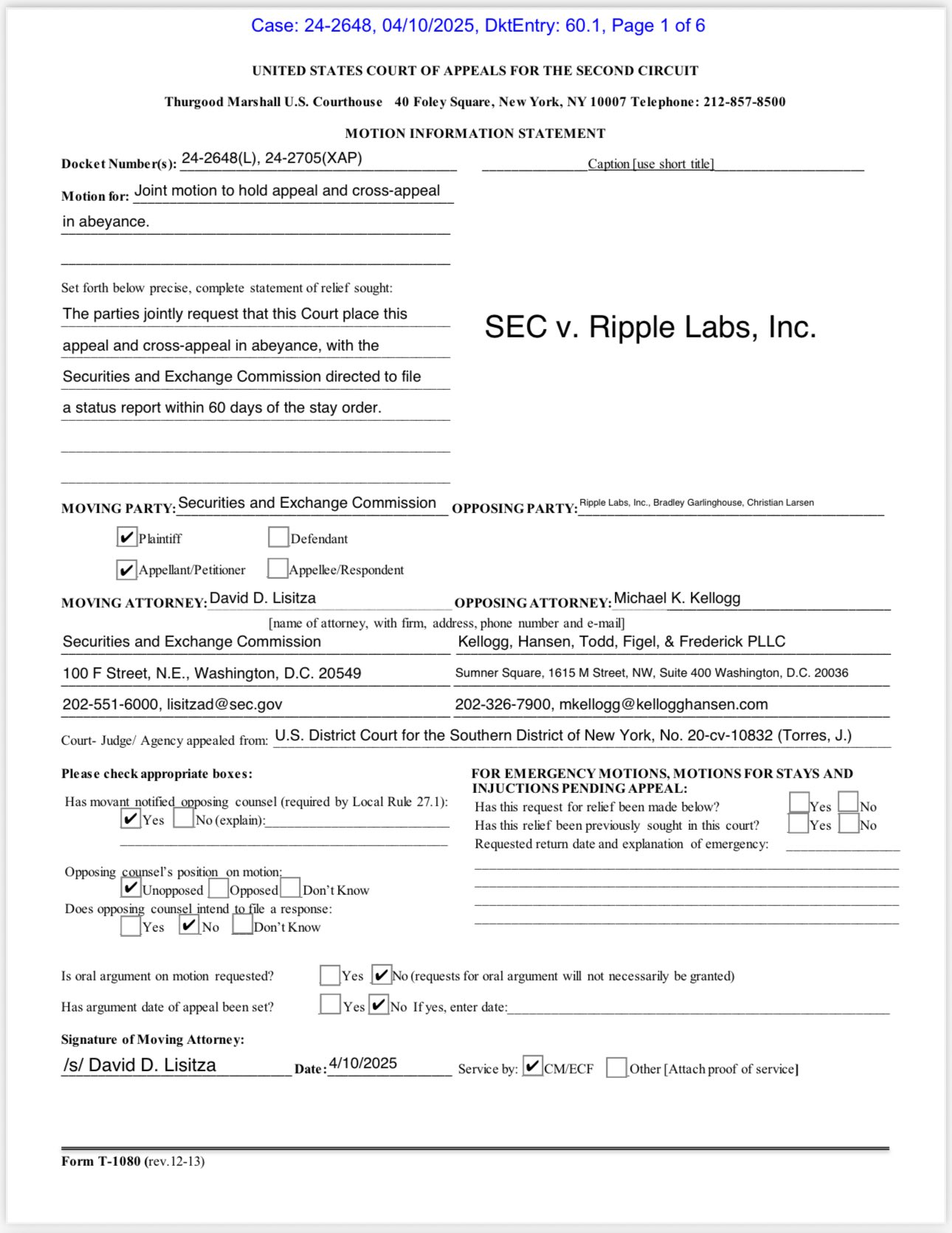
That April 16 deadline had been scheduled for Ripple’s reply brief in the appeal. The motion now halts that process, with both parties seeking additional time to finalize the terms. The settlement will only become official once approved by the full SEC commission.
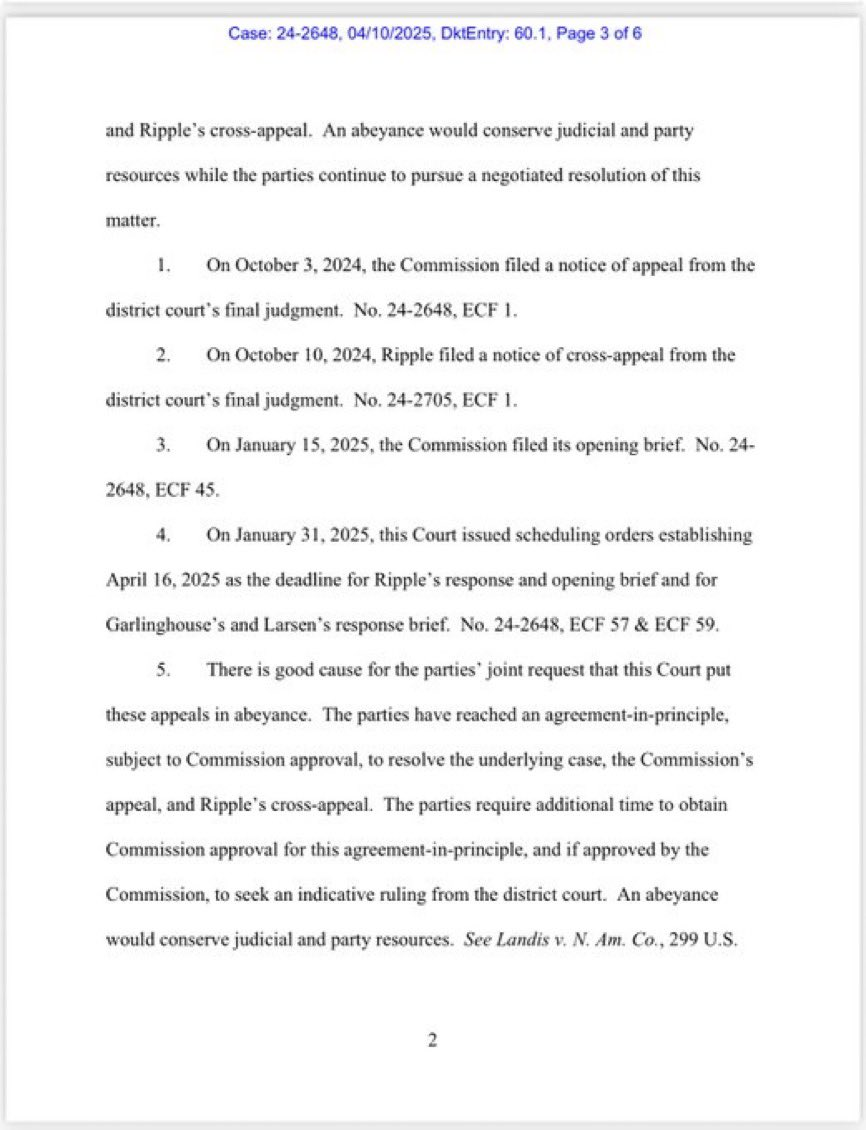
Brett, a pro-XRP commentator, called the filing a breakthrough. He stated that Ripple and the SEC have paused their appeals after reaching a preliminary agreement. If approved, it would resolve all charges.
Final Terms Under Review by SEC Commissioners
The proposed settlement covers all remaining litigation issues. This included the SEC’s appeal of Judge Analisa Torres’ decision and Ripple’s earlier decision to withdraw its cross-appeal in March.
It also resolves outstanding allegations against Garlinghouse and Larsen. It stems from the SEC’s 2020 complaint accusing Ripple of selling unregistered securities.
A court document filed Thursday requests the Second Circuit to pause the SEC’s and Ripple’s appeals. This motion, related to Ripple vs. XRP, is pending final commission approval.
The filing states the parties “have reached a settlement in principle,” suggesting that discussions have moved beyond preliminary stages.
The SEC’s request comes from a move similar to Gemini’s earlier this month. In that case, the agency also requested a two-month pause to conclude settlement negotiations regarding Gemini’s Earn program.
Legal Experts Weigh in on Strategy Shift
The filing’s timing aligns with the Senate confirmation of former SEC commissioner Paul Atkins. Some legal observers see his crypto-friendly stance as influential in driving this shift.
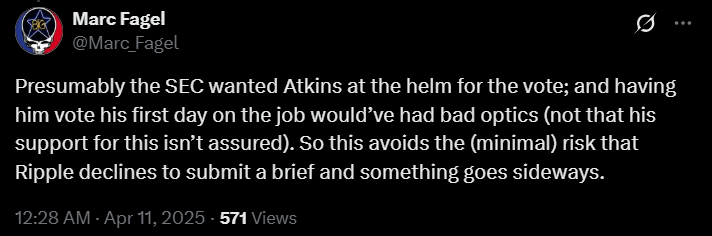
A former SEC lawyer, Marc Fagel, said on X that Atkins’ involvement might have been strategically delayed to avoid political backlash. Fagel wrote that the SEC likely wanted Atkins at the helm for the vote.
He suggested this move was to ensure internal alignment before approving the settlement. He noted that the appeal withdrawal might hinge on Judge Torres’ ruling. The decision concerns a prior injunction preventing Ripple from selling XRP to institutional investors.
XRP ETF and Market Impact in Focus
Pro-crypto attorney Bill Morgan pointed out that the motion marks the first public confirmation by the SEC of a settlement. “At least we now have a public acknowledgment by the SEC,” Morgan wrote. He added that attention will now turn to whether Judge Torres will revisit the injunction order.
Should the injunction be lifted and the case closed, some analysts believe it could open the door for a spot XRP ETF in the US. However, no formal filings have been made. It may also accelerate Ripple’s expansion of operations across the US market.
The legal battle of Ripple vs. SEC has spanned over three years, starting in December 2020. The Commission alleged that XRP constituted an unregistered security. This triggered a broader debate on crypto classification in the United States.
Ripple has maintained that XRP operates as a digital currency. Therefore, it argues that XRP does not fall under the SEC’s jurisdiction as a security.
If finalized, the Ripple vs. SEC settlement could serve as a blueprint for future regulatory actions involving crypto firms. It would end one of the industry’s most closely watched cases. This could open the door to increased institutional engagement with XRP and similar assets.
Disclaimer
This article is for informational purposes only. Crypto investment involves inherent risks due to the volatility in price. Readers should conduct their own research before making any investment decision. Also, you can consult a crypto expert before investing in cryptocurrencies.



