
 IGNITION
 streamoors
 Injective
 NEAR Protocol
 Pearl
Pearl LayerZero
 Quantus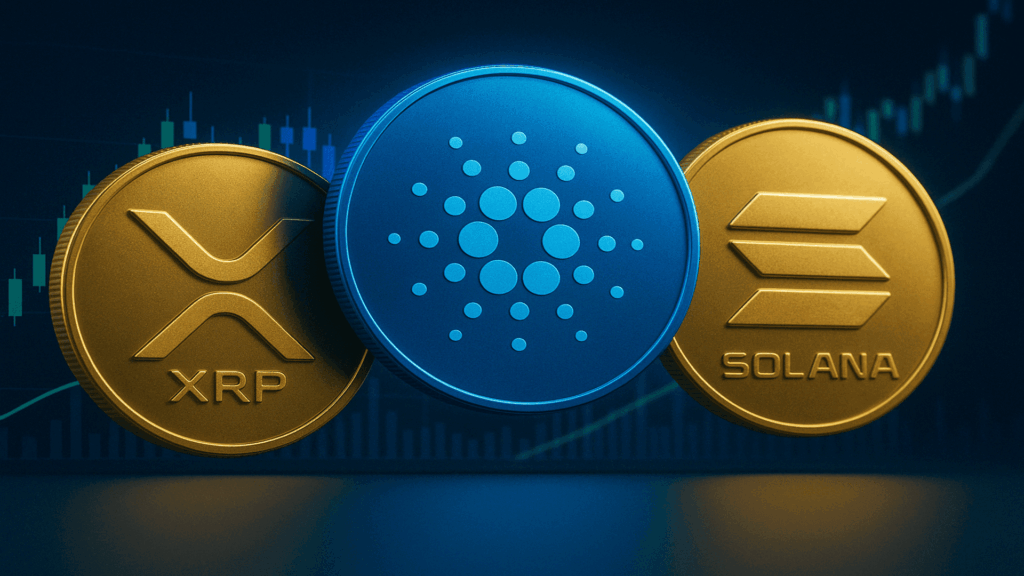
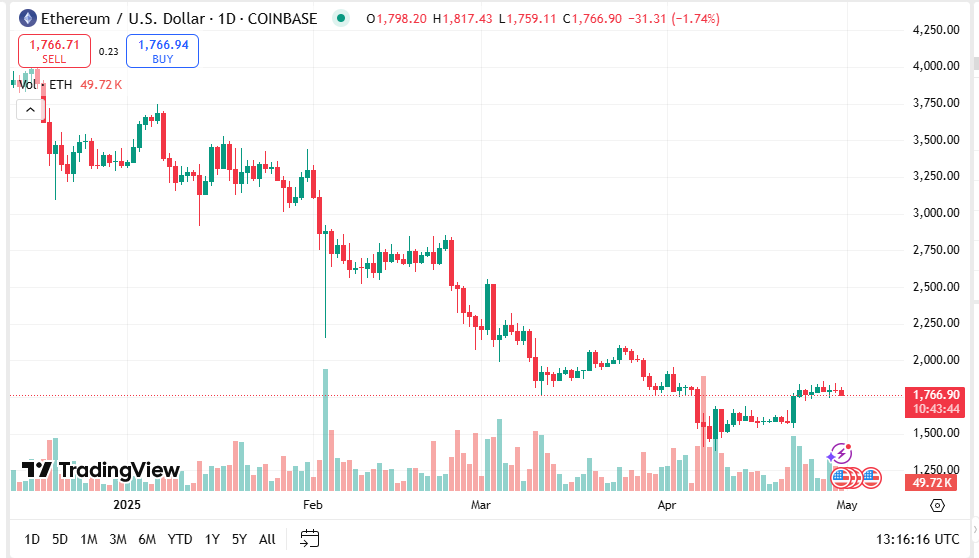
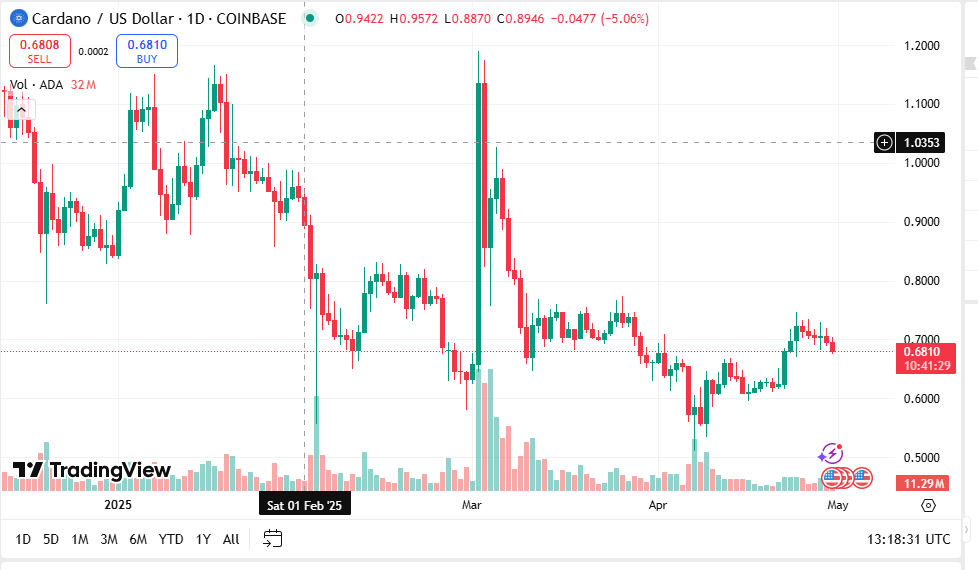
Ethereum sits at $1,779.40 and Cardano at $0.6861. They’re worth $214.95 billion and $24.22 billion, with average daily volumes of $12.42 billion and $703.91 million.
Those eye-catching figures opened up an argument now blazing the desks from London to Singapore: can XRP outcompete both chains? If so, are Ethereum and Cardano bulls about to get left behind? Or, are they circling a new entry point in the form of rising contenders like Remittix (RTX), which already has whales betting big?

Standard Chartered Fan-The-Flame
One bank note, released late last week, says XRP might surpass Ether’s valuation. It could happen after the settlement of U.S. spot-ETF approvals and Ripple’s payments rails win broader acceptance.
The note stoked self-examination among heavily invested Ethereum and Cardano trading desks. They counter-argue the case against the ether base case. They say Ethereum still holds more than 55% of the total DeFi value locked. It will shortly trim down transaction costs and latency when its Pectra upgrade occurs.
In the meantime, Cardano’s Hydra heads-up scaling promises sub-second finality. This quality could keep ADA ahead of its time even if XRP overshadows Ether.
On-chain indicators support such durability. Exchanges’ supply of ADA is at a six-month low as whales swap tokens to self-custody. That indicates conviction rather than capitulation. Likewise, the percentage of long-term ETH holders set an all-time high in April. That evidences the “diamond-hand” culture of Ethereum and Cardano enthusiasts.
Ethereum’s Roadmap Still Matters
Despite price flatlining, developers continue to be drawn to Ethereum’s master repository of tooling, stablecoin depth, and battle-tested security. EigenLayer restaking went live this spring, giving ETH holders the chance to double-dip on rewards without exiting the system.
Smart-contract fees staying high, staking reward, plus potential ETF inflows may sustain demand, despite XRP flipping the chain for a piece of time.
Cardano isn’t lagging behind either. Its most recent figures show a 70% jump in 24-hour volume. That aligns with test-net demos of Minataur, the stablecoin-staking module. If Minataur ships on schedule, owners could potentially earn dollar-denominated yield without selling ADA. It’s a major force that would draw capital back from alternative ecosystems.
In that regard, the majority of long-range models still allocate core exposure to Ethereum and Cardano, assuming at least one holds a top-five position by 2026.
Could Cardano Instead Steal Ethereum’s Thunder?
Standard Chartered’s fee forecast may come to pass, but a few quant desks offer an alternative spin: ADA rather than XRP may not only drive Ether, but may do so should Hydra and governance hard forks proceed without incident.
Cardano’s redesign of fee markets later in the year will allow dApp developers to pay fees in native tokens. It’s a bonus welcome to projects leaving Ethereum’s gas uncertainty behind. If usage on the network increases, supply locked up at stake pools (presently 63% of circulation) will increase scarcity. It will provide a potential for a 300%–400% breakout to the $2.50 region.
Seasoned traders, therefore, own Ethereum and Cardano in scenario trees: either ETH retains dominance and absorbs ETF flows, or ADA’s future feature set does so instead. The chances of both losing market share simultaneously are lower than headlines suggest. That’s especially with Bitcoin‘s halving in the rearview and alt-season rotations in play.
The Remittix Wildcard

While analysts debate Ethereum, Cardano has a different tale to tell. That has pulled in more than $14.6 million from whale wallets: Remittix (RTX). It is selling at around $0.0757 with 530 million tokens traded. This platform powers a crypto-to-cash bridge that settles payments into international bank accounts in minutes.
Each exchange burns some RTX, which renders real-world payments an everlasting supply sink. It is something neither Ethereum gas fees nor Cardano staking does directly.
Transaction users grew 17% week-over-week after small and medium-sized enterprises in Nigeria and the Philippines applied “crypto-in, cash-out” invoicing. Fee-share models divert 20% of conversion profits back to holders as a yield stream that is independent of inflation reward.
With EU e-money and U.S. MSB licenses on the horizon, and Solana-Pay and EVM hooks on their Q3 schedule, RTX supporters expect a fair 10× if volume reaches just a few basis points of the $190 trillion remittance market.
Whales have hedged the Ethereum and Cardano competition. They are positioning themselves for an asymmetric payoff outside the Layer-1 universe, even under engagement. They are considering a payment token whose burn rate rises with adoption.
Catch the Next Wave—Back Remittix Early
Standard Chartered may be right that XRP may temporarily pass Ether, but the long-term leaderboard will come under execution, not headlines. Ethereum and Cardano both possess significant developer talent, future upgrades, and vested communities, so a mass displacement is not in the cards.
Still, the best way may be diversification: hold core positions in the smart-contract giants and leave a growth sleeve for early utility bets such as Remittix. That combination of blue-chip reliability, network-breakthrough potential, and speculative kicker on real-world payments is a recipe that many fund managers believe to be the best way to catch crypto’s next macro wave.
Join the Remittix (RTX) presale and community:
Join the Remittix (RTX) Community
Disclaimer: Any information written in this press release or sponsored post does not constitute investment advice. Themarketperiodical and all its authors do not, and will not, endorse any information on any company or individual on this page. Readers are encouraged to make their own research and make any actions based on their own findings and not from any content written in this press release or sponsored post. Themarketperiodical.com is and will not be responsible for any damage or loss caused directly or indirectly by the use of any content, product, or service mentioned in this press release or sponsored post.


