
 astronaut
 Zylo Ecosystem
 Pearl
Pearl Sui
Sui Walrus
 Quantus
 Quant
Quant

Bitcoin ETFs have seen a massive influx of funds recently. In just five weeks, investments have exceeded $9 billion. This surge highlights growing interest in Bitcoin among institutional investors. The trend suggests strong market confidence in crypto-backed assets.
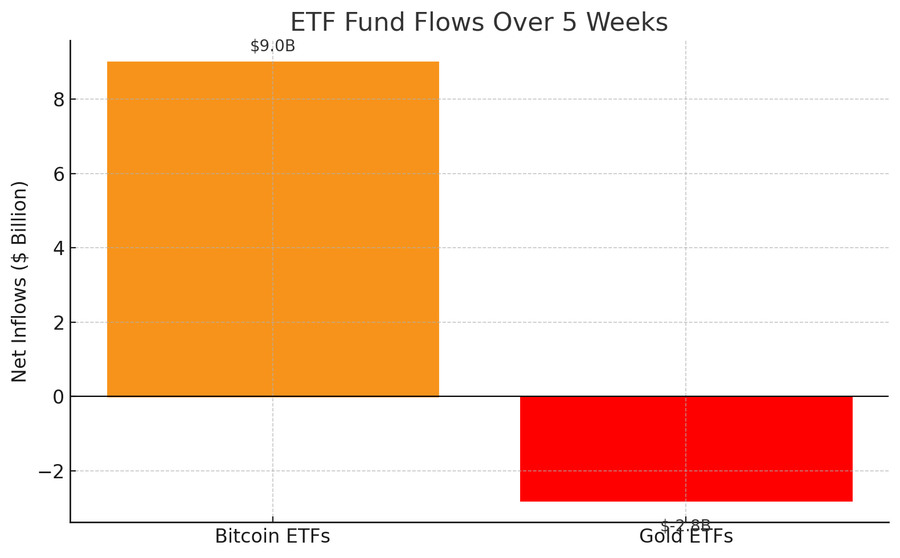
Gold ETFs saw a significant outflow of $2.8 Billion during this period. This loss was much greater than the total inflows of $184 billion. The imbalance highlighted a strong shift in investor sentiment.
Sustained Capital Inflows Indicate Growing Institutional Interest
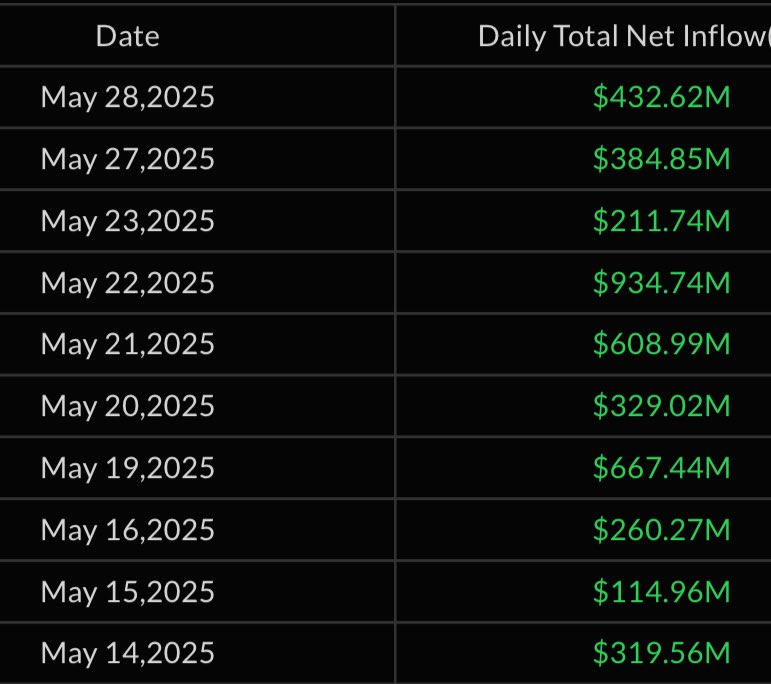
U.S. Bitcoin ETFs have seen inflows ranging from $115 Million to $935 Million for the last ten consecutive days.
The most significant spikes were on May 22 ($934.74 Million), May 19 ($667.44 Million), and May 21 ($608.99 Million). These figures indicate a steady demand for Bitcoin through regulated financial products.
BlackRock’s Bitcoin ETF, IBIT, has pushed this trend. Net inflows of $6.35 Billion in May increased IBIT’s assets under management to $71 Billion.
Institutions are getting more involved in Bitcoin. This marks a shift from speculation to serious investment. Funds flowing into Bitcoin ETFs have protected the price and have helped slow down sell-offs.
Bitcoin ETFs Outpace Gold ETFs in Long-Term Capital Flows
Capital flows into U.S. spot Bitcoin ETFs and SPDR Gold Shares (GLD) have varied over the past seven years. This reveals a stark contrast in adoption speed.
Bitcoin ETFs have drawn $36.2 billion since their launch. This is over 20 times the amount the first gold ETFs attracted.
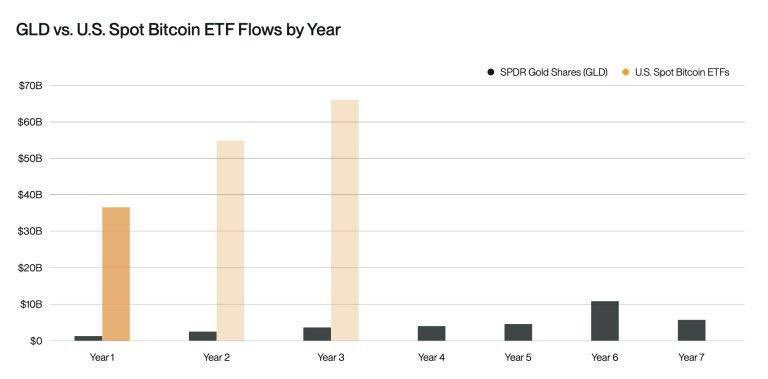
Gold ETFs received more funds in their sixth and seventh years, averaging about $10 Billion to $12 Billion. On the other hand, Bitcoin’s inflows quickly increased.
According to Bitwise, Bitcoin ETFs might receive $120 Billion by the end of 2025 and $300 Billion by 2026. Per recent trends, significant institutions are becoming willing to use Bitcoin for value storage and exchange.
Bitcoin Exchange Reserves Reach Historic Lows Amid Rising Prices
Blockchain data revealed a steady drop in Bitcoin holdings on exchanges. The amount fell from nearly 3.4 million in late 2022 to about 2.4 million by May 2025. At the same time, Bitcoin now sits close to the $100,000 level.
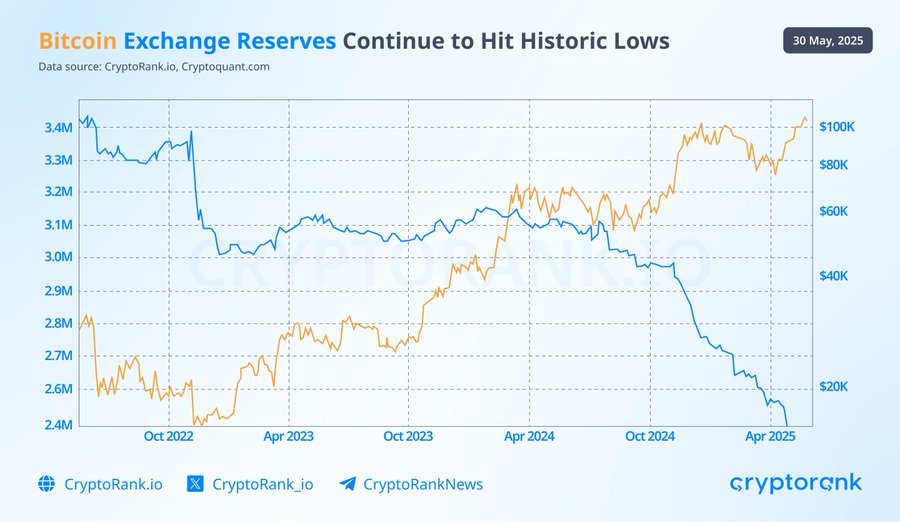
It shows that people are moving Bitcoin into cold storage, which means accumulation for the future. A smaller supply of cryptocurrency may encourage more people to buy, which could help prices rise.
Non-custodial, secure wallets are being used more frequently. This indicates that large investors and governments see them as the safest crypto-holding method.
Reducing the amount of crypto stored in exchanges minimizes the risk of rapid sales, leading to less market instability.
Market Cycle Patterns Suggest Strong Bullish Potential
The 2020-2021 and 2024-2025 cycles have traveled very similarly. Both bull and bear markets have accumulation, acceleration, and a last bullish rise. The most recent bull run in Bitcoin ended at a high of $69,000.
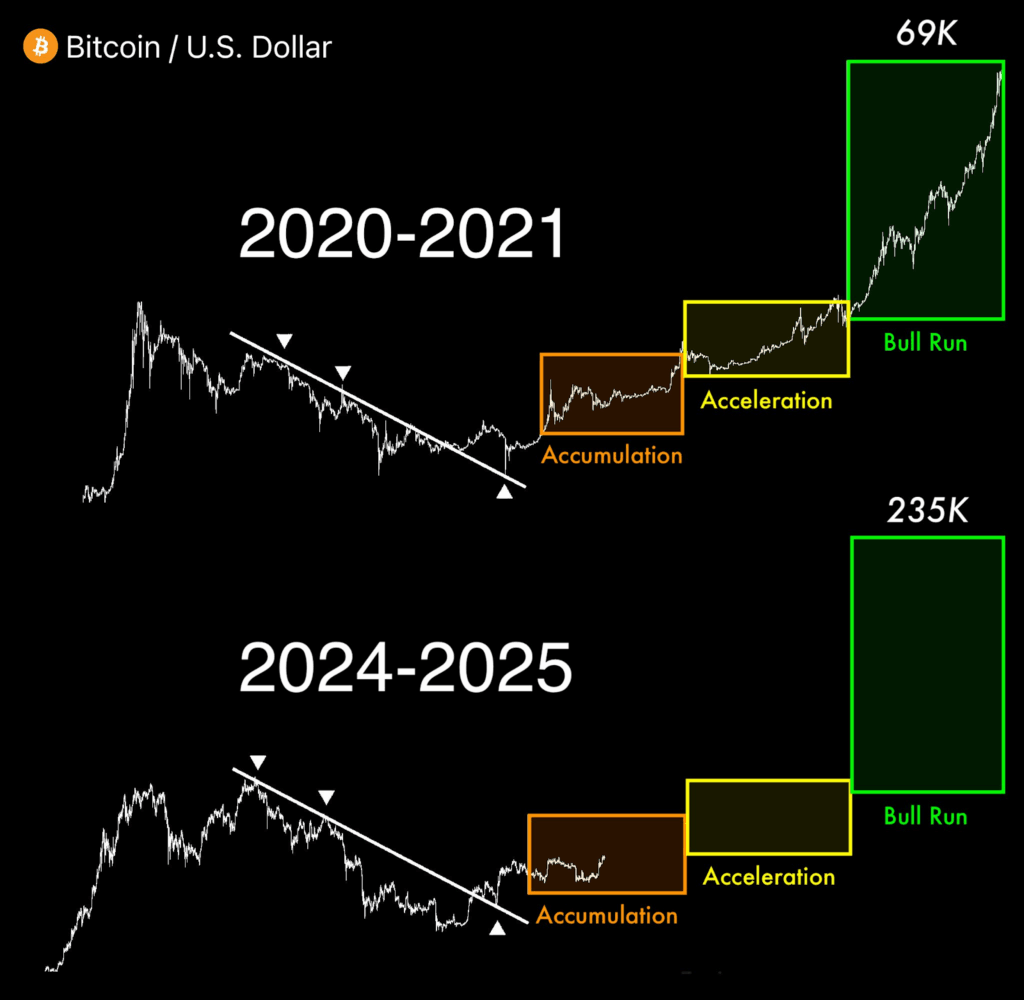
Bitcoin is currently in its accumulation period and is expected to move upward, resulting in a bull run shortly. CryptoNobler predicts that Bitcoin could reach $235,000 in this cycle, much more than it reached in the past.
This supports the view that Bitcoin has a strong chance of improving because the cycles are similar. However, the Fear & Greed Index is at 60; the market is experiencing more Greed. This suggests that optimism and trading activities are rising.
Crypto traders are confident that prices will rise, suggesting strong momentum. The index is still lower than 70, which shows the market isn’t yet overwhelmed by excessive greed. According to the current forecast, Bitcoin price will increase by 10.29% and reach $ 115,640 by June 28.
Disclaimer
This article is for informational purposes only and provides no financial, investment, or other advice. The author or any people mentioned in this article are not responsible for any financial loss that may occur from investing in or trading. Please do your research before making any financial decisions.




