Dacity Coin
 streamoors
 astronaut
 Injective
 Celestia
 Pudgy Penguins
 Sui
Sui
Key Insights:
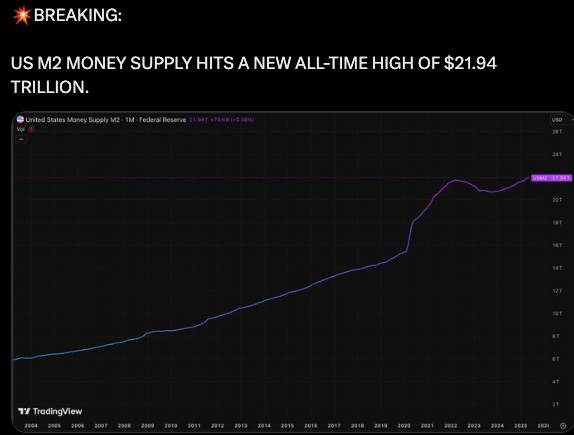
- US M2 money supply climbs to unprecedented $21.94 trillion level
- Surge raises concerns over inflation and weakening dollar strength
- Analysts warn that excessive liquidity may boost risk asset bubbles
The United States has achieved a landmark, which is a tremendous achievement in terms of finances. The M2 money supply of the country recently stood at a sum of 21.94 trillion dollars, the most significant number ever recorded. This upsurge has revived concerns touching on inflation, a faltering dollar, and sizzling markets.
M2 encompasses checking accounts, money market fund,s and savings deposits, as well as cash. When this figure is increasing at a rapid rate, it tends to indicate that there is more money being circulated into the economy. However, this additional liquidity is not free of danger.
Rising M2 Money Supply Prompts Economic Analysts to Pay Attention
Several people have been caught surprised by the recent increase in M2. The rise is an indication that there is an increase in liquidity at an accelerated rate. This, economists say, could add more pressure on prices, especially when the demand begins to gain momentum over supply.
Mark Jensen, a financial analyst, said, “When the money starts to rush into the system, the prices tend to come. It is an alarm bell that one must not overlook.”
The Federal Reserve had been sending signals that there would be a breather on raising interest rates. However, this sudden leap can alter those plans. An increase in the amount of money in circulation may drive prices up in the next few months.
Markets React as Concerns About Overheating Grow
The financial markets have already begun to respond. Other investors are rebalancing their portfolio to less risky funds. Others are, however, buying up stocks in the expectation that liquidity will continue.
This makes the situation explosive. The additional money released into the economy would push the asset prices that are not really worth it. Analysts caution that this may end up causing bubbles, which may be the case in industries such as tech, crypto, and real estate.
Dollar to Lose Strength and Inflation May Rise Again
The cooling of inflation had been experienced in the earlier quarters. However, recent M2 figures indicate that the trend might turn the other way. The larger the money supply, the more the coins will be devalued.
Indicatively, the U.S dollar index has been on the decline. When a dollar is weaker, it increases the cost of imports. That may lead to an increase in price of fuel, electronics, and groceries.
This has an empirical impact; ordinary citizens of the US could find their bills increasing and their purchasing power decreasing soon. And when expectations of inflation increase, there may not be enough increase in wages to keep up.
Federal Reserve is Under New Pressure to Act
There are those who feel that intervention will have to be made by the Fed in the near future. It can either hike interest rates or allow its balance sheet to tighten. They would both decrease liquidity and slacken inflation, however, at a cost.
Increased cost of borrowing could cause consumers and businesses to start retrenching. That would halt economic growth when the economy was just taking off.
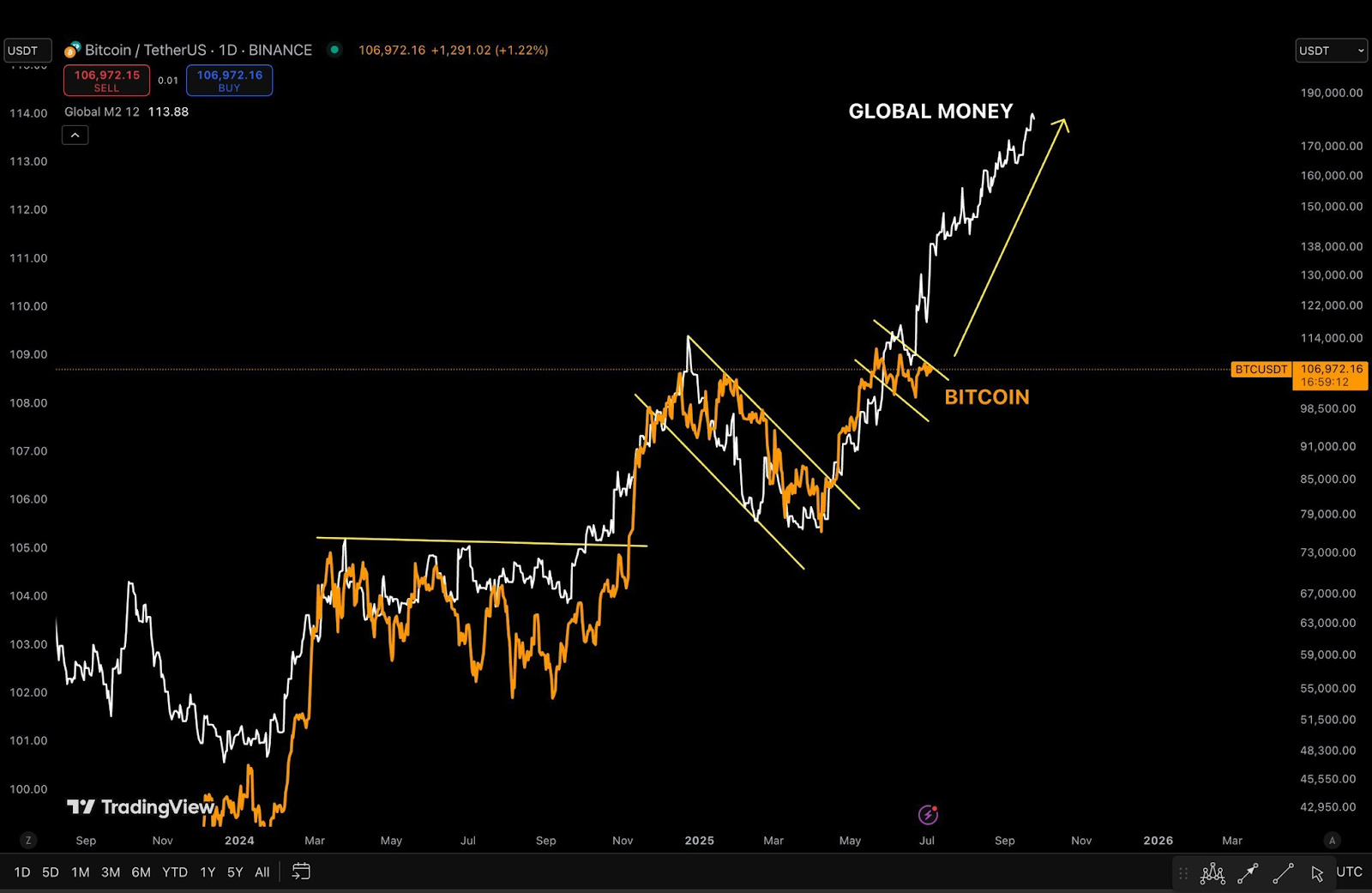
M2 liquidity in the world has gained a new all-time high, which is a good indication of the world having an expansion in the money supply. With cap seeking shelter, the next likely destination on the Bitcoin track is ~$170K, in accordance with the flow of liquidity.
Consumers Brace for Ripple Effects in Daily Life
The effects of an increase in M2 will not be restricted to financial markets. Full-time workers might start to notice the pinch on their day-to-day purchases. The prices of groceries might increase. The same could apply to rent and transportation costs.
There may also be new challenges for homebuyers. In the event of rising mortgage rates, there is a possibility of reduced affordability. That can reduce sales of houses and put strains on real estate developers.
This should also be noted by credit card holders and borrowers. The rise of interest rates may make debt more costly. That could translate into lower expenditure and lower economic growth in general.
The amount of money supply in the U.S. has reached unprecedented heights. Some people give a response to abundant liquidity, some people say there is an opportunity, and others say danger. The economy is currently on a tightrope. The next few weeks will determine whether such an influx of money contributes to development or inflation.
Disclaimer
This article is for informational purposes only and provides no financial, investment, or other advice. The author or any people mentioned in this article are not responsible for any financial loss that may occur from investing in or trading. Please do your research before making any financial decisions.