
 Sword Inu
 no crying in the casino
 streamoors
 IGNITION
 Altai the Tiger
 Pearl
Pearl Quantus
Key Insights:
- President Trump takes a stern executive order for banks that discriminate against crypto as Binance founder, CZ, reacts.
- Coinbase CEO says the U.S. government will own over $600 Billion in Bitcoin. Adam has backed a prediction of $200 Trillion market cap on Bitcoin.
- Massive liquidity is increasingly flowing into crypto exchanges through stablecoins.
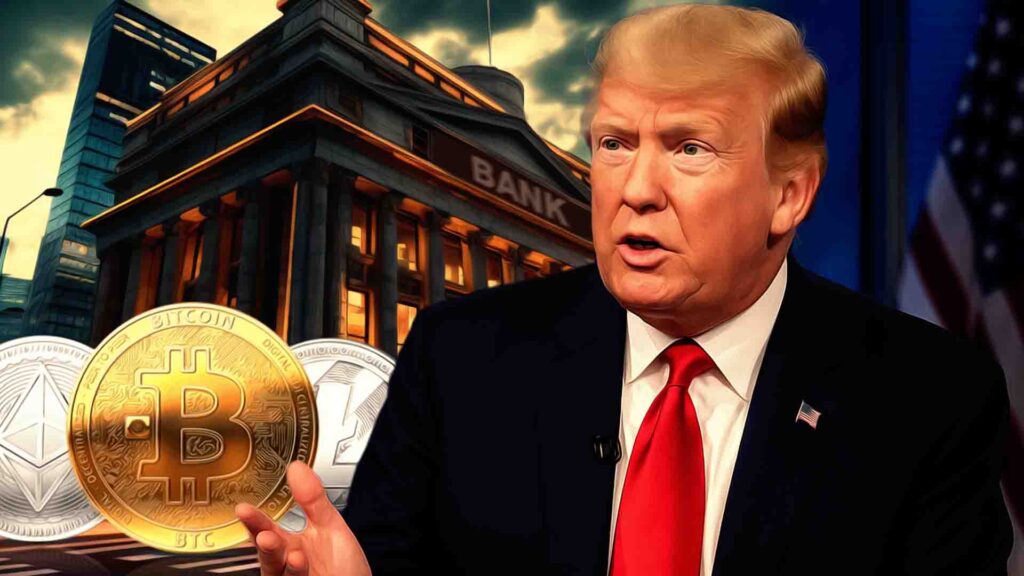
On August 4, the White House hinted at exerting more stringent measures focusing on big banks and firms. President Trump was determined to make the U.S. a hub for crypto. It’s a pledge he has reiterated through his executive orders.
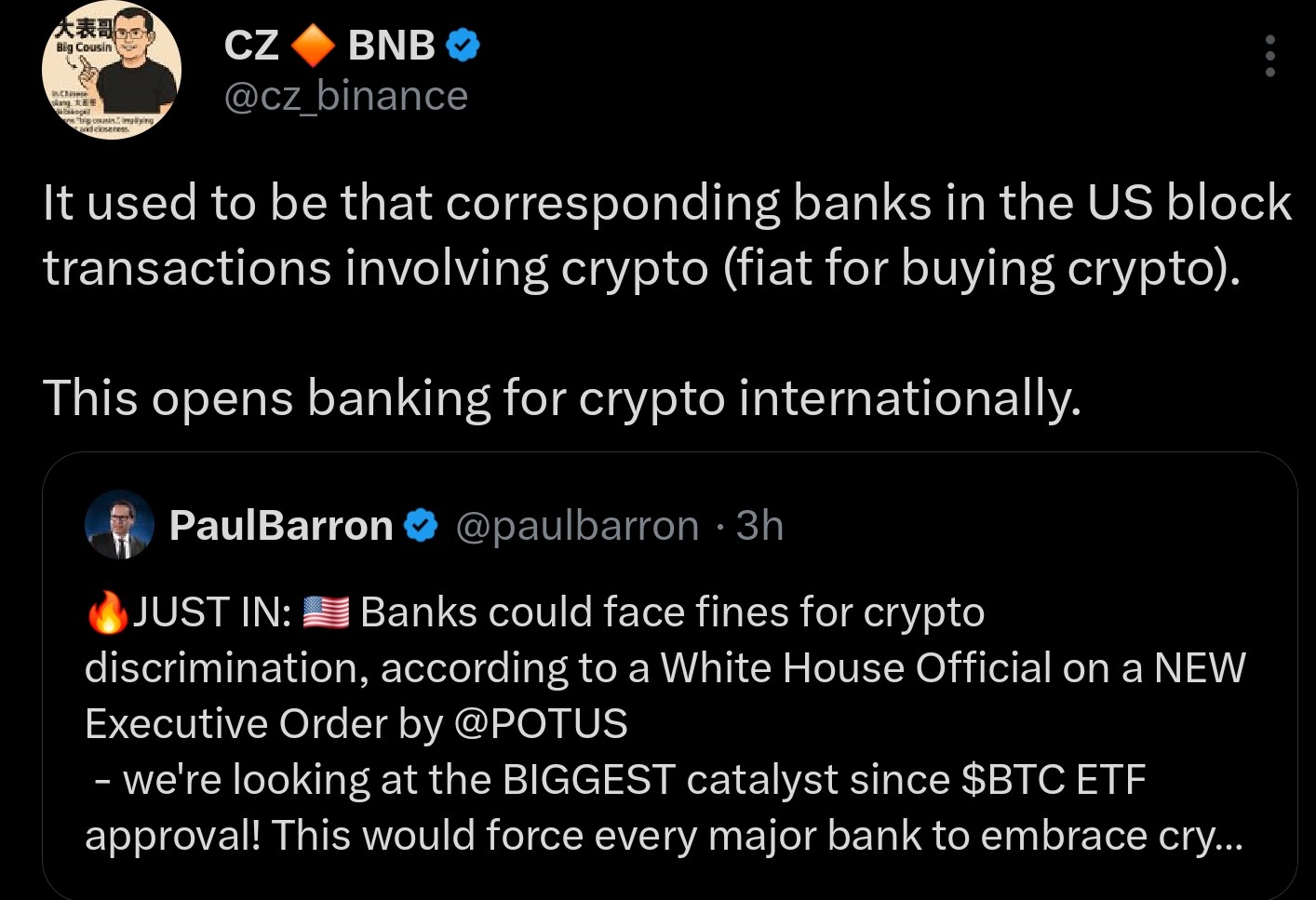
The President pressured big banks to embrace Bitcoin and crypto or face consequences. Paul Barron reported this on X based on the insider sources at the White House.
Trump to Banks: Back Off Crypto or Face Consequences
The White House official could sign the executive order this week. The order will subject banks to various penalties if found guilty of discrimination against crypto.
The news got reactions from top individuals like the Binance Founder. CZ noted how times have changed since U.S. banks used to block transactions involving crypto buying using fiat currencies.
Other observers were also quick to mock banks, terming them as exploitative. Digital World commented on the news. The observer stated, “Poor banks, they are in the verge of losing their abilities to overcharge the consumer with 30% APR credit cards and high-cost loans.”
The era when banks discriminated against crypto is far long gone. However, the administration saw the need for a clear regulatory framework.
Banks like JP Morgan fully supported Bitcoin and crypto, as evidenced in their pilot program, JPMD coin. It’s a US dollar-backed stablecoin.
Why Are Bitcoin and Crypto Here to Stay?
Coinbase CEO, Brian Armstrong, stressed Trump’s stance on Bitcoin and crypto with his bold stance. In an interview, Armstrong said Bitcoin was a better form of money than Gold.
While the two were scarce, Bitcoin was more affordable and divisible. Bitcoin has better utility and was the best-performing asset in the last 10 years.
Another legend in Bitcoin, Adam Back, reiterated Armstrong’s view of BTC about Gold. Adam said that BTC would reach a market cap of $200 Trillion. This translates to $10 Million per coin.
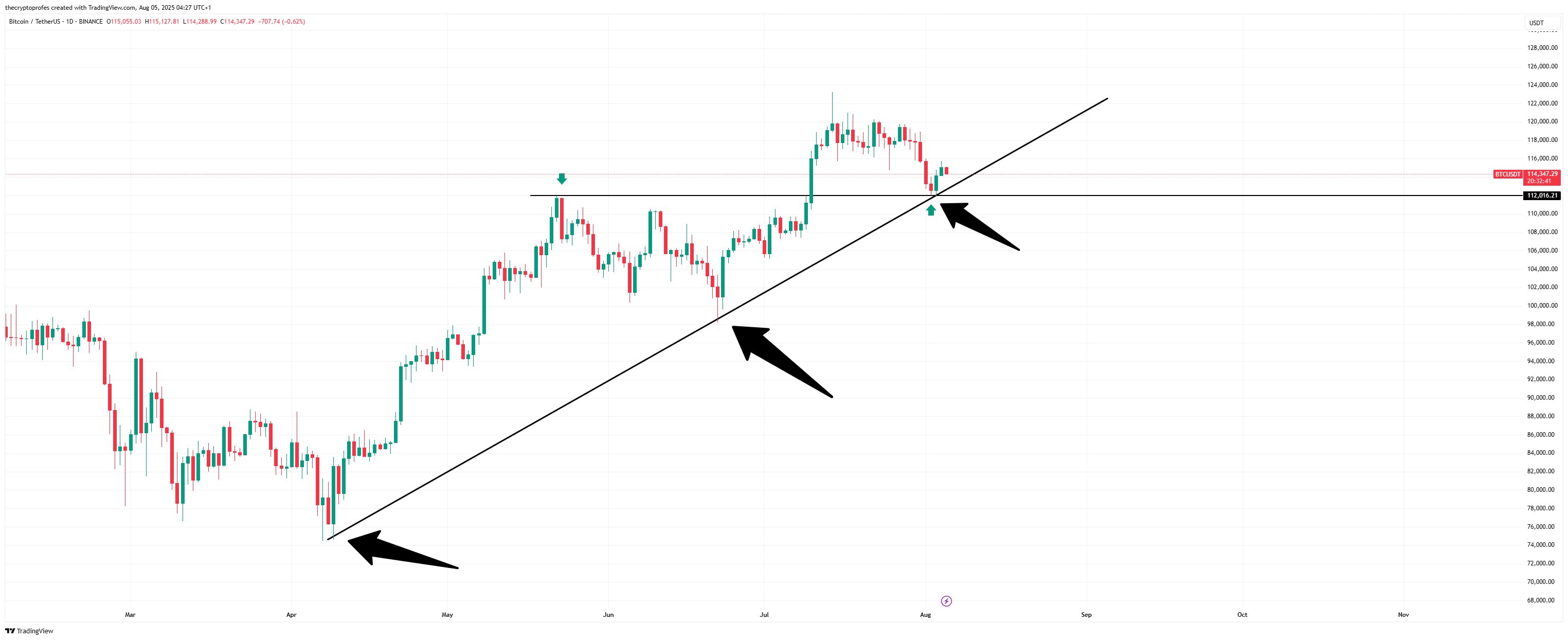
From a numerical point of view, the projection was starting to align. The market respected the trendline support, having rejections at $75K, $100K, and $112K. The current rejection was a retest of an earlier resistance that had been broken.
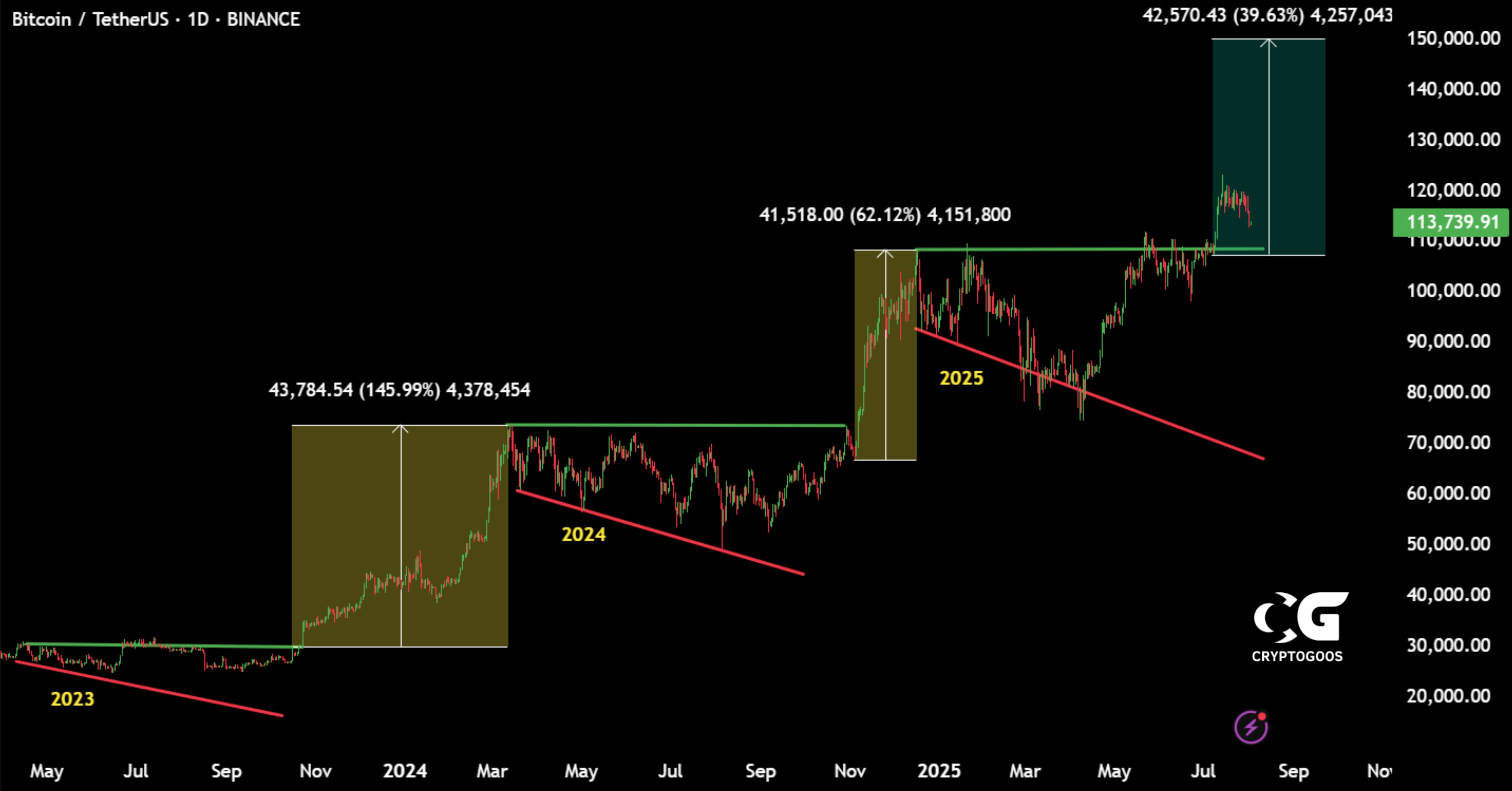
On a short-term lens, Bitcoin was opening for its next leg up, which could take the price to $150K. The patterns showed that a rally followed every time BTC broke from the broadening wedge.
For 2023, the market surged by 145%. The break in 2024 resulted in 62% with the 2025 hinting at a 39% gain from here. However, the move could be delayed if BTC falls into the wedge. A retest of $100K could not be ruled out.
The price projections backed by Armstrong and Back clearly showed that crypto was here to stay. Their views stressed a long-term bullish outlook, especially for Bitcoin.
Market Reactions to Huge Liquidity Flows
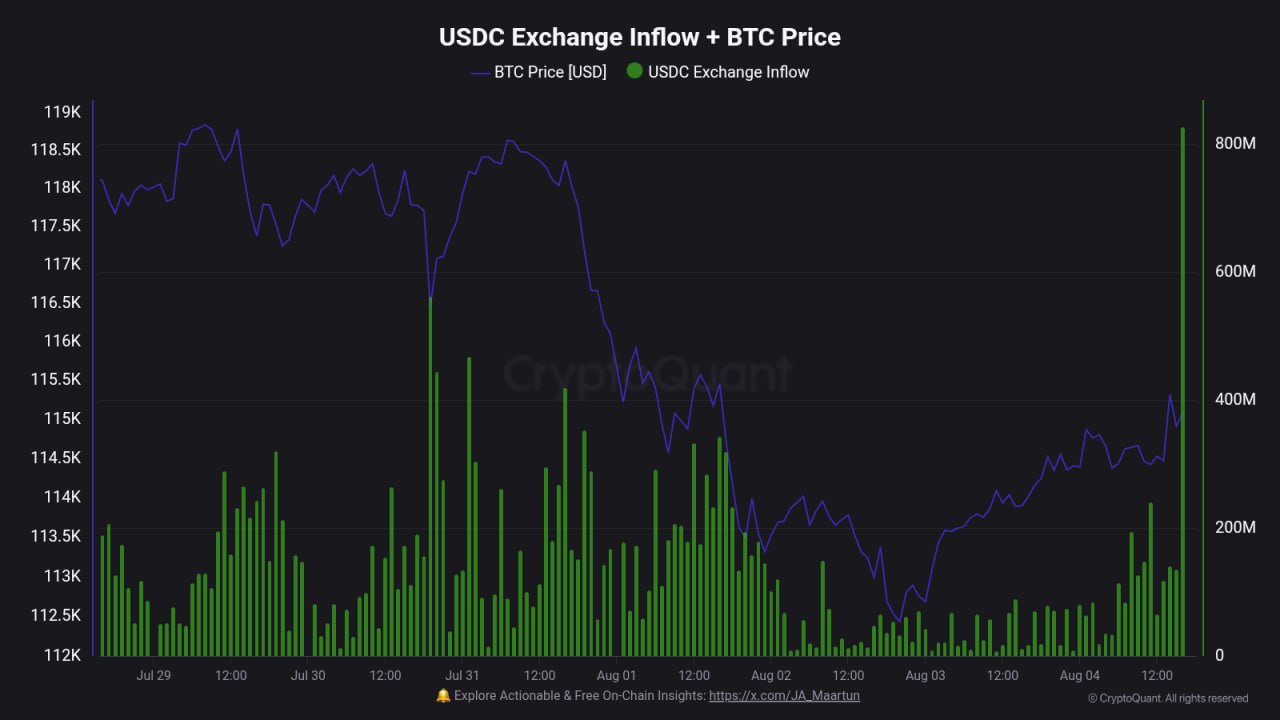
Massive liquidity was flowing into the crypto exchanges amidst the coming executive order. As a result, more than $826 Million worth of USDC hit the exchanges.
The stablecoin inflow has been suppressed for the last two days. There, the inflow was below $200M before the spike. Market participants were gearing up for more liquidity now that banks were notified regarding funding involving crypto.
In conclusion, these regulations set the stage for more borrowing. The banks would be under scrutiny if they discriminate against crypto users. However, users needed to follow the right procedures while awaiting presidential approval.
Disclaimer
This article is for informational purposes only and provides no financial, investment, or other advice. The author or any people mentioned in this article are not responsible for any financial loss that may occur from investing in or trading. Please do your research before making any financial decisions.




