Sword Inu
 streamoors
 Altai the Tiger
 no crying in the casino
 IGNITION
 Pudgy Penguins
 Quantus
Key Insights:
- El Salvador will establish Bitcoin banks, which implies the consolidation of the cryptocurrency in the national financial system.
- The International Monetary Fund feared the dangers of adopting Bitcoin as legal tender due to its volatility.
- The number of Bitcoins in El Salvador is more than 6,200 BTC with an equivalent value of approximately $730 million.
El Salvador is also a step closer in implementing its Bitcoin-dedicated economic policy as it opens up Bitcoin banks: President Nayib Bukele and the government plan to incorporate Bitcoin into the nation’s financial system even more.
Although not much is known about the rollout’s form and timeline, this action indicates how El Salvador intends to employ Bitcoin.
El Salvador Bitcoin Bank Proposal
More recently, El Salvador announced that it would be opening Bitcoin banks or allowing further cryptocurrency integration in the country. The government institution that will control the strategy of Bitcoin, the National Bitcoin Office (ONBTC) declared plans regarding Bitcoin banks.
Nevertheless, it did not include any details of their operations or timeline.
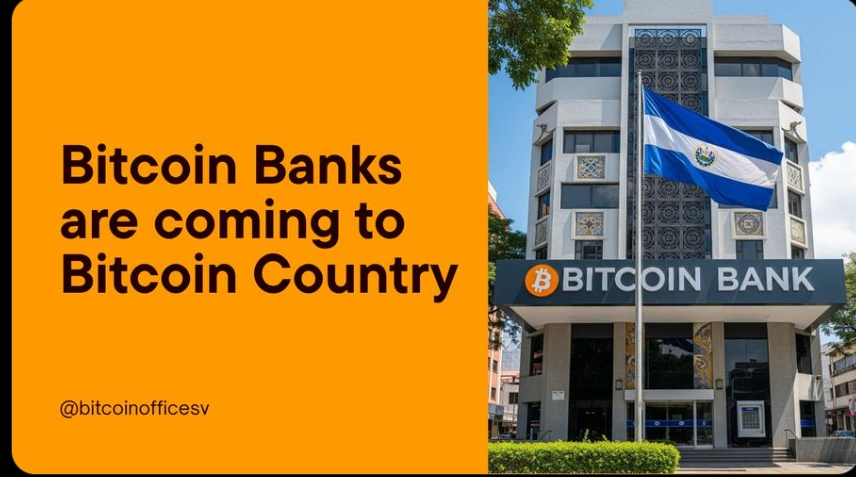
The proposal also comes after El Salvador’s government suggested reforms to create a private investment bank designed to operate using both Bitcoin and U.S. dollars. This proposal will enhance the nation’s financial infrastructure by offering banking services, including deposits and loans, denominated in Bitcoin.
More so, the crypto move aims to attract both domestic and international investors and facilitate Bitcoin-based transactions. The bank would require a minimum capital of $50 million, with provisions allowing foreign shareholders to participate in ownership.
Bitcoin Adoption and Regulatory Framework
Among the major elements of the Bitcoin bank project is the deregulation of the policies and rules that govern the operations of privately owned banks that operate with digital currencies. This involved relaxing the rules on global partnerships and easing the limit on loan activities.
The government has stated that the regulatory system will make sure that Bitcoin banks operate in a secure and structured environment. However, there are no specifications on how these institutions should work.
Nevertheless, even without a clear structure, the administration of President Bukele is still paying heavy attention to the strategy on the use of Bitcoin in the country. These include the fact that it is the first country to legalize Bitcoin as a form of currency.
El Salvador’s Growing Bitcoin Reserves
The Bitcoin holdings of El Salvador have been the focus of a debate. The country currently has more than 6,200 BTC, currently worth about $730 million. Although financial institutions such as the International Monetary Fund (IMF) have been doubtful about this, the government has been engaging in further BTC purchases.
Moreover, introducing Bitcoin banks could change how the country utilizes its BTC reserves. Like El Salvador’s Bitcoin adoption, the US has sparked a global shift by officially recognizing Bitcoin as a strategic reserve asset. With over $20 billion in Bitcoin now held as part of its national reserve, the move signals a transformative moment in global finance.
International Reactions and IMF Scrutiny
International entities, especially the IMF, have also responded to the announcement, some of which have been concerned with El Salvador’s Bitcoin strategy. IMF cautioned that using Bitcoin as a legal tender on a large scale may cause consumers’ risk.
Warnings by the IMF are not the only obstacles El Salvador has to overcome in its Bitcoin adoption. The country’s national finances and economy have also been under investigation, especially with Bitcoin price fluctuation.
Meanwhile, the price of Bitcoin has been holding the trend above $115,000 for the whole month, trading near $116,500 at the time of writing. At this price, BTC’s price has been up 7% in the last month, with a market cap of $2.31 trillion.
Disclaimer
This article is for informational purposes only and provides no financial, investment, or other advice. The author or any people mentioned in this article are not responsible for any financial loss that may occur from investing in or trading. Please do your research before making any financial decisions.