
 streamoors
 IGNITION
 Quantus
 Sui
Sui Zcash
Zcash Ethereum
 Pearl
Pearl

Coinbase and Google back the x402 protocol. GoPlus Security flagged several projects, prompting its review.
The report surfaces as the protocol expands. It spreads across major wallets and new platforms. This growth raises questions about the safety of emerging x402 applications.
Security Concerns Rise Across the x402 Protocol
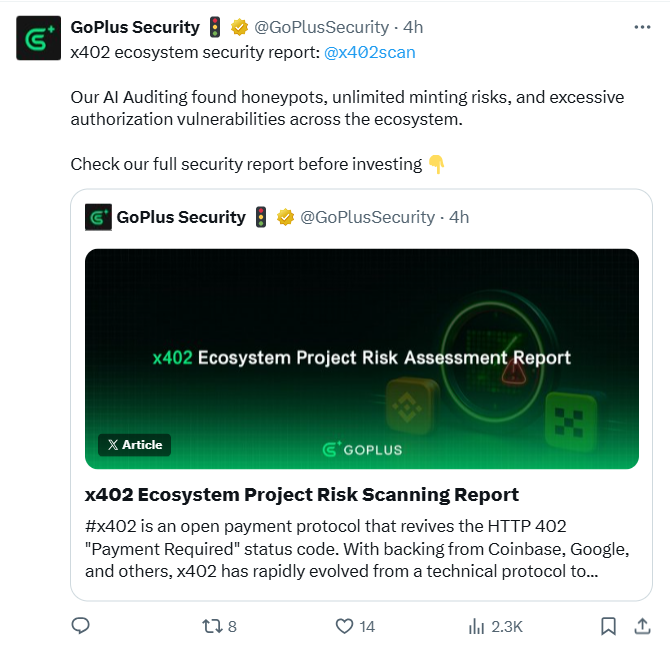
The x402 protocol is drawing attention after GoPlus Security reported a series of issues found in more than 30 related projects. As detailed, findings cover tokens and applications that use the protocol.
The group notes that many projects remain in early stages and could expose users to avoidable risks. The scans point to four main problem areas. These include excessive authorization, signature replay, honeypot behavior, and unlimited minting.
Each type creates a different pathway. Owners or trusted roles may handle assets unexpectedly. Excessive authorization appears in several contracts where owners can move tokens held by the contract or by users.
Signature replay issues come from missing nonces or other protections. This could let a signed message be used more than once. Honeypot behavior shows up in designs that give owners special paths to block withdrawals or unlock hidden controls.
Unlimited minting is also present in some projects, allowing supply growth without limits. Two incidents stand out. On October 28, the cross-chain protocol 402bridge lost control of USDC from more than 200 user accounts due to an authorization flaw.
On November 12, Hello402 raised concerns about unlimited minting and centralization. These issues impacted liquidity and led to a decline in the token price.
The report lists project-level risks as well. FLOCK, MRDN, and several others include functions that allow owners to extract tokens from the contract.
Some PENG contracts and the x402Token contract bypass allowance checks for selected accounts. Projects such as x420, U402, and H402 (Old) include minting paths without proper limits.
GoPlus Security stated that its scans use both automated review and expert checks. The team says it plans to continue reviewing x402-related contracts as more projects join the network.
Strong Growth Shapes the Expanding x402 Protocol Ecosystem
It is worth mentioning that the x402 protocol has continued to grow at a steady pace. Developers have started to use the protocol as a payment layer for apps, agents, and service tools. Activity includes trading, gaming, and simple requests for compute or data.
Decentralised.Co reported that the network has processed over 18.82 million transactions since launch. This represents a significant increase since May. The group noted that most activity runs through Coinbase and Daydreams.
Essentially, these two services account for approximately 82% of all traffic. The numbers suggest that adoption remains centered on a few large operators. Daydreams is gaining ground quickly, with the service recently surpassing 1.4 million transactions.
That growth comes from agents that pay for compute, API calls, and access to online services. These tasks are small but frequent, which pushes activity higher as more tools connect to the protocol.
The rise of memecoin also brings attention to x402. However, many of these tokens rely on simple contract templates and may not include strong controls. This places more weight on audits and community review as new users enter the market.
New Integrations Emerge Beyond Binance and Midnight
Adoption now stretches beyond the early platforms. Binance Wallet added x402 protocol sections. OKX Wallet highlights new projects through the x402 protocol. Meanwhile, these placements expose the protocol to broader audiences and attract new developers.
More integrations are appearing. Community members have reported activity on Midnight and other networks. Several tools and trading platforms have added support as well. These steps demonstrate that teams are testing x402 in various settings and exploring where the protocol is applicable.
The growth also increases the need for better oversight. Many projects are young and could carry hidden risks. Security groups say they will continue to watch contract changes and review new deployments.



