
 streamoors
 Altai the Tiger
 Sword Inu
 IGNITION
 no crying in the casino
 Quantus
 NEAR Protocol

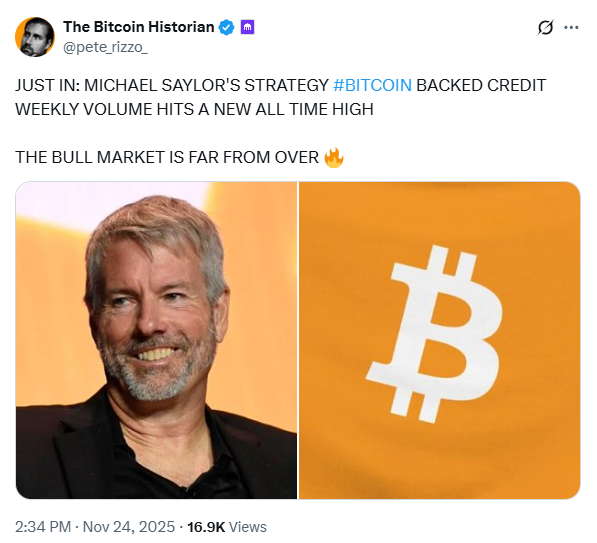
Michael Saylor’s firm, Strategy Inc., has seen its Bitcoin credit volume reach a new weekly record.
The milestone was recorded as the MSTR stock traded lower after a JPMorgan warning about possible index removal and large fund outflows.
Record Credit Volume Meets Sharp MSTR Share Decline
Strategy’s Bitcoin credit volume reached a new high this week. New posts on X show that weekly Bitcoin-backed borrowing activity crossed its highest point to date.
Nevertheless, that increase drew interest because the company’s share price remained weak.
Strategy’s stock was trading at $170.21 at press time as it moved up a bit in the early trading session. The pre-market price showed a slight rise of 1.5% uptick to $173.39.
The stock has fallen sharply over the past month. The decline reached 40%, while Bitcoin dropped 20% to about $85,000 during the same period.
The recent drop followed a report from JPMorgan on November 20. The bank warned that Strategy could be removed from major indices.
These include MSCI USA, MSCI World, and the Nasdaq-100. The note said Bitcoin represented about 99% of the company’s assets, which might pass a proposed 50% limit for crypto exposure.
JPMorgan estimated that passive funds could remove between $2.8 billion and $8.8 billion if the change is approved.
The analysts said this shift might affect the company’s access to financing in the future.
However, the pressure might not be tied to Bitcoin’s weakness. Market watchers argued that the issue relates to index rules rather than the wider market.
Online discussions showed frustration about the recent sell-off. Many users said the recent fall did not match Bitcoin’s smaller decline.
Still, some argued that the stock no longer follows Bitcoin price movements in the same way as before.
Criticism of Banks and Debate Across Crypto Spaces
Public comments spread quickly after the report. Jake, a crypto commentator, said JPMorgan might have misjudged the current climate.
In his latest post on X, he stated that older banks remain uncomfortable with growth in digital assets.
His posts encouraged account holders to move funds to institutions that support Bitcoin.
He also referred to the global financial crash in 2008. He said the public no longer needs banks that failed during that period.
His comments sparked long arguments online and in trading groups. Posts from well-known figures in the crypto sector added to the tension.
Max Keiser and Adam Back said the bank raised margin requirements on the stock during the summer.
They said that change created pressure on traders and could have forced sales. Other voices compared the situation to GameStop short squeeze of 2021.
A number of users shared stories about closing accounts. Some withdrew large deposits from JPMorgan branches.
Grant Cardone, a real estate investor, reportedly moved $20 million from Chase. Online groups shared screenshots and reactions to these moves throughout the weekend.
Sentiment across platforms remained mixed. Parts of the crypto community blamed large institutions for the crypto market sell-off. Other voices warned that volatility could continue for several weeks.
Saylor Responds as Markets Wait for Next Steps
Michael Saylor has also released comments on the issue. He said the company will continue to raise Bitcoin-backed loans through next year.
His statement included plans for $7.7 billion in credit facility in 2025. He rejected rumors that the company may sell Bitcoin to support the stock.
Technical analysts pointed to support for MSTR stock near $172.50. Some warned that a deeper fall in BTC could reduce the value of Strategy’s Bitcoin position relative to its debt.
Others said a rebound in Bitcoin might help the company regain momentum.
The MSCI consultation runs until December 31, 2025, and any approval would take effect later in February.
Saylor’s Bitcoin credit volume will remain under close watch as investors follow the stock, the company’s financing plans, and the index review process.



