
 Sword Inu
 no crying in the casino
 streamoors
 IGNITION
 Altai the Tiger
 Pearl
Pearl Quantus

US China trade talks face a delicate test. Washington has quietly shelved plans to sanction China’s Ministry of State Security after the “Salt Typhoon” cyber‑espionage campaign. The Trump administration also delayed new export controls.
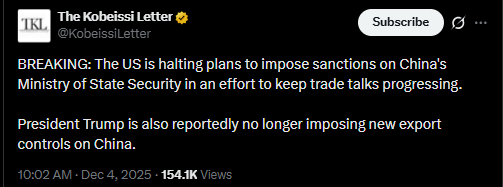
The reason is simple: protect the fragile breakthrough deal struck in October. Officials fear fresh penalties could derail momentum. For now, apparently, diplomacy has outweighed confrontation. The pause underscores how trade priorities are shaping security decisions.
It highlights the fragile balance between economic progress and national defense as both sides push to keep negotiations alive. Financial Times reported this development and confirmed by Reuters.
Cybersecurity Concerns vs. US China Trade Talks
The Salt Typhoon operation shocked American officials. Hackers stole years of call records from AT&T and Verizon. They even reached into a U.S. Army National Guard system. Security experts called it one of the largest breaches in years.
Normally, such a cyber attack would trigger immediate sanctions. Yet the White House chose restraint. Officials explained that sanctions now would break the fragile truce. The October 2025 Busan agreement gave both sides breathing room.
The US China trade talks are seen as more important than retaliation. Critics remain worried. They believe national security is being traded for economic gains. Some lawmakers argue that ignoring the attack could encourage future breaches.
Economic Gains from US China Trade Talks
Markets reacted quickly to the pause in sanctions. Technology stocks rose. Commodity companies gained value. Traders saw calmer relations as a path to higher profits in 2026.
Farmers welcomed China’s promise to buy soybeans again. This was a major relief after years of uncertainty. Car makers also benefited. Rare earths and magnets from China will keep flowing without new export licenses.
The Busan framework was clear. The United States agreed not to impose 100% tariffs. China agreed to resume purchases and continue rare‑earth exports. Both sides paused new punishments in shipping, technology, and fentanyl‑related goods.
For American industries, the us china trade talks brought stability. Farmers, technology companies, and car makers all gained from the truce. The deal gave them at least one year of certainty.
What Comes Next
The truce lasts until late 2026. President Trump plans to visit Beijing in April. That meeting will decide whether peace continues or confrontation returns.
The White House believes the pause buys time. America can build its own rare‑earth mines. It can reduce dependence on China while keeping the economy strong.
Security experts remain cautious. They warn that ignoring cyber attacks could embolden future breaches. They argue that economic calm should not come at the cost of national defense.
For now, both Washington and Beijing are committed to maintaining the truce. The us china trade talks remain the centerpiece of this strategy. The world will watch closely when the agreement comes up for renewal.



