
 streamoors
 IGNITION
 Quantus
 Sui
Sui Pearl
Pearl Zcash
Zcash Aerodrome Finance

Nvidia stock price has dropped sharply and is nearing a bear market as concerns about the potential AI bubble rise. It has dropped by 17% from its all-time high, erasing billions of dollars in value, with its market capitalization falling from $5 trillion to $4.23 trillion. Still, the company has numerous catalysts that may help it rebound.
Nvidia Stock Has Become a Bargain
One key catalyst that may trigger a rebound in Nvidia’s stock price is that the company has become a bargain based on its historical standards.
Data compiled by Seeking Alpha shows that the company has a forward price-to-earnings ratio of 37. While this number is much higher than the sector average of 24, it is much lower than its five-year average of 45.
Additionally, the closely watched price-to-earnings-growth (PEG) ratio has dropped to 0.9, which is lower than the sector median of 1.70. This means that the stock’s performance in relation to its growth and earnings is a bargain.
Meanwhile, the rule-of-40 calculation shows that the company has some of the best metrics in the United States. It has a forward revenue growth rate of 73% and a net profit margin of 53%, resulting in a multiple of 136%.
The rule-of-40 valuation metric states that a company is usually undervalued if the sum of its growth and margin exceeds 40. In Nvidia’s case, the metric is 136%, meaning that it is balancing its growth and earnings well.
Additionally, Nvidia’s P/E multiples are much smaller than those of other companies, making it a bargain. For example, Shopify, which has lower growth and margin metrics, has a forward PE ratio of 112, while Tesla, an EV company whose growth is decelerating, has a value of over 200.
Nvidia Growth is Still Strong
The other main reason why Nvidia’s stock price is expected to rebound in 2026 is that its growth trajectory has accelerated over the past few years.
The most recent results show that the company’s revenue surged to $57 billion in the third quarter, bringing its trailing twelve months (TTM) revenue to $187 billion. Its quarterly revenue was significantly higher than what it made in the combined financial years of 2022 and 2023.
The company’s net profit has jumped from $617 million in 2016 to over $99 billion in the TTM. This makes it one of the best-performing companies in Wall Street.
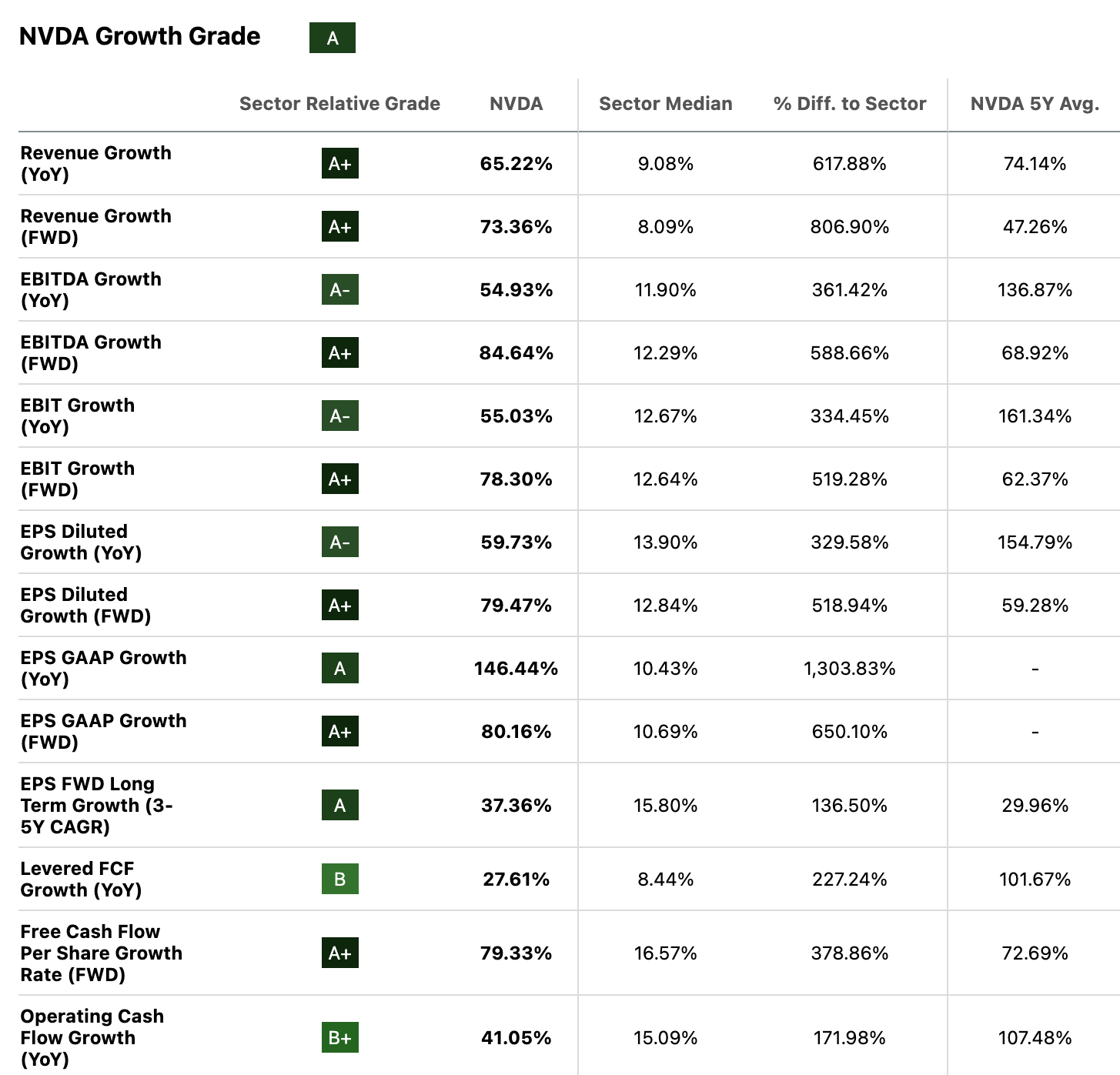
Most importantly, analysts are highly optimistic that the company has considerable room for growth. The average estimate is that its revenue will jump to $213 billion this year followed by $317 billion a year later. Its EPS is expected to move from $4.69 this year to $7.49 next year.
History shows that Nvidia consistently beats analysts’ estimates, indicating that its actual numbers will likely exceed the estimates.
NVDA Stock Technical Analysis Suggests a Rebound is Possible
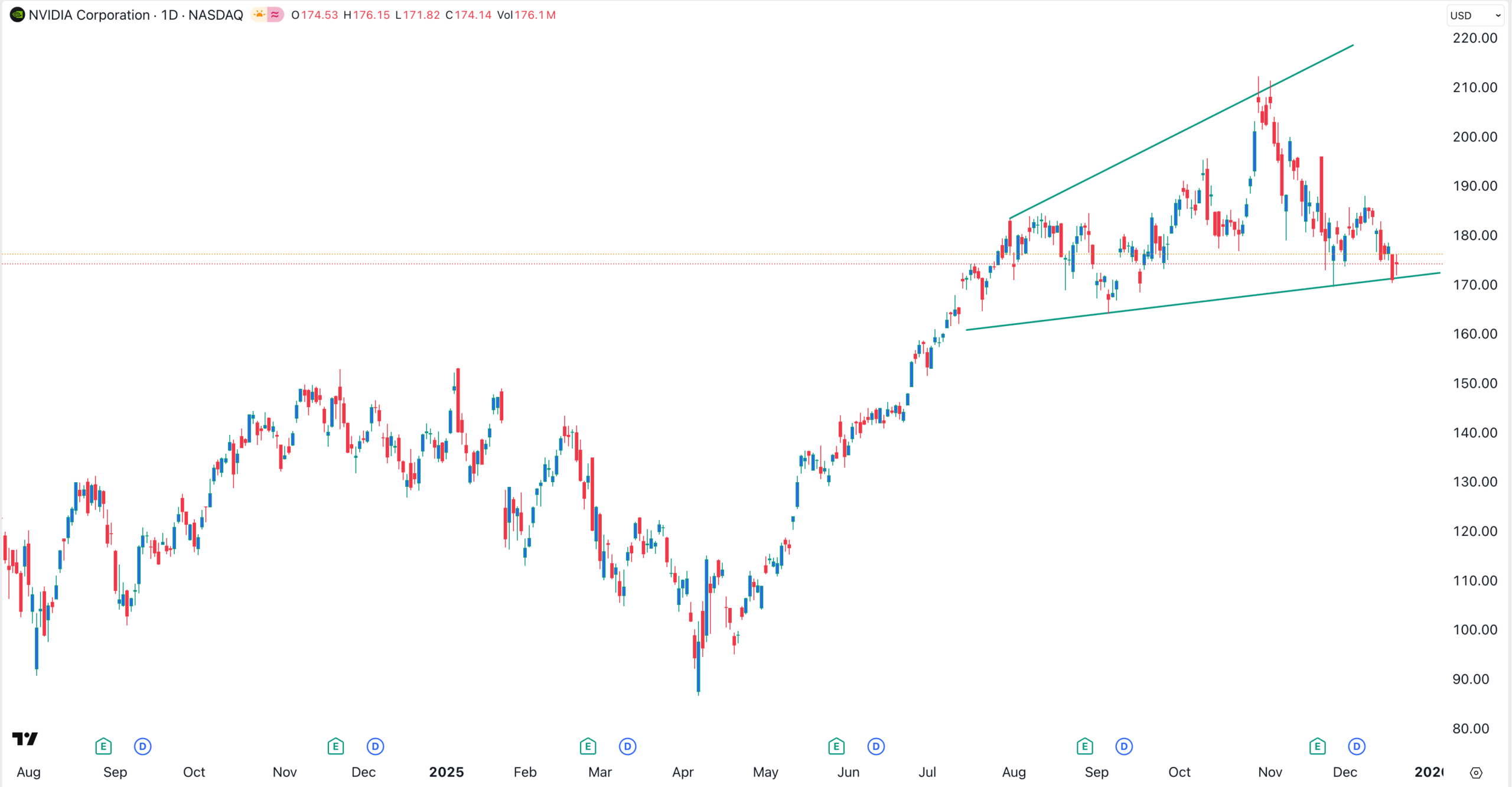
The daily timeframe chart indicates that the NVDA stock price has more upside potential, as it has formed a giant megaphone pattern.
A megaphone pattern is characterized by two trendlines that move in a diverging direction. In this case, the lower side of the megaphone connects the lowest swings since September, while the upper side links the highest swings since July
Therefore, this pattern suggests that the Nvidia stock price has more upside potential in the coming year. If this happens, the stock may rebound to the next key resistance level at $210.
Analysts are Bullish on Nvidia
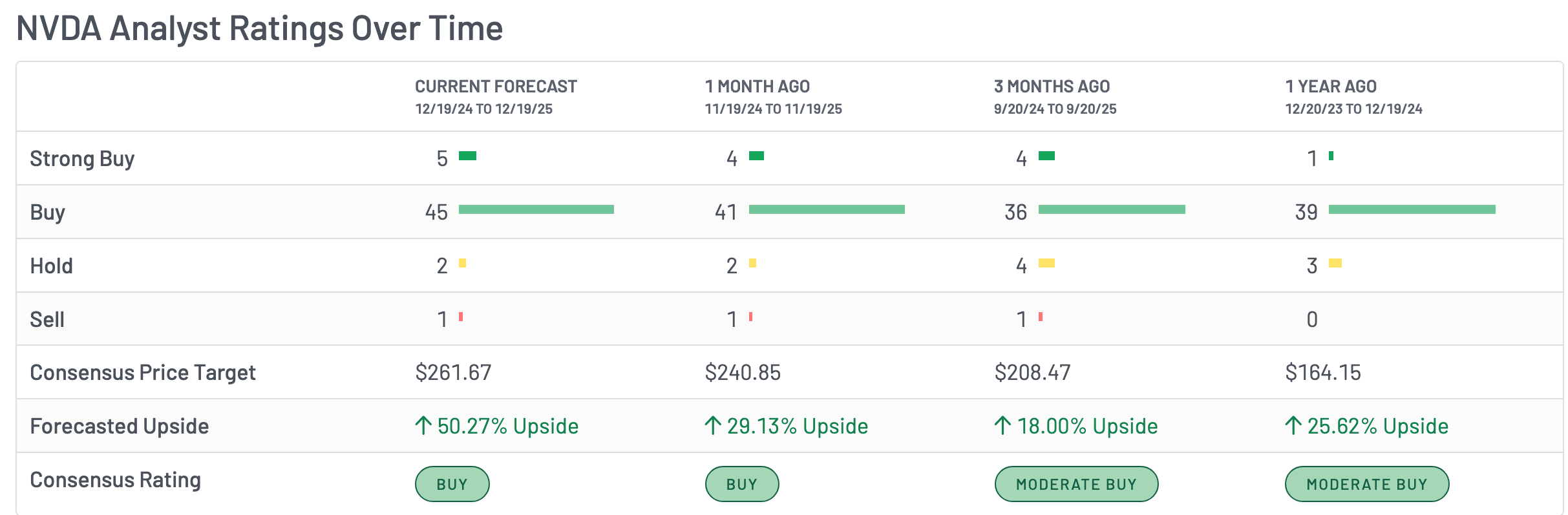
Finally, Wall Street analysts are highly bullish on Nvidia stock. Data compiled by MarketBeat shows that the consensus target among analysts is $261, much higher than the current level.
The estimate has been rising over the past few months, increasing from $164 last year to $208 three months ago and $240 the previous month.
Some of the top analysts with a bullish outlook are from companies like Tigress Capital, Bernstein, UBS, and Morgan Stanley.
Analysts bullish on the stock believe that the AI bubble is not about to burst and that the company has more room to run.




