Bunker Mode
 Bitcoin
 Pearl
Pearl Starknet
 NEAR Protocol
 Wormhole
 Quantus

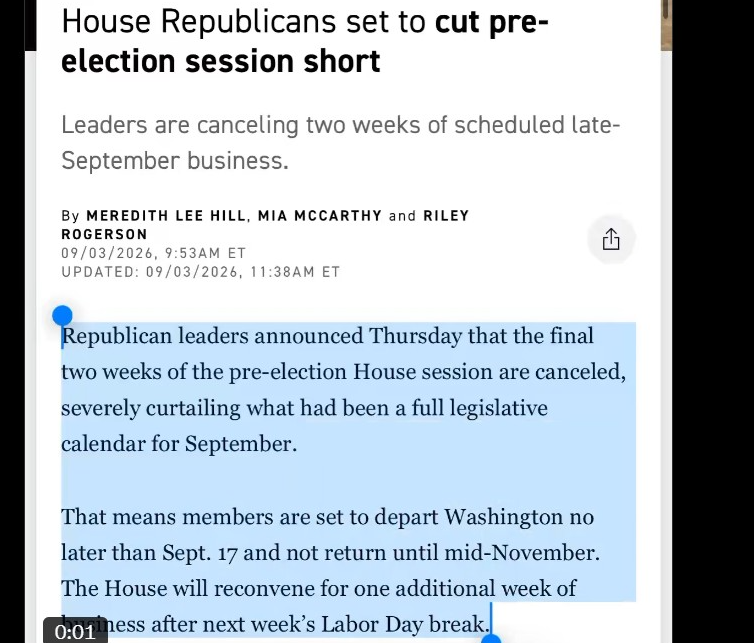
The CLARITY Act faces a tighter path to final passage after House Republican leaders removed the final two scheduled voting weeks of September.
House members are now expected to leave Washington after Sept. 17 and remain away until after the Nov. 3 midterm elections. The change leaves only four House voting days beginning Sept. 14 before lawmakers depart for roughly six weeks.
That timing overlaps directly with the Senate’s planned Sept. 15 procedural vote on H.R. 3633. If senators amend the House-passed text, the House would need to consider those changes before the bill could reach President Donald Trump.
CLARITY Act Update Faces House Recess
House leaders removed voting sessions for the weeks of September 21 and September 28. The change cuts eight legislative days from the calendar before the November 3 midterm elections. Members now expect to leave Washington after September 17 and return to regular legislative work after the election. That schedule gives lawmakers little time to complete the CLARITY Act during September.
The House already passed H.R. 3633, the Digital Asset Market Clarity Act, on July 17, 2025. The measure cleared the chamber by a 294-134 vote, with 78 Democrats joining Republicans.
The Clarity Act creates a federal market structure for digital assets and divides oversight duties between the Securities and Exchange Commission and Commodity Futures Trading Commission. Senate changes would require another House decision.
Senate Vote Starts a Longer Process
Senate leaders plan to hold a cloture vote on September 15 on the motion to proceed. The vote needs at least 60 senators to advance the bill into formal floor debate. A successful vote would not send the legislation directly to the president. Senators could still debate the text, propose amendments, and hold more procedural votes before final passage.
That process creates the main timing problem for September. The House plans to leave Washington two days after the expected Senate vote. If senators approve a different version, House members would need to accept those changes or negotiate common language with the Senate. Either route could move final action into the post-election period unless House leaders change the calendar.
Lummis Pushes Wyoming Model Nationwide
Senator Cynthia Lummis continues to support the CLARITY Act and describes it as a national version of Wyoming’s digital-asset approach. The Wyoming Republican said her state created a legal framework for digital-asset companies before Washington developed broader rules. She said federal legislation could give companies clearer operating rules and keep more digital-asset development inside the United States.
Lummis also released updated Senate text in July after work by the Banking and Agriculture committees. She said lawmakers had a limited window to reach an agreement during 2026. Her latest support comes while senators prepare for the procedural vote and continue negotiations over several provisions.
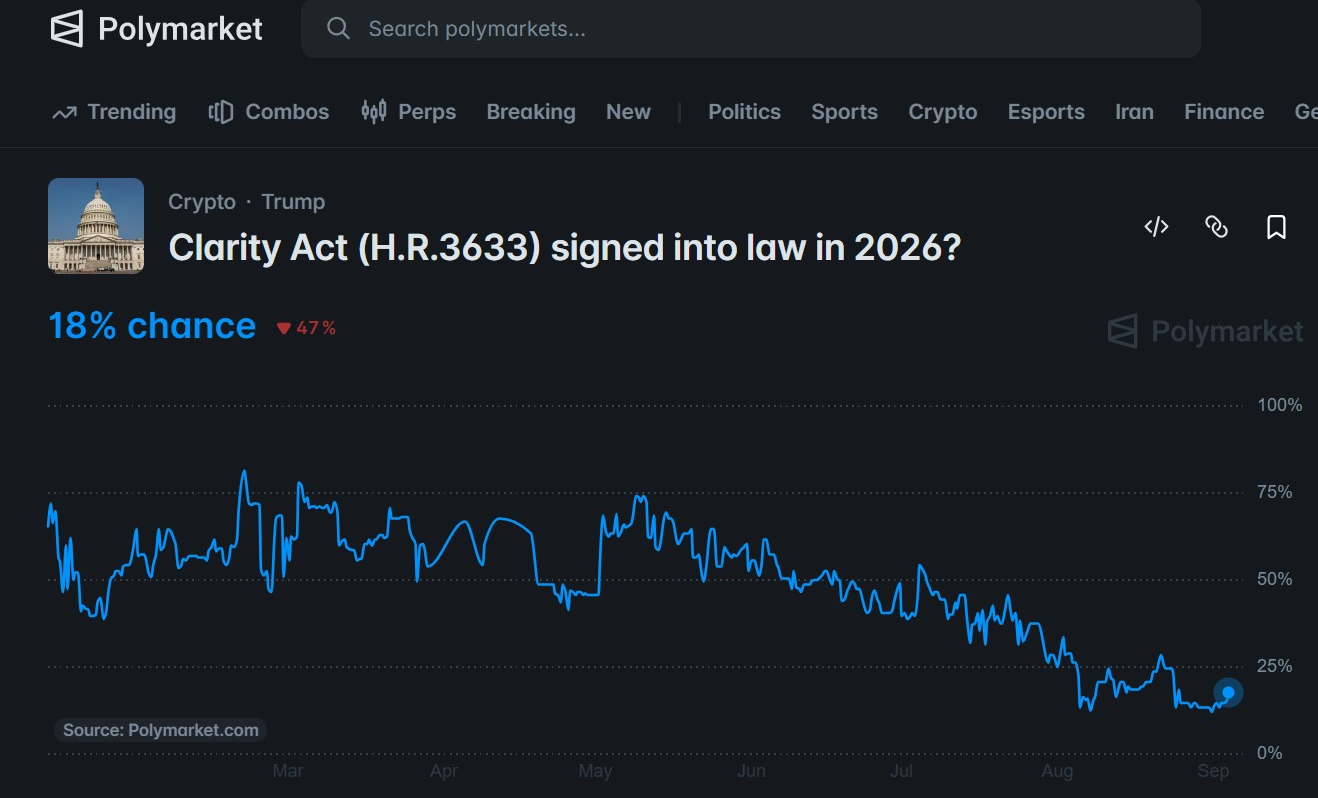
Polymarket traders also cut their 2026 expectations. The market priced the chance of enactment at about 18% on September 3, down from roughly 20% in August.
Senate Disputes Still Shape the Timeline
Senators continue negotiating stablecoin rewards, anti-money laundering rules, state enforcement powers, decentralized finance, and ethics provisions. Stablecoin rewards have drawn particular attention from banks and crypto companies.
Crypto firms oppose restrictions that could limit how platforms share revenue or offer transaction-based incentives.
The calendar leaves little room for a lengthy amendment process before the House recess. A post-election lame-duck session could give Congress another chance to finish the bill during 2026. Lawmakers could also alter the House schedule, although leaders have not announced such a move.
If Congress cannot agree on identical text before the current Congress ends, lawmakers would need to restart the legislative process in the next Congress.