
 Zerebro
 Bitcoin
 Aerodrome Finance
 ZKsync
 Pearl
Pearl Pudgy Penguins
 Bitway
Key Insights:
- U.S. inflation rate declines to 1.67%, per Truflation Index
- Polymarket shows 95% chance Fed holds rates on July 30
- Markets eye September for possible 25 bps rate cut
U.S. inflation has fallen to 1.67%, according to Truflation’s real-time index, its lowest level since early 2023. This cooling trend sharpens market expectations for interest rate cuts, as traders closely monitor the Federal Reserve’s next moves.
With the federal funds rate still anchored at 4.25%–4.50%, markets are nearly unanimous in predicting no rate change at the Fed’s upcoming July 30 meeting. However, investor sentiment suggests that this could shift by fall, as macroeconomic indicators trend toward easing.
Inflation Continues Downward as Market Optimism Grows
Truflation data indicates a steady and measurable decline in consumer inflation over the past six months. The index peaked above 3% earlier in the year but has since fallen, now settling at 1.67% as of July.
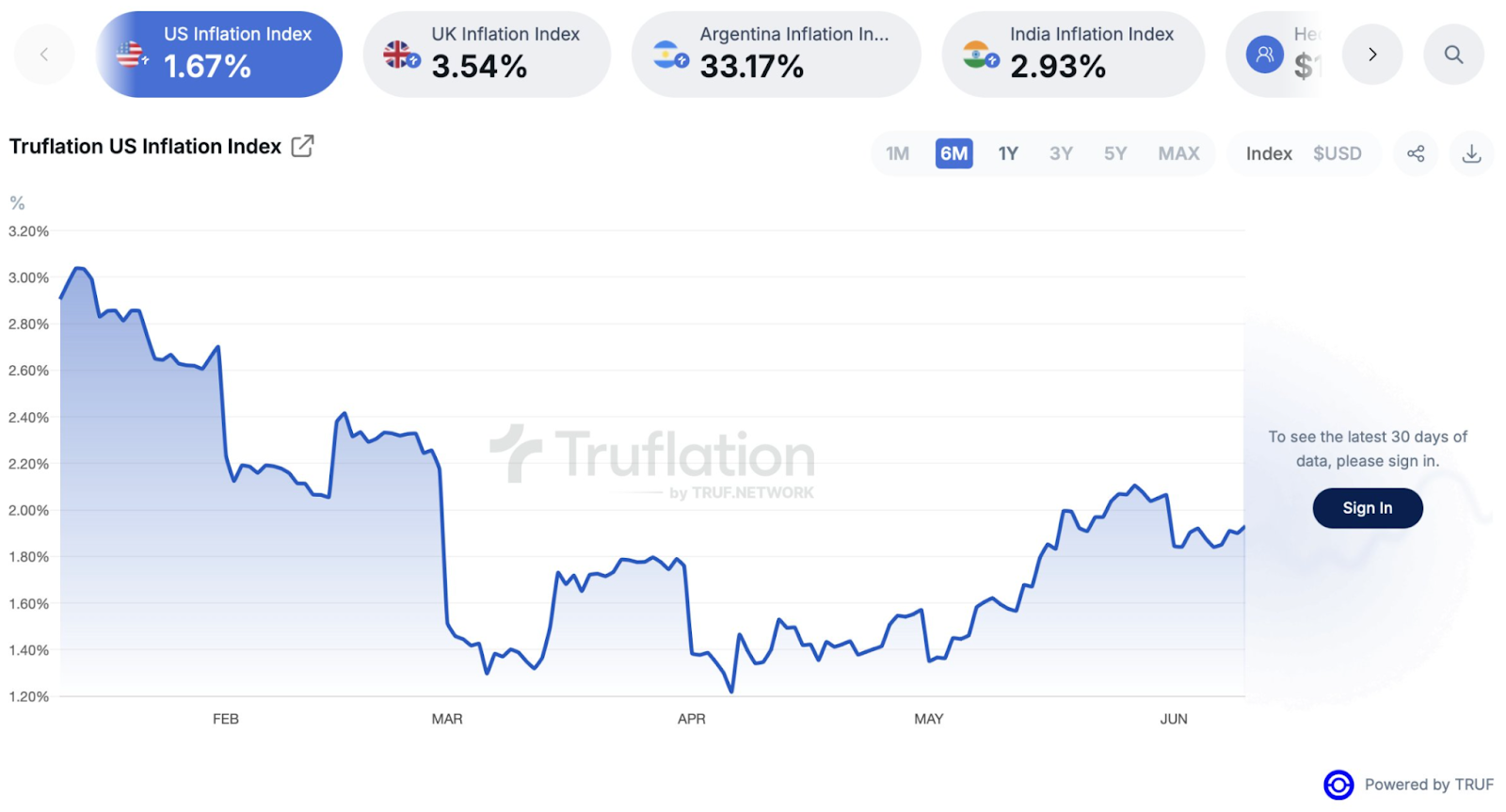
This trend reinforces confidence among market participants that inflation may no longer be a near-term concern. Strong market performance and historically low unemployment are adding weight to those arguments, fueling calls for monetary easing.
At the same time, job growth continues to support overall economic resilience. The June labour report showed a net gain of 147,000 jobs, which surprised many analysts. The unemployment rate dipped slightly to 4.1%, suggesting the labour market remains robust even as inflation declines.
This confluence of data points is helping to anchor expectations that the Fed will move toward rate cuts sooner rather than later. However, some observers warn that low inflation today does not rule out risks re-emerging later this year.
Fed Holds Steady as Tariff Concerns Cloud Outlook
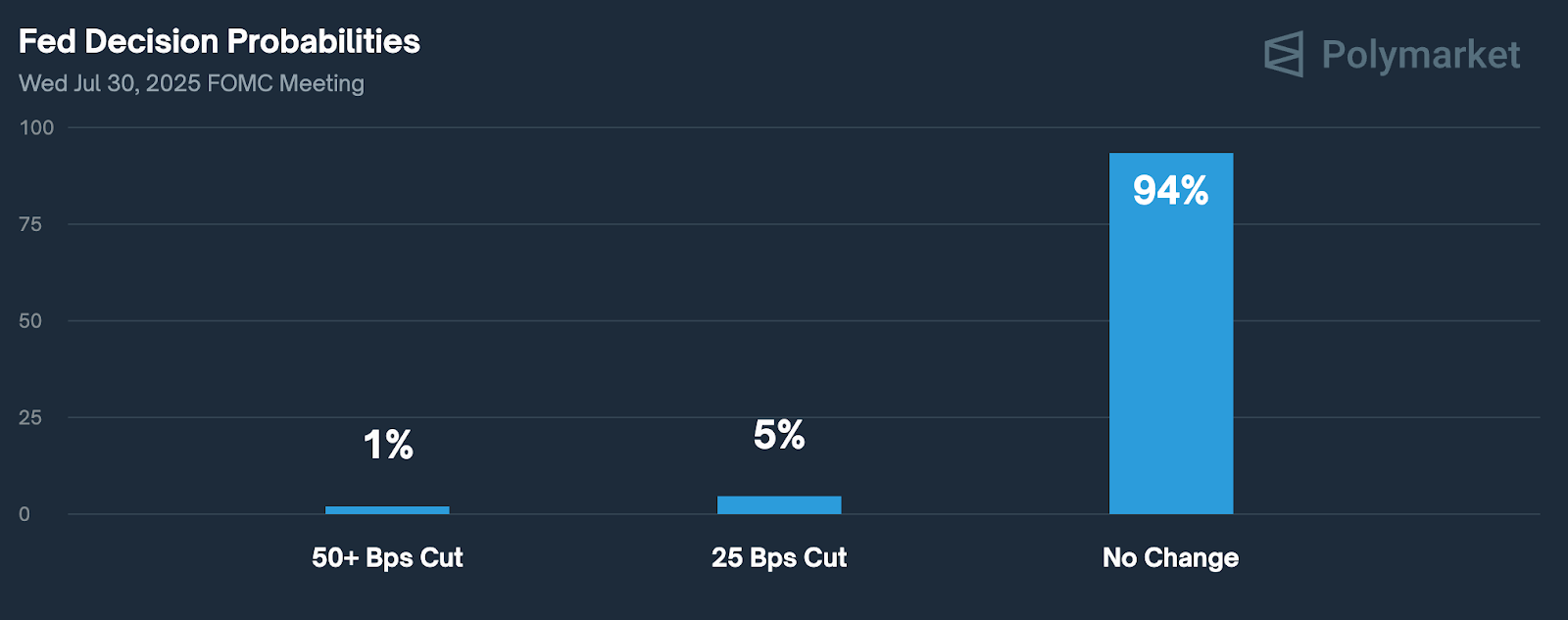
According to Polymarket, there is a 94% probability that the Fed will hold interest rates steady at the July 30 FOMC meeting. Traders believe that while inflation is dropping, the Fed remains cautious due to ongoing tariff-related uncertainties.
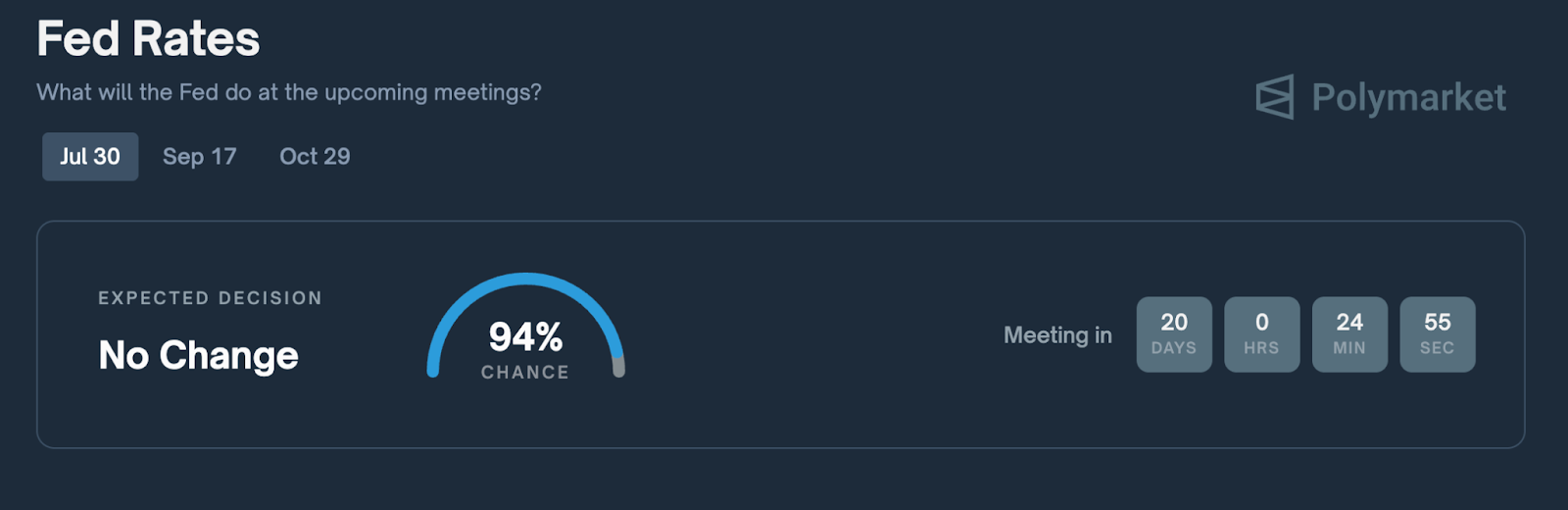
The Federal Open Market Committee voted unanimously in June to maintain current rates. Officials cited a stable economy but noted that rising trade tensions could increase price volatility in the coming months.
New tariffs announced by the Trump administration—targeting countries like Japan and South Korea are not scheduled to take effect until August 1. This timing allows short-term inflation data to remain subdued, but experts warn of delayed impacts.
Retailers and manufacturers are still working through pre-tariff inventories. As this low-cost stock runs out, price pressures may intensify. Economists argue that any such lag could distort inflation readings and delay the Fed’s response.
JPMorgan’s chief strategist David Kelly has warned that markets should not become complacent. He emphasized that tariff impacts are rarely immediate, and that monetary policy needs to remain responsive to developing conditions.
September Cut in Play if Data Holds
While the Fed is likely to stand pat this month, markets are increasingly pricing in a rate cut for September. Polymarket data shows only a 6% chance of a cut in July, but expectations shift significantly beyond summer.
Fed governors, Michelle Bowman and Christopher Waller have indicated that a rate reduction might be coming by September, as long as inflation remains contained. They stressed that the stability of inflation and labor market strength are the major conditions of any policy change.
According to that sentiment, consumer expectations are stable. According to the June Survey of Consumer Expectations by the New York Fed, the fear of inflation has been tempered in the short, medium, and long-term perspectives.
Expectations of spending growth were a little bit lower, but the income growth and future financial optimism were better. This is an indication that households are experiencing reduced burden of prices and increased certainty of economic conditions.
However, the issue of trade uncertainty is a significant variable. As the timelines of tariffs keep on shifting, companies are wary of long-term investment. Analysts warn that the rate cuts may be delayed or adjusted, as long as trade tensions continue to rise.
In the meantime, Wall Street keeps rallying. Major indices are back at the highest levels they have ever been, with improved inflation and positive jobs reports. Nevertheless, there are still sectors that could be subject to trade exposure, which complicates the Fed timing calculation.
Disclaimer
This article is for informational purposes only and provides no financial, investment, or other advice. The author or any people mentioned in this article are not responsible for any financial loss that may occur from investing in or trading. Please do your research before making any financial decisions.




