
 streamoors
 IGNITION
 Injective
 NEAR Protocol
 Pearl
Pearl LayerZero
 Hyperliquid

The US White House is reviewing a proposed rule. This could allow the Internal Revenue Service (IRS) to tax the offshore crypto accounts of Americans. This rule, proposed by the Treasury Department, requires only the president’s approval to take effect.
Per the federal regulatory docket, the rule “CARF: U.S. Broker Digital Transaction Reporting” reached the president’s desk on November 14. Officials delivered it for executive review that day.
If approved, the rule will place the US among countries that have adopted the Crypto Asset Reporting Framework. It will align American brokers with global digital transaction standards.
White House Likely to Approve the US Adoption of CARF
CARF was established by the Organization for Economic Cooperation and Development (OECD) in 2022. It was established to combat tax evasion through offshore cryptocurrency accounts.
Countries that adopted the framework automatically share the crypto account information of citizens.
If US adopts CARF, it will join other leading economies such as Germany, Canada, the UK, France, Italy, and Japan. Dozens of countries have already adopted the framework, including crypto hubs such as the UAE, Singapore, and the Bahamas.
All signs suggest the White House will approve the rule. It has publicly called for its adoption before. White House crypto advisors supported the rule at that time. They deemed it necessary to stop US residents from evading taxes by moving crypto offshore.
They wrote:
US Remain Pro-Crypto Under Trump Administration
Unsurprisingly, the move to tax the offshore crypto accounts of Americans has raised some eyebrows. However, the Donald Trump administration remains strongly pro-crypto.
The US call for CARF adoption included a caveat. It stated the rule should not add new reporting requirements on DeFi transactions..
One recent pro-crypto move came from the IRS and the Treasury Department. They issued guidance on staking for crypto exchange-traded products (ETPs). Last week, Treasury Secretary Scott Bessent disclosed on X that staking and sharing of rewards for crypto ETPs are allowed.
The guidance from the IRS follows an earlier one from the SEC that liquid staking is not a security. Crypto ETFs with staking enabled are already available for Solana, Ethereum, and XRP.
Beyond that, Congress under the Trump administration has been making concerted efforts to provide regulatory clarity. The market structure bill, which is currently under deliberation in the Senate, will finally provide that clarity.
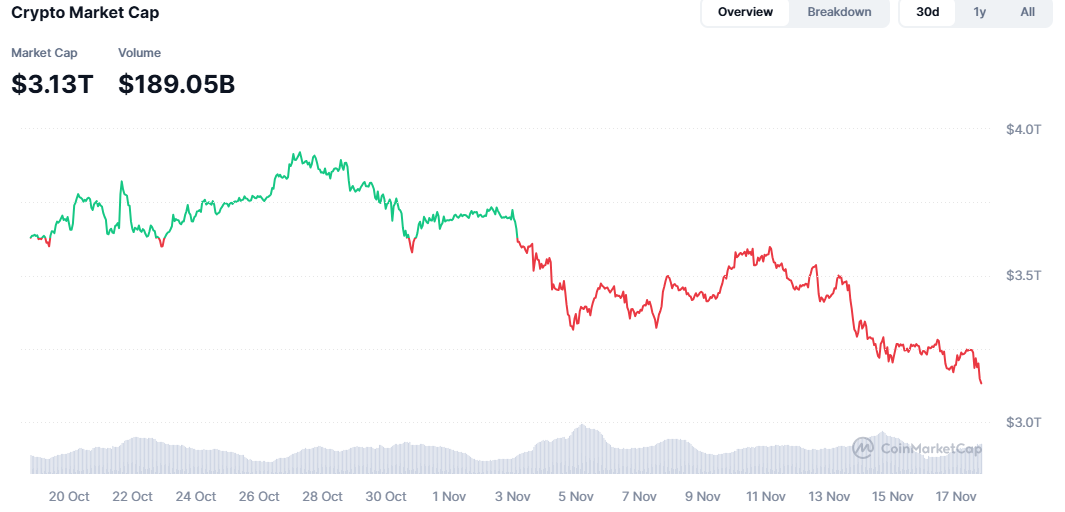
Meanwhile, despite all the positive developments, Bitcoin has struggled in recent weeks. Bitcoin soared to a peak of $126,000 earlier this year. Now the entire crypto market has plunged into decline.
Bitcoin fell to $92,000 today, marking its lowest level since April, and is now down 2% year-to-date. It is trading below the price level from Trump’s swearing-in. Solana, XRP, and Ethereum show similar declines.




