
 Altai the Tiger
 IGNITION
 streamoors
 Sword Inu
 NEAR Protocol
 Injective
 Quantus

BlackRock CEO Larry Fink and COO Rob Goldstein wrote a guest column in The Economist on December 1, 2025. They described blockchain-based tokenisation as the most significant change in financial market infrastructure since the 1970s.
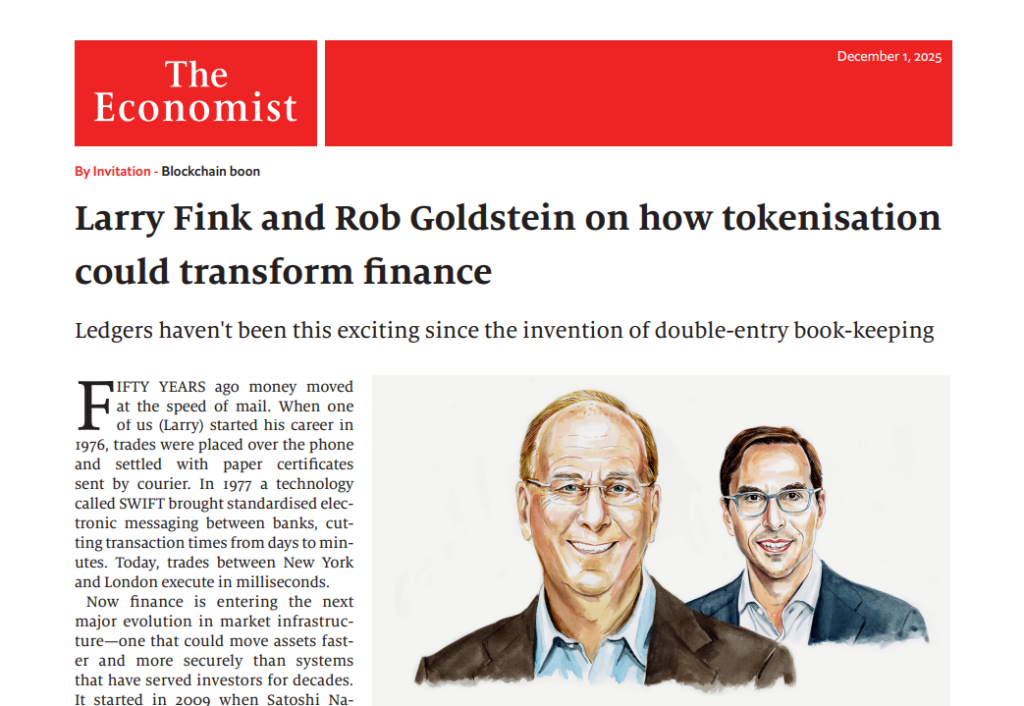
They also credited Bitcoin as the technology that started this shift. Their message shows how the world’s largest asset manager now views digital assets. It also demonstrates the rapid growth of tokenisation in global markets. Their article signals a major change in traditional finance.
Bitcoin’s Role and the Rise of Tokenization
BlackRock leaders said that the story began in 2009. They wrote that “It started in 2009 when Satoshi Nakamoto, a pseudonymous developer, launched bitcoin as a shared digital ledger that could record transactions without intermediaries.”
They explained that this technology later inspired something larger. They wrote that “A few years later, that same technology—the blockchain—sparked something even more transformative: tokenisation.”
They compared tokenisation to the early internet. They said its current stage is like the web in 1996. At that time, Amazon’s sales were very small. They said, “Tokenisation could advance at the pace of the internet—faster than most expect, with enormous growth over the coming decades.”
They noted that tokenised financial assets have grown by approximately 300% over the past 20 months. They said this growth is strong in emerging markets. These markets often lack strong traditional banking systems.
How Tokenization Works and Why It Matters
They explained that tokenisation enables the placement of almost any asset on digital ledgers. These assets include real estate, corporate debt, infrastructure, and currencies. They said this system creates standardized and instant settlement.
Today, many settlements take several days. They also said that tokenisation replaces slow and paper-based processes in private markets. It uses programmable code instead. This improves efficiency, transparency, and access.
They described a future where investors hold both traditional and digital assets in one wallet. This would connect old financial systems with new innovators. These innovators include stablecoin issuers and public blockchains.
They stated that risk should be assessed based on the asset itself. It should not be judged by whether it is digital. They wrote, “A bond is still a bond, even if it lives on a blockchain.”
BlackRock’s Own Moves Toward Digital Assets
BlackRock is already using these ideas. Its iShares Bitcoin Trust (IBIT) has gained large holdings. This shows strong institutional demand for spot Bitcoin exposure.
The company also launched the BUIDL tokenized money market fund in 2024. It has grown quickly. It is now a leader in its category with billions in assets.
They said they were once cautious about crypto. They noted that they had their own early doubts. However, they now view tokenisation as a practical step forward. They called for updated regulations. They said modern rules are needed to support safe and open systems.
Their article shows BlackRock’s shift toward digital assets. It also shows that major financial institutions now trust blockchain technology, which began with Bitcoin. They said tokenization can expand access, reduce friction, and reshape global markets for generations.



