
 streamoors
 IGNITION
 Injective
 Quantus
 NEAR Protocol
 Pearl
Pearl LayerZero

The SEC has taken an important step toward connecting traditional finance with blockchain technology. On December 17, 2025, the agency released interim guidance explaining how broker‑dealers can legally custody crypto asset securities.
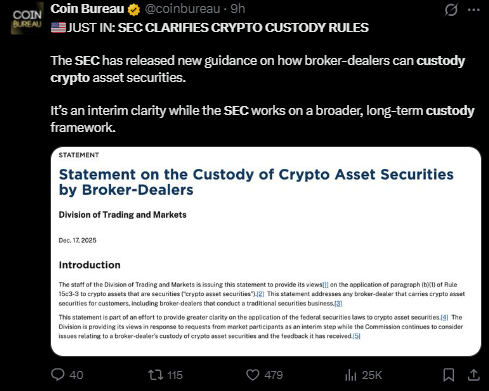
These assets include tokenized versions of stocks, bonds, and other traditional instruments issued on blockchains. The guidance focuses on how firms can meet the Customer Protection Rule.
It requires physical possession or control of customer securities. This move offers clarity while long‑term rules are still being developed.
SEC Guidance on Custody Requirements
The SEC’s Division of Trading and Markets issued a staff statement explaining how broker‑dealers can comply with Rule 15c3‑3. This rule requires firms to protect customers’ fully paid and excess margin securities.
The new guidance says broker‑dealers can meet the “physical possession or control” requirement by holding the private keys to crypto asset securities. This marks a shift from earlier, more restrictive interpretations.
The guidance is temporary. It responds to industry requests for clarity while the SEC works on a broader framework. Broker‑dealers must meet strict conditions before they can custody these assets. They must have direct access to the crypto securities and be able to transfer them on the blockchain.
They must also create written policies to evaluate the blockchain network they rely on. These evaluations must cover performance, scalability, security, governance, and risks such as hard forks or 51% attacks.
Firms must document these assessments before they begin custody and repeat them regularly. If they find major security or operational risks, they cannot custody the assets.
Protecting private keys is essential. Firms must follow industry best practices to prevent theft, loss, or misuse. No third party, including customers or affiliates, may access the keys without authorization.
Broker‑dealers must also prepare for disruptions. They require plans for blockchain failures, legal orders such as freezes or seizures, and asset transfers during bankruptcy or liquidation. These requirements aim to protect investors while allowing innovation.
Reactions From the SEC and the Industry
SEC Commissioner Hester Peirce welcomed the guidance. In her statement, titled “No Longer Special,” she said the move treats tokenized securities more like traditional ones.
She also urged the SEC to update Rule 15c3‑3 to better fit digital assets. Peirce has long advocated for clearer and more flexible cryptocurrency rules.
Industry reactions were mostly positive. Many view the guidance as a sign that tokenized real-world assets may grow more rapidly. Some users on X claim that it reduces uncertainty and supports increased liquidity.
Others called it a small but meaningful step toward regulatory clarity. Many believe it will help traditional financial firms adopt blockchain‑based securities without needing special structures.
Critics note that the guidance does not change any laws. It applies only to crypto asset securities, not to assets like Bitcoin that are treated as commodities. Some argue that it does little for non-security crypto and highlights the need for broader reforms.
Impact on the Market and What Comes Next
This guidance fits into the SEC’s ongoing efforts to regulate crypto. It builds on earlier frameworks, including the 2020 special‑purpose broker‑dealer guidance.
The new requirements may increase compliance costs for broker‑dealers. But they may also bring more institutional involvement and improve liquidity for tokenized assets.
The SEC will continue reviewing the rules. This interim step may signal a more practical approach to crypto regulation in the United States.



