Altai the Tiger
 IGNITION
 streamoors
 Sword Inu
 NEAR Protocol
 Injective
 Quantus

The CLARITY Act remains absent from the Senate floor schedule as lawmakers approach the August 10 recess. Monday’s schedule lists one cloture vote on H.R. 6500, a continuing resolution vehicle.
Senate leaders have not officially announced a cloture motion or floor vote for H.R. 3633. The limited calendar now leaves lawmakers little room to advance the crypto market-structure bill before the break.
Senate Schedule Leaves CLARITY Act Without a Confirmed Vote
The Senate reconvened on Monday, August 3, and planned a 5:30 p.m. vote on H.R. 6500. That measure serves as a legislative vehicle for a continuing resolution and does not involve digital asset regulation. The official floor schedule did not list the CLARITY Act for debate, cloture, or passage.
Senate leaders could still add the bill to the schedule during the week. However, the chamber must complete several procedural steps before senators can begin consideration.
Leadership must file cloture on the motion to proceed unless senators agree to shorten the process. No such filing appeared on Monday’s announced schedule.
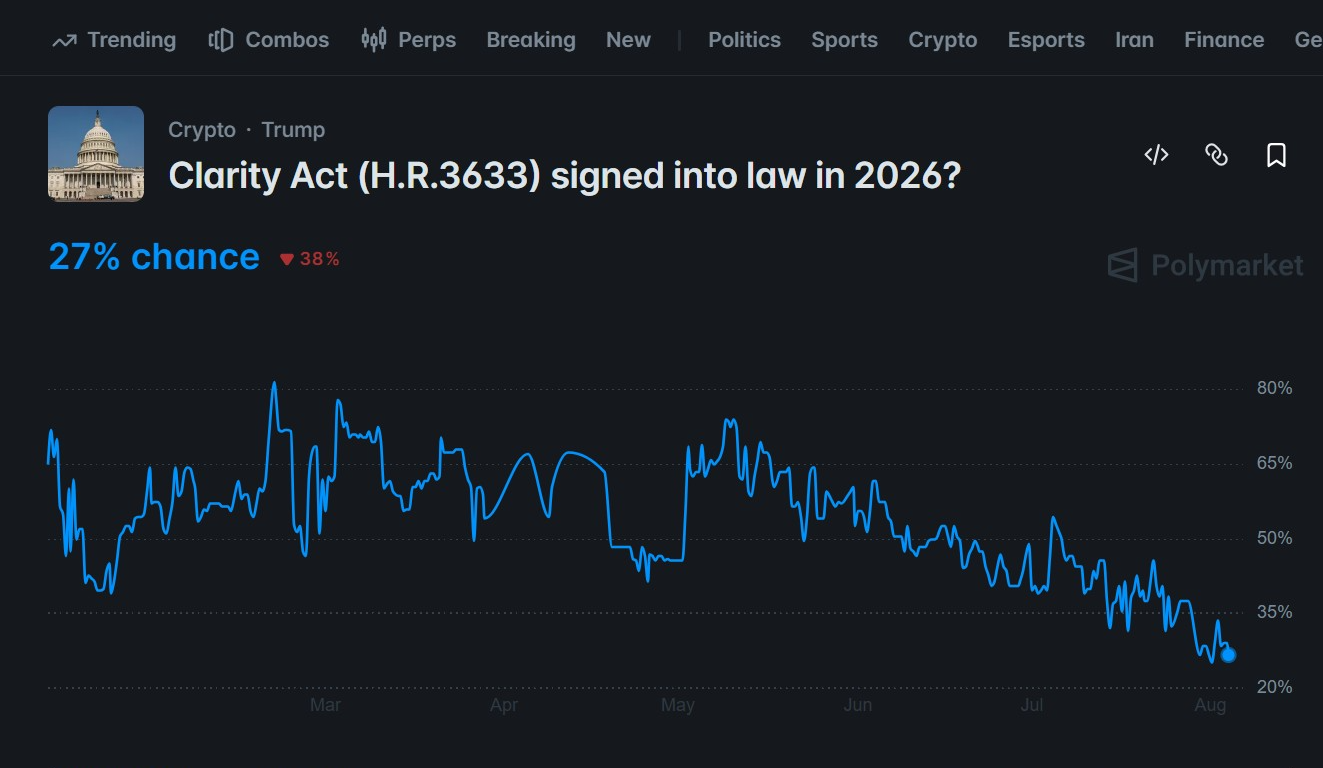
According to prediction markets, the CLARITY Act has a 27% chance of becoming law in 2026. Odds have fallen 38%, extending a decline from earlier highs near 80%.
Wednesday Cloture Filing Could Produce a Friday Vote
A Wednesday cloture filing could allow the Senate to hold a procedural vote as early as Friday, August 7. That vote would decide whether the chamber ends debate on the motion to proceed. It would not represent final passage of the CLARITY Act or send the measure to the White House.
Senate rules normally require a cloture petition to remain pending before the chamber holds a vote. Lawmakers could move faster through unanimous consent or another negotiated agreement.
Without a shortcut, senators may have little time to open debate and address amendments before the August recess begins.
The cloture vote would also require support beyond the Republican conference. The Senate generally needs 60 votes to end debate on legislation.
If all 53 Republicans support the motion, leaders would still need at least seven Democratic votes. Any Republican opposition would increase the required Democratic support.
Bill Advanced Through House and Senate Committee
The House passed H.R. 3633 on July 17, 2025, by a 294-134 vote. The legislation then moved through Senate committee work during Congress. On May 14, 2026, the Senate Banking Committee advanced the measure by a bipartisan 15-9 vote.
Senator Cynthia Lummis released updated CLARITY Act text on July 22 following negotiations with the Banking and Agriculture Committees. The measure addresses regulatory authority, consumer safeguards, market oversight, and treatment of digital commodities.
Supporters have called for clearer federal standards for token classification, trading platforms, custody, and decentralized finance. Opponents and undecided senators continue to review provisions covering ethics, enforcement, investor protection, and industry structure.
August 10 Recess Tightens the Legislative Window
The Senate’s tentative calendar lists a state work period from August 10 through September 11. That schedule leaves four remaining legislative days after Monday for leaders to begin action.
The chamber could change its plans, but Senate leaders had not publicly confirmed a CLARITY Act vote by Monday afternoon.
A Friday cloture vote would only start the next stage of Senate consideration. Senators could still require debate time, amendment votes, and a final passage vote. The House might also need to consider Senate changes before the legislation could reach the president.
Senate leaders, therefore, face a narrow procedural path before members leave Washington. They could seek unanimous consent, negotiate a bipartisan time agreement, or postpone consideration until after the recess.
Until leadership formally files cloture or announces another agreement, the CLARITY Act remains off the Senate floor schedule for action.