
 astronaut
 Pearl
Pearl Hyperliquid
 Walrus
 Pudgy Penguins
 Bitcoin
 NEAR Protocol
Key Highlights:
- The US now holds over $20B in Bitcoin as part of its official strategic reserves.
- Despite its leadership in global crypto policy talks, India has yet to define a clear path.
- Institutions like BlackRock and Metaplanet are accelerating BTC accumulation, adding urgency to national strategies.
The US has officially recognized Bitcoin as a reserve asset by adopting it as a national reserve asset. This landmark move marks a transformative moment in global financial systems.
Institutional interest grows, and peers like Bhutan embrace BTC. India faces mounting pressure to define its crypto strategy and seize this emerging opportunity.
US Turns Bitcoin Into a Strategic Asset
In January 2025, President Donald Trump ordered the US to repurpose 200,000 seized Bitcoins. This reserve has a value of over 20 billion dollars. It now serves as a safeguard against inflation and currency risk.
Last month’s White House Crypto Summit confirmed the move toward a Bitcoin reserve. Officials outlined plans to expand the reserve using budget-neutral strategies.
Moreover, three US states have passed laws that allow the use of public funds to store Bitcoin. Others will follow, demonstrating that the state-level policy rapidly aligns with the national crypto objectives.
Bitcoin is currently being viewed as a capital asset by the Securities and Exchange Commission and the International Monetary Fund. Such regulatory clarity is further strengthening the position of Bitcoin as something more than a speculative investment.
It has now found its way into sovereign financial planning and institutional portfolios. Bitcoin market has not flashed significant sell signals despite the increasing price.
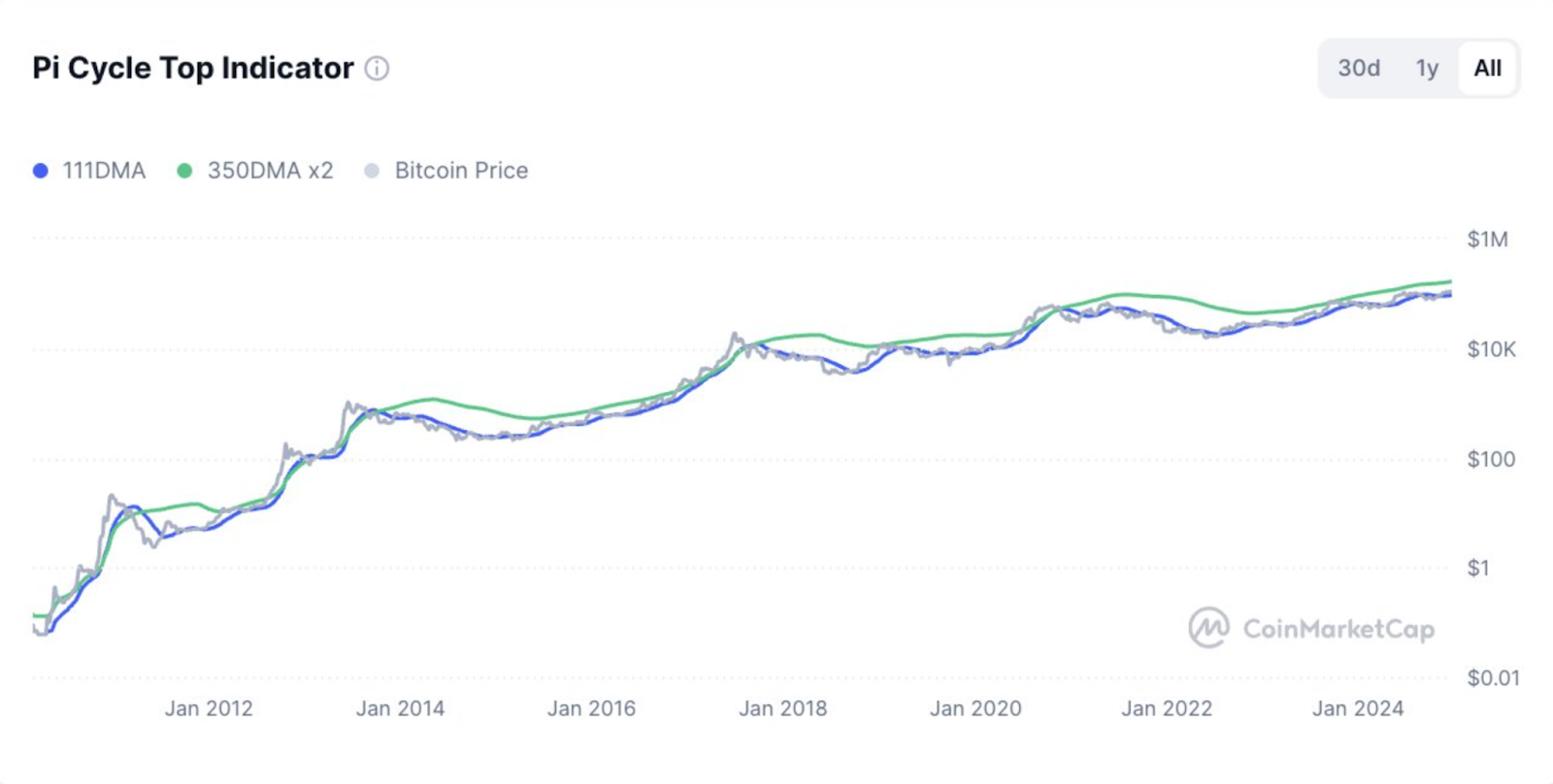
The Pi Cycle Top Indicator by CoinMarketCap has previously predicted market peaks in 2013, 2017, and 2021. This time, the indicator lines have not crossed.
A market top may not be imminent. This implies that there is a potential for upside in the current market before it becomes exhausted.
Concurrently, funding rates have become negative, indicating that retail traders are shorting the rally. This has seen a chain of liquidations as Bitcoin keeps rising against the bearish sentiment.
As a result, the disparity between short positions and price action indicates the increasing skepticism in the current rally.
BlackRock and Metaplanet Accelerate BTC Acquisition
Institutional adoption is gaining momentum, and this week, BlackRock has spent more than $340 million to buy 3,147 BTC. This purchase shows that large financial institutions are increasingly confident that Bitcoin will be valuable in the long term.
The firm’s approach aligns with the general tendency of portfolio diversification with the help of digital assets. In the meantime, Metaplanet Inc. of Japan has also increased its Bitcoin treasury.
On June 26, it bought 1,234 BTC for 132.7 million dollars, increasing its holdings to 12,345 BTC. This action saw Metaplanet overtake Tesla as the seventh-biggest company holding Bitcoin globally.
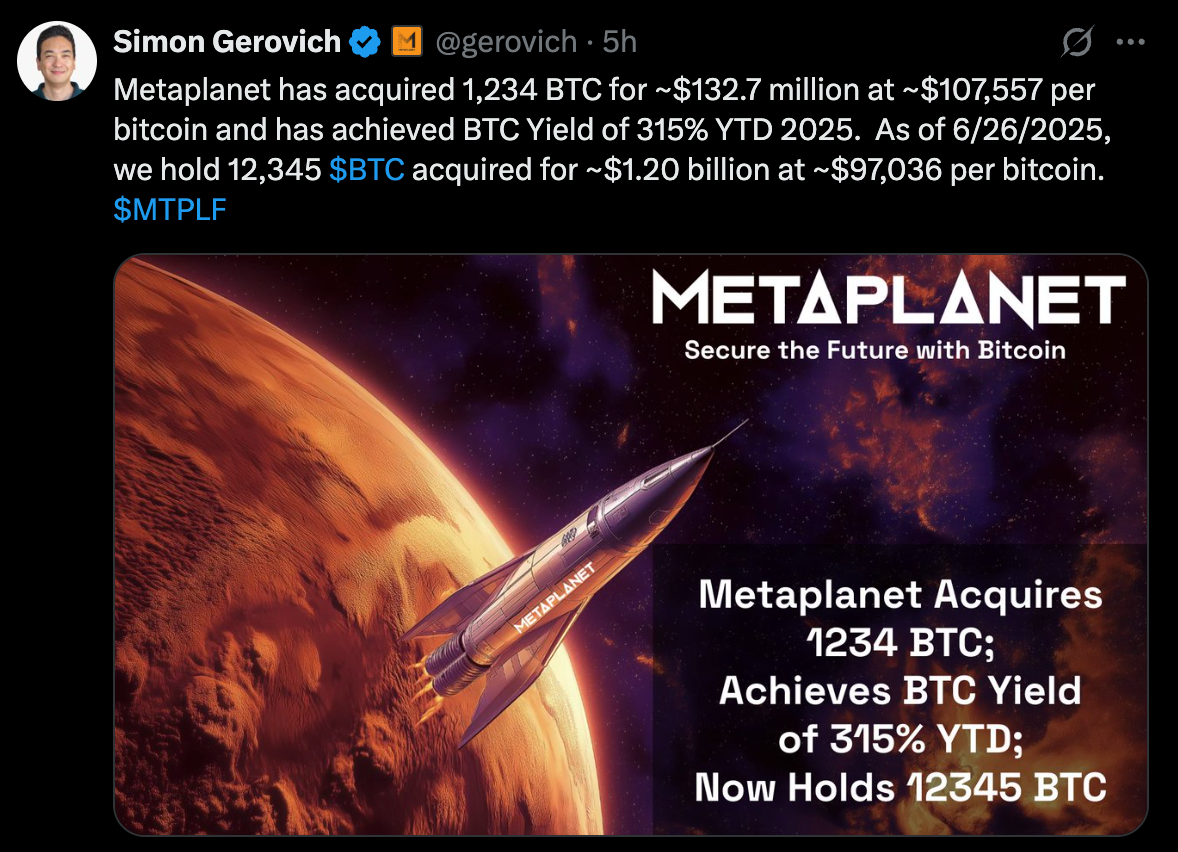
In June, the company purchased an additional 1,111 BTC and issued more than $510 Million of equity. CEO Simon Gerovich affirmed that it would hold 30,000 BTC by the end of the year.
If this is realized, Metaplanet would be the fourth-largest publicly traded owner of Bitcoin, only after Riot Platforms.
India’s Missed Momentum and Regional Perspective
As world institutions move forward, India will still tax crypto without a formal reserve policy. India has been instrumental in the 2023 G20 crypto framework negotiations.
However, it has not implemented the same at the national level. This ambiguity confuses investors and slows down possible innovation.
Bhutan offers an interesting local case of Bitcoin adoption. The country started mining Bitcoin with hydropower in 2021 and has over 1 billion reserves.
These funds are used to fund the public programs and contribute to the national sustainability objectives. This demonstrates how digital assets can contribute to economic resilience.
India, which has a vast renewable energy potential, can adopt a similar sovereign mining approach. Nevertheless, there are barriers to scale and regulation.
The later India establishes regulatory clarity, the harder it will be to stay in line with the changing global cryptocurrency environment.
Bitcoin’s Strength Lies in Its Structure
Bitcoin has essential qualities that make it suitable for use as a reserve. Its limited supply of 21 million coins will make it scarce and guard against inflation.
Due to its decentralization, it is not subject to counterparty risk. Also, it is not dependent on a specific institution or country.
In addition, Bitcoin is liquid and has no borders as it is traded 24/7 in the international markets. It is not just lying in the vaults like gold, but is fast, transparent, and safe through the blockchain. This combination of asset-like security and digital speed makes Bitcoin a special tool in contemporary finance.
India can dominate this field in terms of resources and talent. Without precise regulation, the country risks falling behind in the global crypto race.
Early adopters like the US and Bhutan already hold a strategic edge. A structured reserve pilot may provide a balanced solution between innovation and financial prudence.
Disclaimer
This article is for informational purposes only and provides no financial, investment, or other advice. The author or any people mentioned in this article are not responsible for any financial loss that may occur from investing in or trading. Please do your research before making any financial decisions.




