streamoors
 Sword Inu
 Altai the Tiger
 IGNITION
 no crying in the casino
 NEAR Protocol
 Pudgy Penguins
Key Insights:
- Pi Coin price has crashed this year, and a pundit points to increased supply.
- Pi Network unlocks millions of new coins to the market each day.
- She suggested that a token burn mechanism would ameliorate the pain.
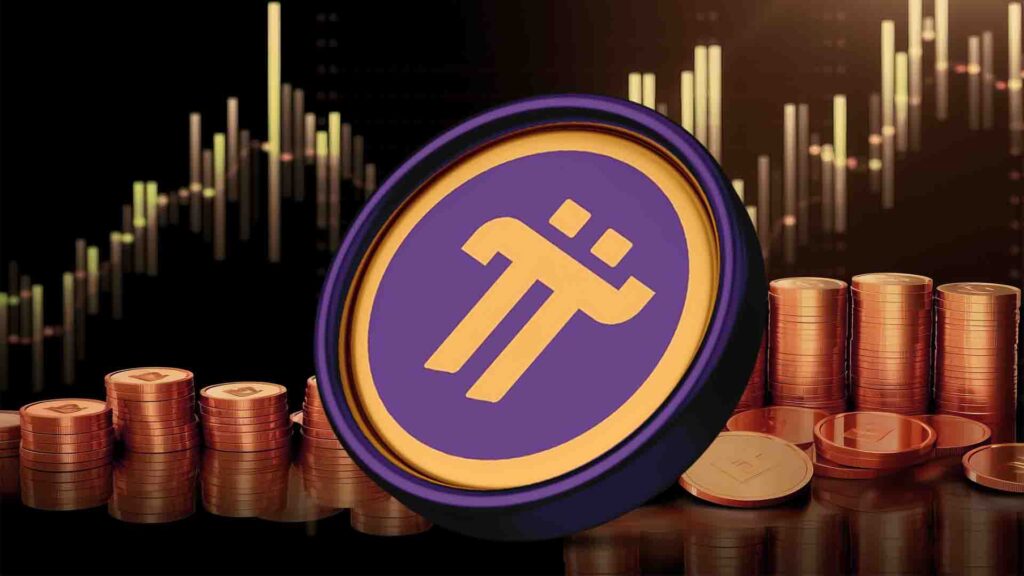
Pi Coin price has plunged by double digits since its much-anticipated mainnet launch earlier this year. This 85% crash has been worse than that of most altcoins.
While many reasons have been proposed, one crypto pundit has shared the main catalyst for the Pi Network price plunge.
Analyst Blames Supply for Pi Coin Price Crash
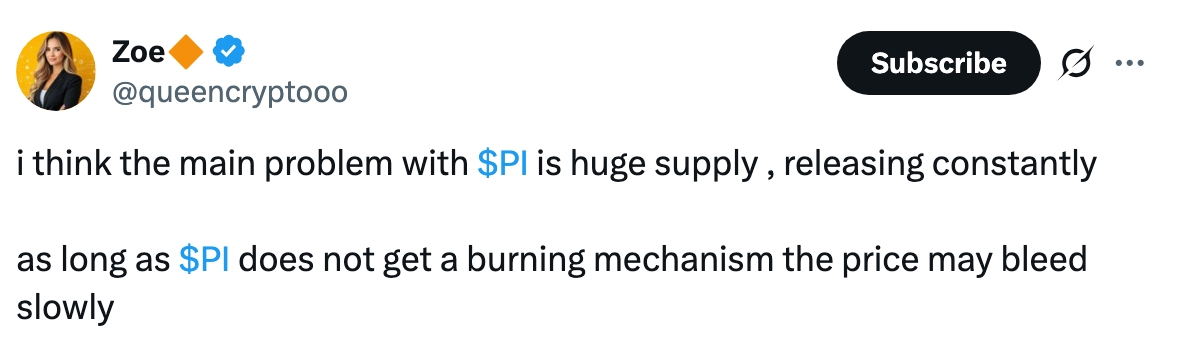
Zoe, a popular anonymous pundit on X, attributed the recent Pi Coin price plunge to declining investor confidence. She also suggested a potential recovery strategy to stabilize the token.
She pointed to the ongoing token unlocks, which are adding to the supply in an unprecedented manner. Her argument is based on the demand and supply theory. This suggests that soaring supply at a time of limited demand will always push prices lower.
CoinMarketCap data shows Pi Network has a maximum supply of 100 billion tokens. The circulating supply stans at 7.65 billion. This means 92.5 billion tokens will eventually be released, adding to the circulating supply.
Pi Network achieves this situation by conducting daily token unlocks. Data shows that the network will unlock over 218 million Pi coins in the remaining days of this month. At this price, these tokens are valued at over $100 Million.
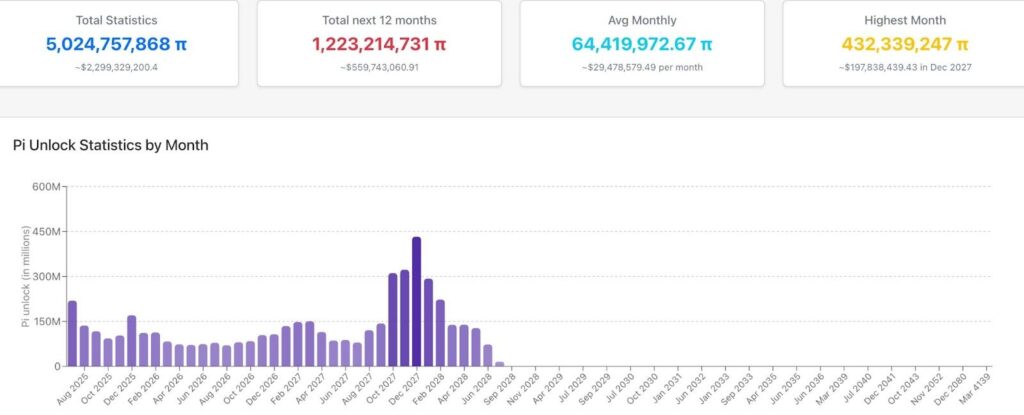
Pi will unlock 136 million tokens worth $62 Million next month. Over the next year, more than 1.2 billion tokens valued at $559 Million will be circulated. According to the following unlock calendar, the process will continue until July 2028.
Solution to the Pi Network Supply Increase
Zoe identified the main challenge for the Pi Coin price as the ongoing token unlocks. She also identified a potential solution to the crisis that may boost the token price over time.
In her X post, she noted that a token burn mechanism would greatly reduce concerns about oversupply. A burn is a situation where tokens are removed from circulation and moved into a dead wallet.
Many popular networks have done that and transformed their chains into highly deflationary projects. BNB Smart Chain burns over $1 Billion of BNB tokens every quarter. This strategy aims to cut the circulating supply from 130 million to 100 million.
The same is true with Tron, which uses the fees it generates on the network to burn millions of tokens each day. Subsequently, the number of TRX tokens in circulation has dropped substantially. Shiba Inu burn rate has also grown in the past few years.
In most cases, crypto projects utilize their fees to burn their tokens. The challenge for Pi Network is that its ecosystem is relatively small to generate enough tokens to burn.
For example, the recent domain auction process attracted bids worth $1.56 Million. This is a small amount for a crypto project worth $4.5 Billion.
Pi Coin Value Price Analysis
The daily chart shows the Pi Coin price sends mixed signals about its future action. On the positive side, the token has formed a double-bottom pattern at $0.3910. It has also formed a neckline at its May high of $1.6657. This pattern often leads to a strong bull reversal.
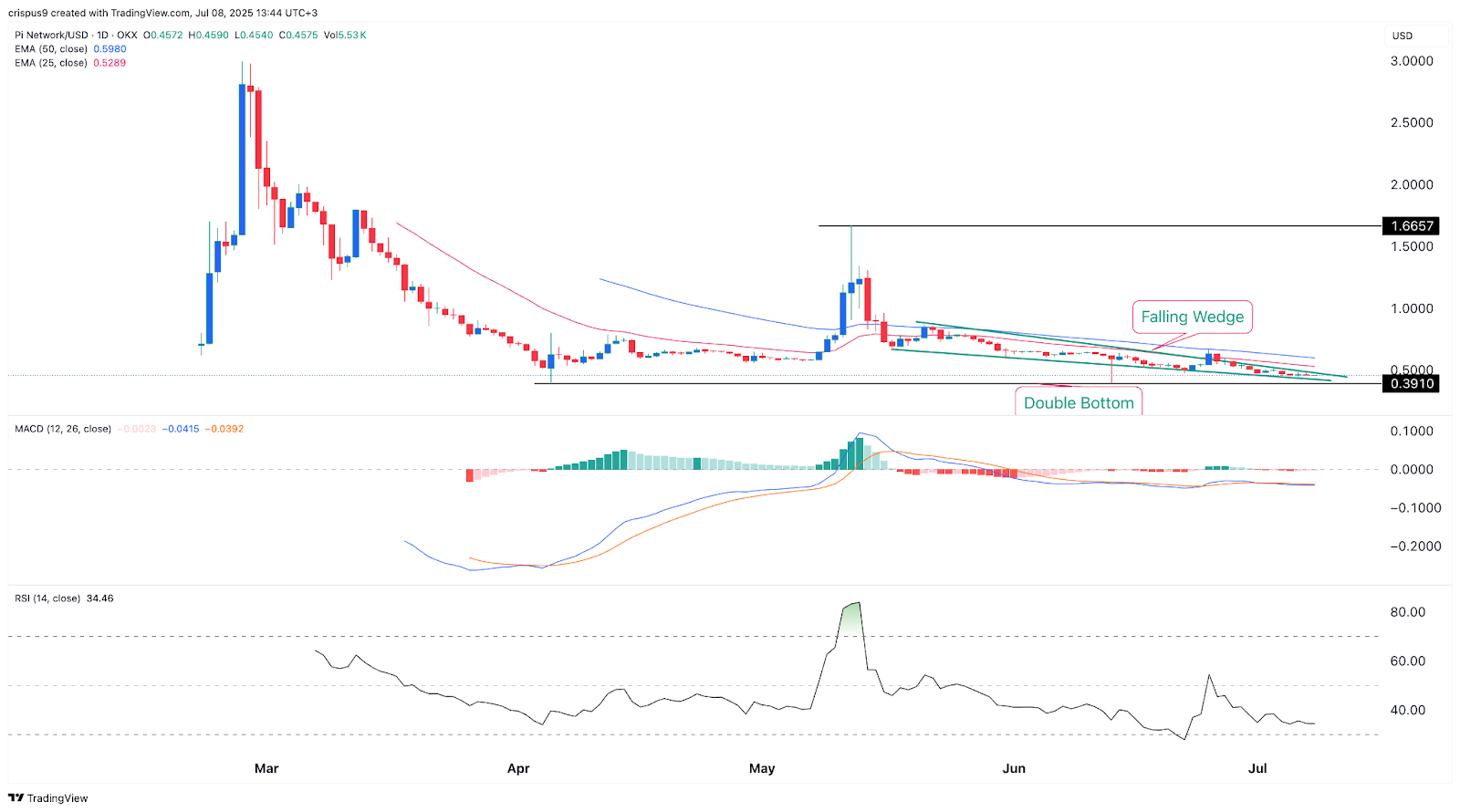
Pi Network price is currently forming a falling wedge pattern. This bullish setup consists of two downward-sloping, converging trendlines. Pi coin price also shows a double bottom at $0.3910. A contrarian bullish reversal could be on the horizon if it holds above this level.
Conversely, the coin remains below the 50-day moving average. On the other hand, the Relative Strength Index (RSI) and MACD point lower.
A drop below the $0.3910 support level would validate a bearish outlook. This could lead to a further decline in Pi Network’s price, possibly toward $0.200.
Disclaimer
This article is for informational purposes only and provides no financial, investment, or other advice. The author or any people mentioned in this article are not responsible for any financial loss that may occur from investing in or trading. Please do your research before making any financial decisions.