
 astronaut
 Pearl
Pearl Hyperliquid
 Walrus
 Pudgy Penguins
 Bitcoin
 NEAR Protocol

The open interest (OI) in Bitcoin (BTC) has recently diverged from that of altcoins, indicating that the altcoin season is gradually waning. This is after being in place since the last quarter of 2024, with new narratives and existing tokens surging in terms of capitalization.
Numerous coins have emerged since Q4 2024, garnering hundreds of millions, if not billions, of dollars in capital.
The recent crash, which also impacted BTC, served as the initial indication that the altcoin season was experiencing a delay. The assumption that altseason is delayed is based on the historical pattern that most cryptocurrencies rally during this period of the year.
In addition, the divergence in Open Interest (OI), the decline in the Altcoin Season Index, and the market cap of non-stablecoin cryptos underscored the delay in the season.
Open Interest in Bitcoin Diverges From Altcoins
To start with, a post by Ted Pillows on X denoted an increasing open interest difference between Bitcoin and Ethereum (ETH) and other altcoins.
Considering the period since January 2024, it has been indicated that BTC dominance in OI has prevailed, with peaks of up to 50 percent. ETH and others ranged between 25% and 35% when writing.
Altcoins reduced to a considerable degree, indicating speculative withdrawal. This decline might be a sign of a market reversal for altcoins, thus delaying the altcoin season. Crypto Twitter (CT) supported this analysis by citing historical patterns of negative sentiment before the altcoin boom.
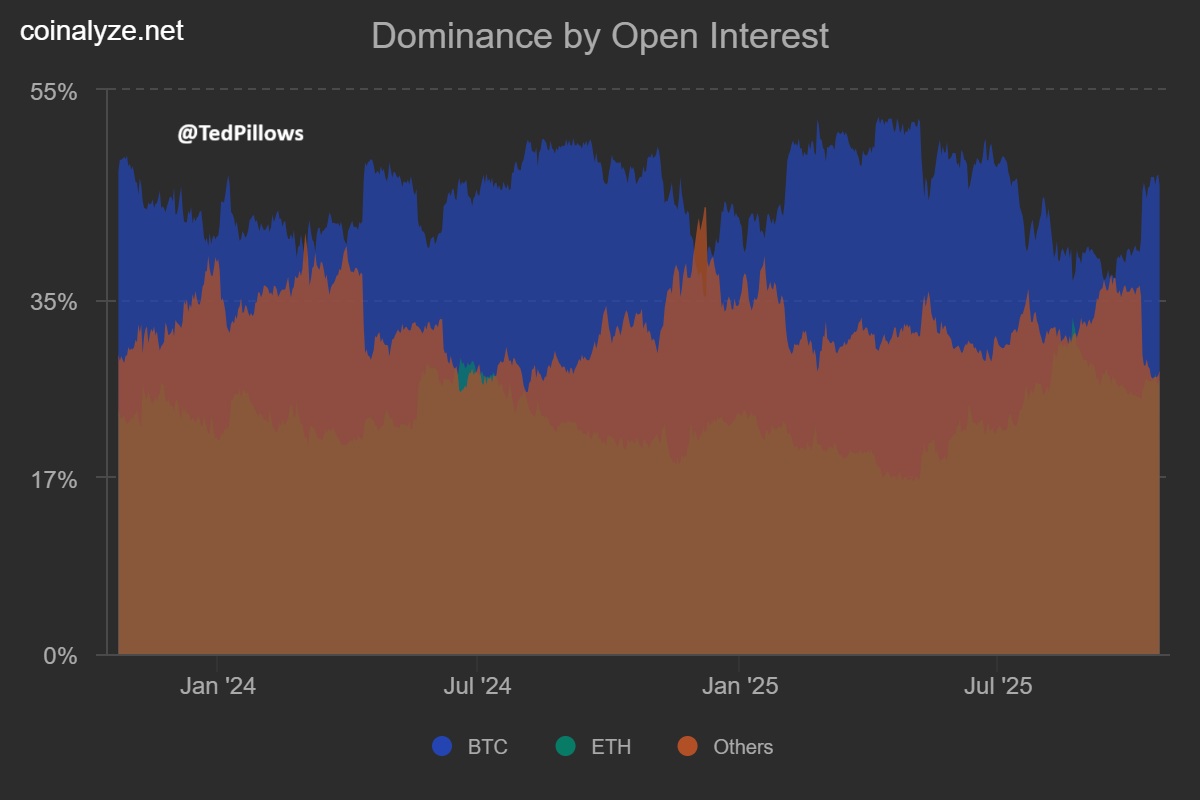
Historically, BTC has always had more open interest than altcoins. However, this changes during altcoin seasons, as more than 75 percent of cryptocurrencies in the top 100 by capitalization outperform BTC.
Altcoin Season Index Drops Hard
Examining the altcoin season index provided support for the altseason delay. The altcoin season index saw a significant decline, falling from levels above 80 to 37. The decrease meant that market control was gradually returning to Bitcoin.
Traditionally, levels above 75 have marked the strong performance of altcoins. Conversely, levels below 25 marked Bitcoin-led rallies. The decline from the upper range was an indication of capital flow to Bitcoin, which commonly occurs before larger market mergers.
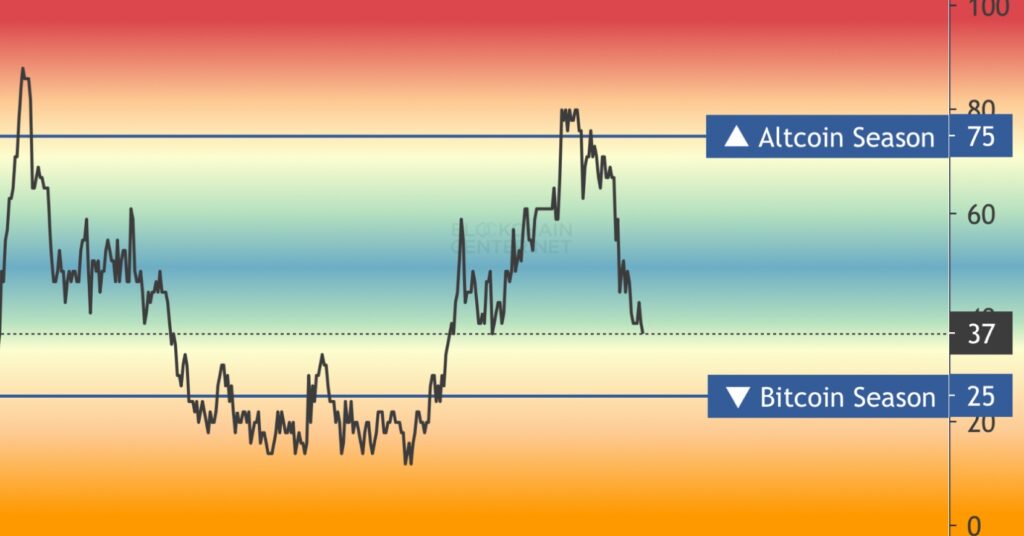
The current reading highlighted a neutral position, meaning that traders were waiting for a new Bitcoin breakout or a revived altcoin push as liquidity conditions changed.
What Is Needed to Spark a Real Altcoin Season?
The altcoin market cap, excluding stablecoins, further cemented this notion. The market cap was rejecting the peak seen in 2021, when altcoins surged to new highs. The result suggested a possible turning point in the altcoin season cycle, as the last similar pattern was seen in 2021.
In 2020, following the COVID-19 pandemic, the Federal Reserve injected liquidity through quantitative easing (QE) after a 53% crash. Altcoins experienced a parabolic rise, signaling the beginning of a new altcoin season.
The current outlook has not changed. The Fed said that it had finished Quantitative Tightening (QT), which suggested the beginning of QE. These developments put the market in a situation for new capital inflow into risk-on assets.
If this liquidity is pumped, it may imitate the surge seen in 2020/2021. However, the actual altseason would start if Ethereum price broke above $5,000, as per analyst Ash Crypto on X. Such an event would result in the market cap surging toward the $2 trillion mark.
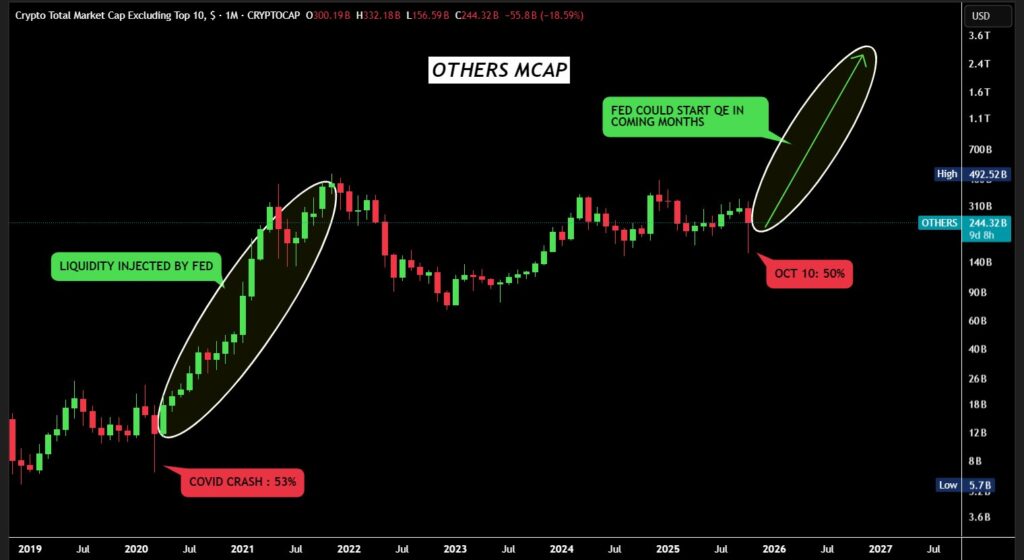
Overall, the sentiments suggest a delayed season, but a shift in market strength, particularly for ETH, could reverse this trend. Additionally, the altcoin season index needed to start turning upward, along with growth in open interest.




