
 streamoors
 IGNITION
 Sui
Sui Quantus
 Bitcoin
 Pearl
Pearl Solana
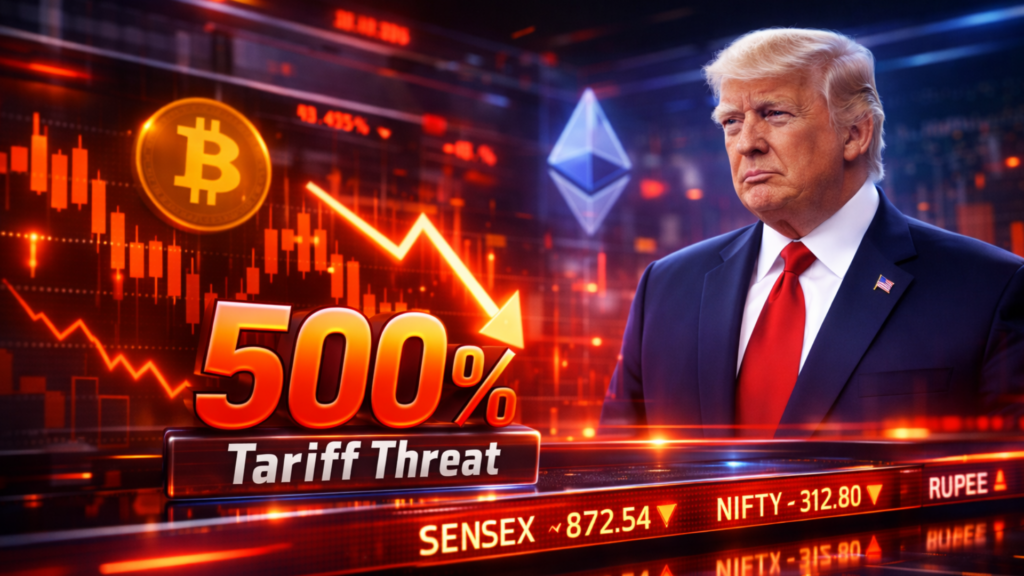
India stocks slid as traders priced in fresh U.S. tariff anxiety. The Nifty 50 and Sensex logged their sharpest one-day fall in over four months.
Selling intensified after Donald trump talk of a 500% tariff tied to Russian oil purchases. Moreover, the Rupee weakened as investors watched persistent foreign selling.
India Stocks Drop amid US Tariff Uncertainty
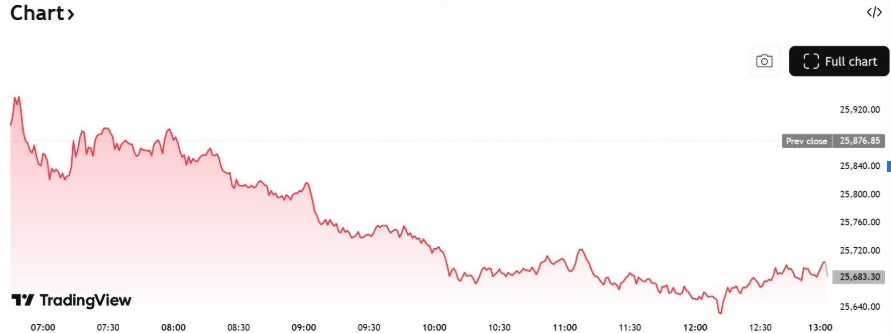
Nifty 50 closed 1.01% lower at 25,636.85, while the Sensex stock ended down 0.72% at 83,633. Both benchmarks extended weekly losses of 1.7% and 1.8%, respectively.
All 16 major sectors finished lower, showing broad selling across the market. Small-cap and mid-cap indexes each fell about 2%, adding to the weak close.
Reliance Industries fell 2.2%, weighing on the oil and gas segment. The oil and gas index dropped 2.8%, its worst session in nine months.
Metal stocks fell 3.4%, their biggest one-day drop in nine months. The IT index lost 2% after rising in the prior two sessions. Export-linked names also dropped as traders reassessed demand risks.
Two apparel exporters, Gokaldas Exports and Pearl Global, fell 8.5% and 7.9%. Seafood exporters Avanti Feeds and Apex Frozen dropped 8.6% and 7.8%.
Capital goods names also fell, led by Larsen and Toubro, down 3.1%. BHEL declined 10.5% in the same session. Reuters also reported plans to ease curbs on Chinese bids.
US Tariff Talk Put Russian Oil Back in Focus
The market decline followed renewed focus on U.S. trade tools linked to Russian energy flows. President Donald Trump is considering tariffs of up to 500%. The tariffs would target countries that buy oil from Russia.
The report said Trump had warned India about higher tariffs. It added that the U.S. has imposed tariffs of up to 50% on Indian goods. India is seeking to finalize a trade deal with Washington.
In Washington, Senator Lindsey Graham said Trump had “greenlit” a bipartisan bill. Graham wrote the draft with Senator Richard Blumenthal. The bill would allow tariffs of up to 500% on certain imports.
It would apply to countries doing business with Russia’s energy sector. Graham cited China, India, and Brazil as major targets. This bill aims to pressure buyers of discounted Russian oil.
Some analysts questioned how such tariffs would be applied in practice. Catherine Wolfram, a former U.S. Treasury official, called tariff-based sanctions an untested tool.
She said countries could keep buying Russian oil despite the threat. She also noted the U.S. would face costs in enforcing such measures.
Rupee Weakens as Foreign Selling Continues
Currency and flow data added to the cautious mood in India stocks. Reports said the Rupee ended lower despite a surprise central bank intervention. Tariff worries and continued outflows outweighed that support. Foreign investors have sold about $900 million of shares in January.
The January sales followed record net sales of about $19 billion in 2025. Traders have watched whether those flows deepen daily volatility.
Anita Gandhi of Arihant Capital Markets said investors were uneasy about tariff uncertainty. The US tariff debate is linked to Russia’s discounted crude trade since 2022.
The Centre for Research on Energy and Clean Air tracked November flows. This showed China bought 47% of Russia’s crude exports that month. India bought 38% of those exports, the analysis showed.



